The health risks of climate change

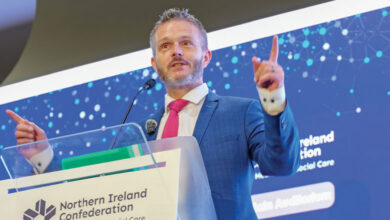
Colin O’Hehir, Head of the Climate Change Unit within the Republic of Ireland’s Department of Health, says climate change’s impact on health is being experienced faster than initially expected, while adaptation becomes more difficult with every increase in global average temperature.
Colin O’Hehir says: “The science is unequivocal in terms of the challenges we are facing and the pace of the challenges we are facing.”
He outlines the findings of the sixth assessment report of the Intergovernmental Panel on Climate Change (IPCC), saying: “These impacts are happening faster than we thought they would. They are getting worse, they are getting more extreme, and the pace at which they are hitting is happening quicker than we are ready for.
“Adaptation gets more and more challenging with every fraction of a degree it goes up. The European region is warming at twice the global average.”
O’Hehir notes that the Environmental Protection Agency (EPA) published the National Climate Change Risk Assessment Main Report in June 2025, which says: “It identified 117 different risks. It identified immediate risks, priorities, and what risks hit a broad range of sectors.”
The Head of the Climate Change Unit says the report identified that the Irish Government is “prioritising its response” to major emergencies, adding that this requires most sectors to increase their resilience “as a matter of urgency.”
O’Hehir says many of the risks have cross-sectoral impacts. Regarding wildfires, he says: “We have now seen wildfires from Finland to Crete this year. We are starting to see them in Ireland, and there is a lot we can learn from our European colleagues on how to manage that, how to make our wildlife more resilient to the impacts of wildfires.
“However, as global average temperatures increase, as heat waves get longer and more frequent, these are coming our way.”
O’Hehir outlines how climate-related hazards such as extreme weather events have the immediate impacts of injury and mortality, adding that “heat-related stress is becoming more of an issue”.
These have the added impact of creating exposures for people’s health, the health workforce, and infrastructure. O’Hehir states that there have also been increases in various types of diseases. He says diseases such as dengue and malaria are “coming our way”, stating that the Republic’s health system “is going to have to be able to deal with that when it hits”.
Continuing, O’Hehir says climate change also impacts on the provision of health services, adding: “It is the nature of the Irish health system that a lot of our health infrastructure is in old buildings that were not built to deal with the type of heat and extended heat we will increasingly have to contend with.”
“The science is unequivocal in terms of the challenges we are facing and the pace of the challenges we are facing.” Colin O’Hehir, Department of Health ROI
Adaptation
The risk assessment informed the development of multiple sectoral adaptation plans. O’Hehir says these enable departments and agencies to prioritise what must be done to address climate change risks.
He says climate action must be integrated into the health system and that “actors in the climate space” must embed health within their systems. The Head of the Climate Change Unit asserts that this will necessitate the identification of risks and their impacts on various sectors, along with what must be done to address this.
O’Hehir explains that the ‘One Health’ approach is one example of this cross-sectoral collaboration. The World Health Organization (WHO) defines One Health as “an integrated, unifying approach that aims to sustainably balance and optimise the health of people, animals, and ecosystems”.
The Irish Government has established a One Health Oversight Committee, co-led by the departments of health, agriculture, and climate. O’Hehir explains that there is a subgroup for environment, climate, and health threats. These subgroups identify threats and their cross-sectoral impacts, and consider how to address them.
At European level in recent years, there has been a recognition of the need to integrate health into climate action and to understand health impacts arising from climate change, O’Hehir says.
Exemplifying this, he outlines that the Alliance for Transformative Action on Climate and Health (ATACH), established at the COP26 climate conference, has created a global community focussing on the decarbonisation of health systems. O’Hehir says the European Centre for Disease Prevention and Control is also critical for understanding climate risks.
The Head of the Climate Change Unit states that various datasets pertaining to health sector challenges arising from climate change must be assessed to map where impacts will be most acutely felt, how the State plans to respond, and how the health system should address this. O’Hehir asserts that achieving this requires “joined-up thinking”.
“We need to look at how the health sector can support global ambition. Global momentum peaked with the Paris Agreement in 2015. That seems like halcyon days now. As a sector, we need to play more of a role to highlight the health impacts of climate change and communicate that to citizens.”