How we can use cancer progress as a blueprint for improving dementia care
50 years ago, cancer was highly stigmatised and marked by major variations in diagnosis, treatment and care. Sustained political leadership, research, investment, and clearer pathways transformed what was possible. Although challenges remain, we now have improved outcomes for millions. For Northern Ireland, the need is urgent.
Dementia prevalence is projected to rise by 51 per cent from 24,700 people in 2024 to more than 37,000 by 2040. Its annual cost could double from £1 billion to £2 billion without strategic intervention.
This is not simply a future challenge.
Today, undiagnosed dementia contributes to an estimated 15,000 additional A&E attendances each year, while one-in-six hospital beds are occupied by someone living with dementia.
Dementia needs the same ambition we saw with cancer 50 years ago. If we are serious about resetting health and social care, dementia must be part of the solution rather than left on the margins of reform.
Science is changing what is possible
We can be optimistic. Evidence suggests that nearly half of dementia cases could potentially be prevented by addressing 14 modifiable risk factors. Blood biomarkers could transform diagnosis, while disease-modifying treatments are changing what may be possible for people with Alzheimer’s disease.
But breakthroughs alone will not transform lives. Without investment in the workforce, diagnostic capacity, data and community support to make innovation routine, Northern Ireland risks being left behind.
Over one-third of people living with dementia in Northern Ireland do not have a diagnosis. Department of Health figures reveal variation in waiting times for an initial memory assessment. More than 3,000 people are waiting, with some facing waits of up to two-and-a-half years. Many may already have been living with symptoms for some time before seeking support.
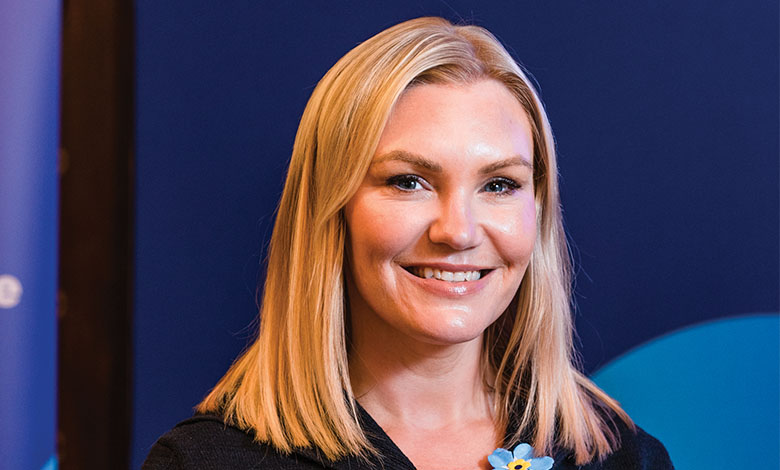
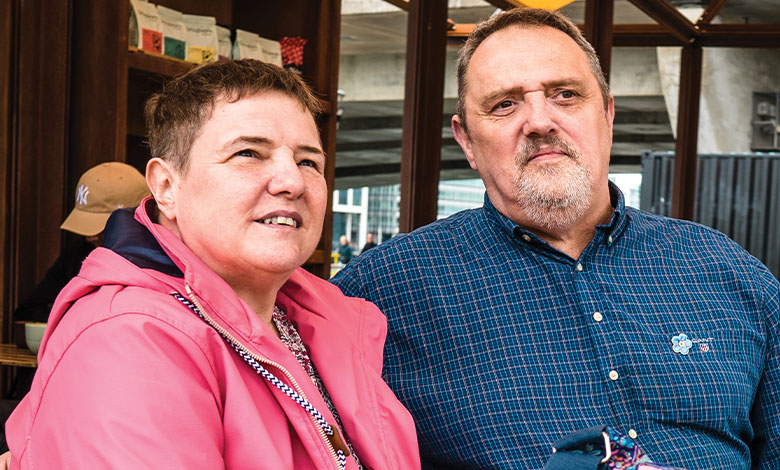
Julie Kerr, from County Antrim said support was not there when they needed it. Following Julie’s dementia diagnosis, a doctor told them to look online for further information. Their experience has led them to call for change.
“For six months after my diagnosis, we felt completely lost. When we finally found support, it changed everything for my husband David and I. We started to get our lives back. No one should have to go through that alone. Support should be there from the start.”
Too often, a dementia diagnosis is followed by a lack of consistent post-diagnostic support, leaving families to navigate dementia alone. Diagnosis must mark the beginning of meaningful support, not the end of someone’s interaction with the system.
Professor Bernadette McGuinness, Consultant Geriatrician and Clinical Professor of Ageing says: “Dementia care in Northern Ireland should be given more priority; we have long waiting lists and people are being seen for the first time at later stages in their disease. We want to assess patients at an earlier stage, enable identification and treatment of modifiable risk factors, and allow patients access to relevant clinical trials. With new disease-modifying treatments on the horizon, Northern Ireland needs the infrastructure to support effective monitoring and follow-up. That requires proper investment and a new dementia strategy.”
Learning from cancer
Cancer care was not transformed by one breakthrough. Progress came through sustained improvement in prevention, diagnosis, treatment, research and workforce, backed by political ambition and accountability. That is the central lesson for dementia.
Alzheimer’s Society’s Roadmap for Change sets out practical short-, medium-, and long-term solutions:
- earlier and more accurate diagnosis;
- investment in diagnostic infrastructure and workforce;
- better data;
- preparation for emerging treatments and blood tests;
- stronger post-diagnostic support; and
- high-quality dementia training across social care.
Northern Ireland needs a new dementia strategy
We are not starting from scratch. The Regional Dementia Care Pathway (2018) provides a framework, but a pathway cannot deliver transformation alone. Since 2018, our understanding of dementia, pressures across health and social care, and possibilities for diagnosis and treatment have changed.
Alzheimer’s Society is therefore calling for a bold, ambitious new dementia strategy for Northern Ireland, delivering our Roadmap for Change through a fully funded Regional Dementia Care Pathway, with clear accountability and measurable outcomes.
Upper Bann DUP MLA Diane Dodds, a member of the Assembly’s Health Committee, says: “Over a decade ago when the DUP held the Health Ministry, Northern Ireland led the way in terms of dementia diagnosis rates across the UK. But while the diagnosis rate in England has improved dramatically in recent years, our diagnosis rate here has stagnated around 60 per cent. This means too many people are locked out of vital treatment and support. With undiagnosed dementia putting a huge strain on an already pressed health and social care system. With Northern Ireland facing the largest projected increase in dementia across the UK in the next decade, we need to act now.”
There is a strong public mandate.
Alzheimer’s Society polling in January 2026 found that 89 per cent of respondents agreed government must act on dementia, 84 per cent supported making it a national healthcare priority, and 69 per cent would be more likely to vote for a party committed to increasing dementia funding.
The time for ambition is now
Cancer shows that outcomes once regarded as inevitable can be changed. Dementia is at a similar moment. We can continue with fragmented, crisis-driven care or build a system focused on prevention, earlier diagnosis, effective treatment, and high-quality support.
A bold new dementia strategy which delivers the Roadmap for Change would provide leadership and accountability to make that transformation happen.
Cancer has shown what sustained political will, investment and system-wide action can achieve.
Dementia cannot wait another 50 years.
Click the link to read the Alzheimer’s Society’s Roadmap for Change:
https://www.alzheimers.org.uk/sites/default/files/2026-05/Northern-Ireland-Roadmap-2026.pdf