Embedding cyber resilience
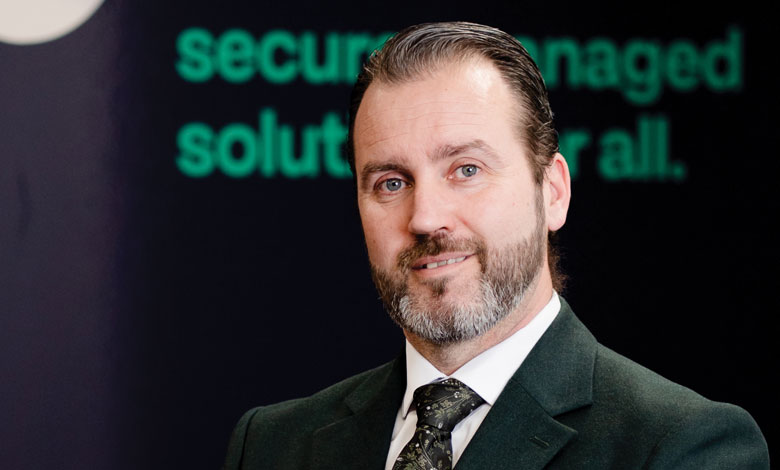
After almost 30 years in Northern Ireland, eir business is entering a new phase of growth, expanding its cybersecurity practice to meet rapidly increasing demand at home and internationally. Pádraigh Griffin, Chief Information Security Officer at eir business, speaks to agendaNi about the company’s work to strengthen cyber resilience across Northern Ireland, the changing threat landscape, and the value of an all-island security and technology partner.
Having joined eir business in January 2026, Pádraigh Griffin has been a cybersecurity professional for 26 years, and he says that eir business’s vision of secure, managed solutions, both on an all-island basis and internationally, was what attracted him to the role of CISO at the company.
Griffin’s role is all-encompassing, leading eir business’s security services in Northern Ireland, the Republic, Britain, and internationally. Speaking on the benefits of this, Griffin says: “We are well positioned to be able to pull international intelligence and threat feeds from other public sector bodies across the globe.
“This gives us the ability to foresee attack and threat vectors before most of our competitors because of the length and breadth of reach we have with our peer groups and special interest groups across the globe.”
eir business, which has been investing heavily in Northern Ireland for nearly 30 years, utilises the TITAN programme, which encompasses threat intelligence, threat analysis, and neutralisation. Explaining what this looks like in practice, Griffin says: “That means we are not waiting for a cybersecurity incident to hit our clients. We are proactively looking at global intelligence and analysing what the effect of that could be for us and our clients.
“The neutralisation piece is also very important. This is about looking at how we put compensation controls in place even if a security patch does not exist.”
Enabling this work is eir business’s risk operation centre. Griffin explains: “We have moved away from threats and vulnerabilities into a space where we are quantifying risk. Public sector organisations must navigate complex regulation so being able to quantify the risk from both an operational and financial point of view is absolutely key.”
Threat landscape
Griffin highlights that the cybersecurity environment in Northern Ireland is rapidly changing due to advancements in artificial intelligence and an increase in CVEs (common vulnerabilities and exposures). He outlines several key trends:
- threat actors are increasingly using AI to target both government and SME organisations;
- sophisticated actors often target the public sector due to its scale, necessitating a ‘zero trust’ security-by-design approach; and
- the focus must shift from merely addressing vulnerabilities to building overall organisational resilience and confidence.
Expanding on this, the CISO says: “The threat landscape evolves; it does not discriminate and it affects all public sector organisations as well as those in the private sector.
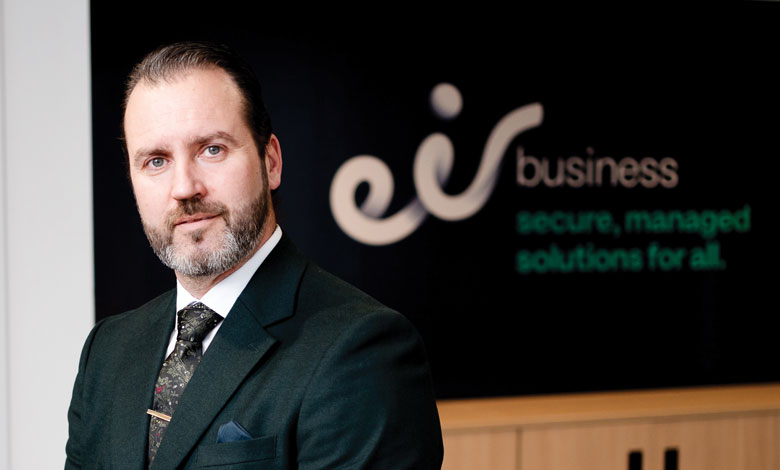
“That evolution has ramped up in the last 12 months. The threat landscape in 2024 and 2025 was completely different to what we have seen in 2026 and what we project for 2027. Advancements in artificial intelligence being used by threat actors has partially contributed to this increase, and we have actually seen more CVEs in 2026 so far than we recorded in the entirety of 2024 and 2025 combined.
“Threat actors do not respect borders, so our response cannot operate in isolation. Through our all-island approach, eir business can combine our expertise in Northern Ireland with intelligence and experience from across our wider teams. By applying what we are seeing globally, we help local organisations anticipate emerging threats, strengthen their defences, and embed cyber resilience across their operations.”
Risk management
Expanding on eir business’s proactive risk management model of cybersecurity, Griffin explains that given Northern Ireland’s expansive public sector, there is a need for organisations to embed zero-trust security by design. He elaborates that this is something “our business has built and instilled in our Northern Ireland practice since day one”.
“Our priority is to give public sector organisations in Northern Ireland the confidence to make informed security decisions and the resilience to respond effectively when challenges arise. By providing the right insight, expertise, and support, we help our clients manage risk proactively and strengthen their overall cyber resilience.”
Interestingly, while narratives around cyber risk evolve based on high-profile events linked to geopolitical actors, Griffin explains that the key to success from a cybersecurity perspective is constant learning and evolution.
“Rather than focusing on who is behind a threat, we concentrate on understanding the risk, limiting its impact, and strengthening resilience. As cybersecurity professionals, our responsibility is to help clients protect their organisations, their people, and their customers with confidence.
All-island operation
Part of Dublin-headquartered telecommunications company eir, eir business will celebrate 30 years in Northern Ireland next year. The milestone comes as the company continues to grow its local presence and expand its cybersecurity capabilities in response to increasing customer demand.
Griffin believes that an all-island footprint can offer Northern Ireland organisations a key place in what has expanded into a global operation.
“Our operation in Northern Ireland is a fully integrated part of eir business’s security’s practice and this provides global benefits to all of our clients. The intelligence that we bring affects Northern Ireland and this in turn helps our base in the Republic.
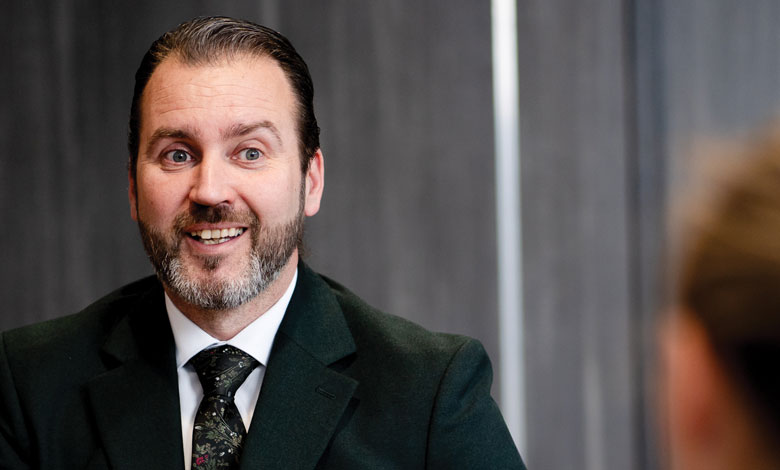
“The threat intelligence teams and the teams built out of the continued investment in Northern Ireland also support our operation in the Republic because the information and intelligence are shared and enables our whole service north and south.
“Our all-island approach is one team, one outcome, and the outcome is about delivering secure, managed solutions for all. We have a very consistent security practice which allows us to deliver services across this island, as well as internationally and across the rest of the UK as well. Our team is able to produce solutions which manage risks for the entire island.”
Northern Ireland continues to operate de facto within the same cybersecurity regulatory framework as the Republic and the rest of the EU. Being an international organisation, eir business possesses expertise in navigating complex and often highly divergent regulatory landscapes.
Griffin says: “Our teams have expertise working across this island, as well as the rest of the UK and Europe, and with navigating American legislation. Our team is well-experienced and well-versed in relation to understanding the nuances and evolution of regulations globally.
“It means we can advise and support our clients to ensure they adhere to the diverse array of frameworks they may have chosen, as well as the legislation by which they are mandated. With this background, we can align services where possible and tailor each individual client’s needs to meet their respective requirements.”
Security and resilience
At the core of Griffin’s philosophy on cybersecurity is the belief that security increasingly needs to be considered alongside the network, connectivity, and managed services that organisations rely on. eir business encourages its clients to take on a joined-up approach to security and resilience.
Griffin explains: “Having network connectivity and security together is a huge enabler for us to deliver confidence. Having them separated means that while you can deliver secure network solutions, you are leaving demarcation untapped.
“Customers believe in what we do because we have the capabilities to not only deliver the network, but also deliver the security services to mitigate the risk right across that network.”
He explains the importance of this being eir business’s clients leveraging network connectivity to connect Cloud applications to other geographical locations and offices.
“That is where we are building the confidence to say we have secure connectivity which is actively managed and administered in line with all compliance standards and GRC. What makes us unique is that we are able to give organisations resilience not only on the network, but also from a security point of view,” Griffin says.
Growing in Belfast
eir business has strong ambitions to develop local cyber expertise and specialist skills, as well as the capacity and accreditations available to customers today. From this foundation, the company aims to grow that expertise in Belfast.
Griffin says that, based on discussions with local academic institutions, there is a clear pipeline of potential for the expertise base to be expanded. “It is about where we can best leverage the strong investments which have been made in the education system in Northern Ireland to bring in the right talent to be able to develop services and capability across this island,” he says.
“These strong investments have been good for us and allow us to be confident in ensuring dedicated, long-term investment into Northern Ireland with all the benefits that arise from that.”
Concluding, Griffin says: “Northern Ireland has all the ingredients to play an even greater role in the future of cybersecurity: talented people, strong educational institutions, and organisations that recognise the importance of investing in resilience. eir business intends to be part of that future by expanding our local capability and continuing to invest in the region.
“Next year, we will mark 30 years in Northern Ireland. That milestone is not only an opportunity to reflect on what our team has achieved; it is a platform for our next phase of growth. There is a significant opportunity ahead, and we are ready to realise it.”
|
About: Pádraigh Griffin
His work spans threat intelligence, risk, security operations, incident response, governance, and compliance. Griffin is committed to strengthening cybersecurity capability in Northern Ireland and developing local talent. He holds a master’s degrees in business, cybersecurity, and cloud computing, is pursuing a doctorate in engineering at UL, and lectures in cybersecurity and GRC. |