The Belfast City Airport Master Plan

Matthew Hall, Chief Executive of Belfast City Airport, talks to Joshua Murray about the airport’s Master Plan 2040, which outlines how it will need to grow over the next 14 years to meet demand for travel, underpinned by major investment in infrastructure that will drive growth in the Northern Ireland economy.
Belfast City Airport currently serves around 2.5 million passengers a year, with that figure forecast to reach seven million by 2040 as demand for air travel to and from the island of Ireland grows.
Around 45 million air journeys are currently made to and from the island each year, according to analysis commissioned for the airport, with the total expected to double over the next 14 years. Northern Ireland accounts for around 11 million of those journeys today, a figure also forecast to double.
For Hall, that projected growth is central to the case for expansion.
“We are relatively unique from a UK perspective because there is no obvious road or rail alternative for people to get back and forth to Great Britain. There is going to be a significant increase in the need for capacity, not just at Belfast City Airport, but at all airports on the island of Ireland by 2040.”
The Master Plan therefore sets out how Belfast City Airport intends to grow to meet that increased demand while retaining its existing role as a convenient gateway to Great Britain and Europe.
The increase in passenger numbers will not simply mean more flights to existing destinations. Hall expects the airport’s core market to remain travel between Northern Ireland and Great Britain, but says European routes will become increasingly important.
“Today, of the air journeys that are to and from Northern Ireland, 70 per cent are to and from Great Britain,” he says. “That is the core demand, and that demand will remain quite similar by 2040.”
However, he adds that the fastest-growing part of the market is expected to be European point-to-point travel, including destinations in the Eastern Mediterranean and greater choice for summer tourism.
Investment in infrastructure
Accommodating that growth will require significant changes to the airport itself.
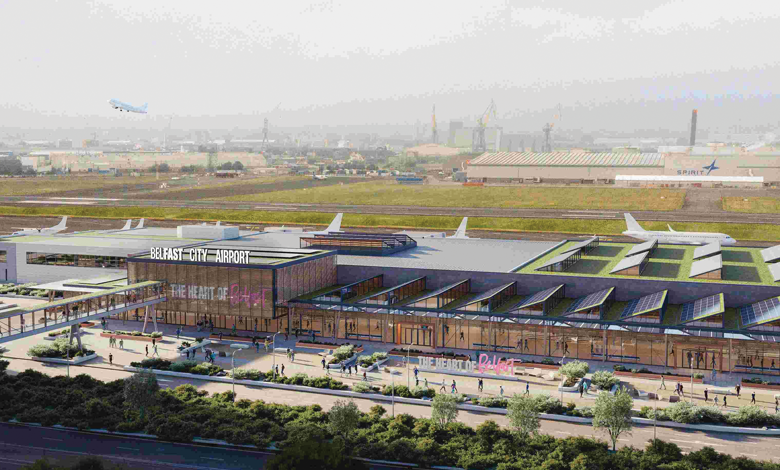
Belfast City Airport recently submitted Proposal of Application Notices (PANs) to Belfast City Council and Ards and North Down Borough Council, setting out the next step in delivering its vision for 2040 and signalling the start of a formal consultation process to inform future planning applications.
The airport says this plan would potentially unlock up to £200 million in private investment over the next 14 years.
The PAN submissions outline draft infrastructure proposals that include extended passenger facilities and new airfield infrastructure, improved access, a new multimodal forecourt, additional parking, and complementary airport uses, including a hotel. There would also be more space for lounges, retail, food and beverage, seating, and other facilities.
One of the most significant suggestions, however, sits outside the airport’s perimeter.
The proposals safeguard the opportunity to deliver a pedestrian link to a future rail halt directly serving the airport, ensuring Belfast City Airport and Translink can continue to work in partnership to explore the opportunity, building on their recently signed Memorandum of Understanding.
Hall describes the opportunity as potentially transformational: “We have worked with Translink to jointly, through a unique public-private partnership, look at the feasibility of putting a station opposite the newly developed terminal building,” he says. “That will allow us to help people get to and from the airport, making Belfast City Airport the first airport on the island of Ireland to be directly connected by rail.”
The Master Plan envisages the rail connection as part of a wider shift towards sustainable surface access, alongside improved bus provision and a multimodal transport hub. The airport says the proportion of passengers arriving by private car should fall as public transport usage increases.
The expansion does not require an extension to the existing runway.
“We do not need to extend runway length,” Hall says. Instead, the airport expects advances in aircraft technology to allow it to serve longer-range destinations while also accommodating a greater proportion of quieter, cleaner, and higher-capacity aircraft.
“This means we can serve more passengers in a responsible and sustainable way, while staying within our existing air noise contour limit,” he says.
Alongside consultation on the planning applications, the airport will also undertake a voluntary public consultation on proposed changes to its current Planning Agreement, providing the community with an opportunity to comment on the full package of draft proposals.
Economic benefits
The airport considers that the proposed growth could deliver a substantial economic dividend. It currently estimates that Belfast City Airport generates approximately £800 million in gross value added for the Northern Ireland economy and supports around 12,000 jobs. By 2040, those figures are projected to rise to £1.7 billion and 23,000 jobs respectively, while direct employment at the airport would more than double.
Hall also sees connectivity as an important component of Northern Ireland’s ability to attract foreign direct investment.
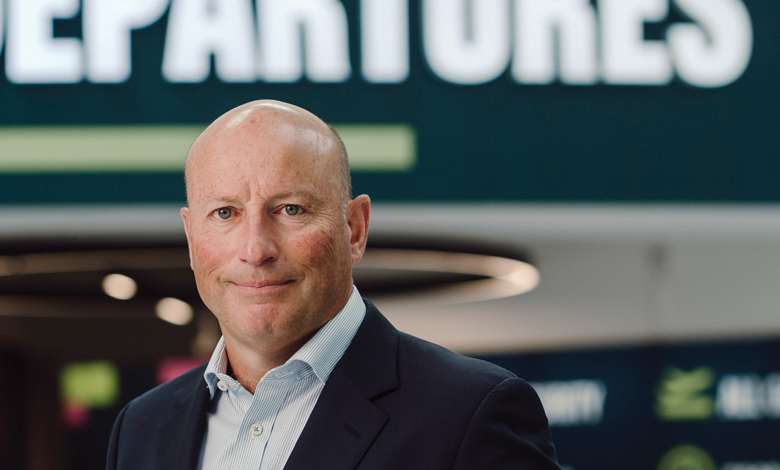
“There is going to be a significant increased need for capacity, not just by this airport, but by all airports on the island of Ireland by 2040.”
“Any business that is attracted to invest in Northern Ireland needs to have confidence that they have the ability to scale over time,” he says. “Without increased frequency and capacity to the existing destinations that we serve, as well as the ability to unlock new destinations, business development will be stalled.”
For Hall, the airport’s role goes beyond simply moving passengers. A high-quality transport gateway can form part of the wider proposition presented to investors and visitors.
“If you are a potential investor in Northern Ireland, you need to have confidence in the transport links,” he says. “We are an island, so having best-in-class connectivity is really important both in terms of air links and good public transport.”
Environmental objectives
Environmental considerations are also central to the airport’s argument for growth. Hall says the airport has already reduced its carbon footprint and states that the Master Plan could accelerate its net zero ambitions.
He asserts that the combination of greater public transport use, cleaner, quieter, new generation aircraft, and more efficient infrastructure, means the airport could accelerate its net zero ambitions by up to 10 years.
“There is a real opportunity to transform how people travel to and from the airport, with more people using public transport and fewer people coming by car.”
Ultimately, Hall sees the proposal as a privately funded investment in a piece of infrastructure that he believes is fundamental to Northern Ireland’s wider economic ambitions. The airport says the potential £200 million investment would require no public funding, while supporting the Executive’s objectives around economic growth, employment, climate, and connectivity.
For an airport that was handling just 13 per cent of its pre-pandemic passenger numbers when Hall became chief executive in August 2021, the proposed expansion represents a striking change in fortunes.
On the transformation going forward and the exciting potential that Northern Ireland presents, Hall concludes: “I think one should be really glass half full in terms of the opportunity.”
| Matthew Hall has more than 35 years’ experience across the aviation, travel, technology, and leisure sectors. He began his career in the airline industry, spending 11 years with American Airlines, before moving into airport management and serving as Chief Commercial Officer at London City Airport. He has also held senior roles in aviation technology and distribution, including as a Vice President at Travelport, as well as a period with David Lloyd Leisure. Hall joined Belfast City Airport as Chief Executive in August 2021, taking over during the Covid-19 recovery period. He became responsible for leading the airport’s recovery before turning his attention towards longer-term growth and the development of its Master Plan 2040. |
More information about Belfast City Airport’s Master Plan 2040 can be
found at:
W: www.belfastcityairport.com/vision