Leading Northern Ireland’s digital future

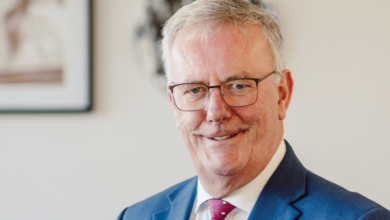
Colin Hutchinson, Group Managing Director and Chief Financial Officer of Fibrus, speaks to Joshua Murray about the rollout of Project Gigabit, enabling rural connectivity, and his ambitions for Fibrus in the short, medium, and long term.
The telecommunications provider Fibrus has become a central player in Northern Ireland’s digital infrastructure landscape, building full-fibre network access across some of the most remote parts of the region.
The pace of expansion has been notable and, according to Hutchinson, growth has been built on a combination of disciplined network delivery, a focus on rural connectivity, and an ability to convert infrastructure investment into real customer adoption.
“What Fibrus does is founded on building networks and building them on time and on budget. Often that is in quite challenging rural locations. The foundation for our growth has been delivering those builds successfully and then connecting customers to the network once it is there.”
That second element is converting infrastructure into active users, and this is where Hutchinson believes the company has distinguished itself from competitors. Over the past year, Fibrus reached a key milestone, with around 30 per cent of homes within its network footprint now connected to its service.
“What Fibrus does is founded on building networks and building them on time and on budget.”
Hutchinson explains: “This means that 30 per cent of the homes we have built are now connected and actively using the service. When you consider that in many of those areas people can choose more established providers, we are competing against very big brands and we are winning.”
This figure signals both customer trust and the effectiveness of the company’s broader strategy. “We are now looking ahead to 35 and 40 per cent penetration and that is how you really drive growth in this sector,” Hutchinson says.
Project Stratum
Central to Fibrus’ progress has been its role in delivering Project Stratum, the Executive’s major broadband infrastructure programme designed to bring gigabit-capable connectivity to areas with the poorest existing services.
Completed in June 2025, the project represented one of the largest infrastructure initiatives undertaken in Northern Ireland in recent years.
“For us, completing Project Stratum was a defining moment. It was a huge infrastructure project and we are incredibly proud that we delivered it on time and on budget.”
The objective of the project was to reach homes and businesses in rural communities where broadband speeds were previously limited by ageing copper networks or where connectivity had lagged far behind urban areas.
“The focus was on areas that had the poorest broadband speeds. People often had access to copper, but it was poor-quality copper and the experience simply was not good enough.”
By replacing these legacy connections with full-fibre infrastructure, the programme has fundamentally changed digital connectivity across large parts of rural Northern Ireland.
“The goal was to give people access to gigabit-capable broadband services. That is essential infrastructure now. It supports how people work, how they run businesses and how they live their lives.”
Independent analysis suggests the impact has already been substantial. Hutchinson points to economic research indicating that the project could generate more than £400 million in economic benefit, including around £50 million annually for the economy.
However, the transformation is not solely economic. “It goes deeper than the numbers. Access to fibre broadband is now essential for everyday life. It enables people to work from home, supports education and entertainment, and underpins how households operate.”
Bridging the rural divide
From the beginning, Fibrus structured its business model around reaching communities that had historically been underserved by telecommunications investment.

Initially focusing on smaller towns, the company subsequently expanded further into rural areas following the awarding of the Project Stratum contract. That approach has had a significant social dimension.
“Having the same broadband speeds available in rural Fermanagh as you would have in Belfast or London really helps bridge that divide. Businesses can operate from rural locations just as effectively, and people can do exactly the same things from home.”
For policymakers concerned about regional imbalance, the implications are significant. Reliable high-speed connectivity reduces the disadvantage faced by rural communities and creates new opportunities for economic activity beyond major urban centres.
“It really breaks down the barriers that one region might otherwise have compared with another,” Hutchinson adds.
Beyond Northern Ireland
While Northern Ireland remains central to Fibrus’ identity, the company’s expertise in rural network construction is also utilised further afield. Over the past year, Fibrus has also reached key milestones under the UK Government’s Project Gigabit programme in Cumbria.
Although geographically very different from Northern Ireland, the region presents its own set of challenges.
“Rural Northern Ireland can be difficult to build in, but in Cumbria you are dealing with national parks and additional planning restrictions, so the environment can be even more complex.”
Despite these obstacles, Fibrus has successfully met its contractual build targets, something which Hutchinson asserts has proven difficult for several other operators across the UK.
“A lot of peers who have won these contracts have struggled to hit their milestones. Some have had to hand them back,” he says. “The expertise developed through Project Stratum, and particularly the experience of our build partner Viberoptix, has been crucial in allowing us to deliver.”
That operational knowledge, built through years of deploying infrastructure in remote and technically demanding landscapes, is now a competitive advantage.

Serving customers
Hutchinson emphasises that long-term growth depends on both customer experience and infrastructure development.
“Fibrus has invested heavily in customer support, including its service centre in Belfast. We have spent a lot of time and effort improving the customer experience,” he says.
“It matters to people that if they have an issue, they can speak to someone locally who understands the service and can resolve the problem.”
That local presence has proven particularly valuable in communities where Fibrus is introducing full-fibre broadband for the first time. “It creates confidence because people know they are dealing with a company that is rooted here and invested in the region.”
Combined with competitive pricing and the reliability of fibre connectivity, the strategy has supported strong customer uptake across the network footprint.
Sustaining growth
Hutchinson believes the fundamentals of Fibrus’ strategy will remain consistent. These are to build high-quality infrastructure, connect more customers, and invest in the people who make the business work.
“The basics are delivering the network, making sure it is reliable, and driving customer penetration but a lot of it is about the people who make that happen.”
Fibrus’ founders placed significant emphasis on assembling the right expertise from the outset. That focus on talent has continued as the company scales. “Having the right people in the organisation has always been central to how the company grows.”
As digital connectivity becomes ever more critical to economic life, the role of infrastructure providers like Fibrus is likely to become even more significant. Hutchinson says that the company’s mission remains closely tied to the communities it serves.
“Connectivity is only going to become more important as we rely more on digital technology. If we can ensure that rural communities have the same access and opportunities as anywhere else, that is a hugely positive outcome for Northern Ireland,” he concludes.
Colin Hutchinson
Colin Hutchinson is chief financial officer and group managing director at Fibrus, the full-fibre broadband  provider headquartered in Northern Ireland. He oversees the company’s financial strategy and operational delivery as it expands gigabit-capable broadband across rural and regional communities. Hutchinson has extensive experience in corporate finance and infrastructure-led businesses and has played a central role in Fibrus’ rapid growth, including the successful delivery of Project Stratum.