Barriers to renewable energy
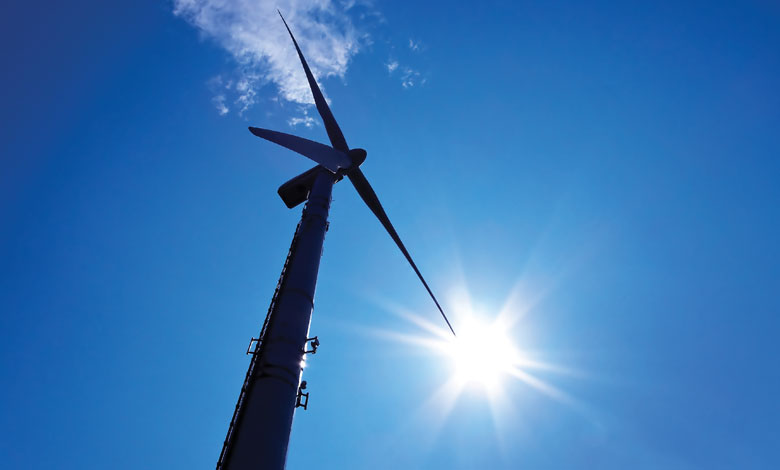
Planning delays, grid connectivity, and flexibility are the key barriers to renewable energy development in Northern Ireland, according to a report from the Committee for the Economy.
Renewable Electricity: progress, barriers and policy in the United Kingdom and the European Union, published in September 2025, says that Northern Ireland’s 27 per cent difference between its target of 80 per cent for renewable energy usage and current usage ranks it 11th out of the 19 countries examined.
However, most countries that rank above Northern Ireland in this metric have less ambitious targets.
Planning delays are recognised as a key barrier to renewable energy development, with knowledge gaps across departments, the length of time taken for decisions, and lack of resources in planning departments highlighted as core issues.
The average processing time for renewable energy applications in 2024/25 across Northern Ireland was 45.6 weeks, according to the Department for Infrastructure.
Grid connectivity
Common complaints regarding grid connectivity from relevant stakeholders include the length of time it takes to first receive an offer and then connect to the grid, and that the first come, first served approach to the connection queue was flawed.
This contrasts with the Republic, where the 25 renewable projects with the potential to deliver the most energy annually are prioritised on the grid connection list.
Another challenge for Northern Ireland related to the electricity grid is flexibility.
The key flexibility challenge is known as ‘dispatch down’, which refers to situations where system operators are required to reduce the output of renewable generation below its maximum level to effectively manage the grid.
Northern Ireland has consistently had a higher dispatch down rate for wind than the Republic since 2016.
In 2024, the System Operator for Northern Ireland (SONI) said the high level is due to a range of factors, including demand, the amount of wind and solar installed on the system, and the capacity factor of renewable generation.
To address Northern Ireland’s grid connectivity challenge, the Department for the Economy conducted a consultation on a Smart Systems Flexibility Plan in April 2024, but the plan itself has not yet been published.
The report highlights policies being considered in Britain which could be implemented in Northern Ireland to address grid-related challenges.
These include offering reduced-cost electricity to new sources of demand to locate locations of constraint, as well as ‘transfer boosters’ which use battery storage to import energy during times of high wind and export it during times of low wind.
The report concludes that while Northern Ireland’s distance to its renewable energy target is not insurmountable and it is facing similar barriers as Britain and many EU member states, there is more that can be done to increase the use of renewable energy.