Greener, safer, and more connected
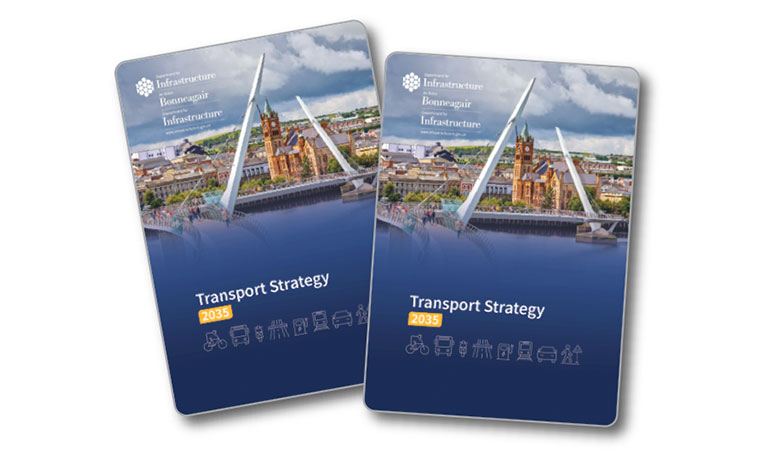
Northern Ireland’s transport system must undergo a significant shift over the next decade, with decarbonisation, better public transport, more inclusive communities, and stronger economic connections at the centre of the Department for Infrastructure’s newly-published Transport Strategy 2035.
Described by the Department for Infrastructure (DfI) as a “clear framework for developing a transport system that supports sustainable economic growth, strengthens regional balance, and improves connectivity for people and communities across Northern Ireland”, the strategy establishes four priorities which will guide future transport policy, investment, and planning:
- creating a resilient and sustainable network;
- supporting connected and inclusive communities;
- improving safety and health; and
- using transport to support green growth.
Published in October 2026, the strategy’s stated ambition is to provide a sustainable, safe, accessible, and effective transport system which meets the region’s climate change requirements, serves urban and rural communities, and supports economic growth.
Resilient and sustainable
Transport is Northern Ireland’s second largest greenhouse gas-emitting sector after agriculture. The strategy acknowledges that emissions have remained broadly above 1990 levels for the past three decades, with efficiency improvements in vehicles and fuels offset by increasing vehicle numbers and longer journeys.
The Department says achieving the legally binding net zero target by 2050 will require a substantial change in how people and goods move. Its approach is based on three broad areas:
- switching fuels,
- shifting modes; and
- reducing journeys.
The transition to electric vehicles and other low-emission technologies will be important, alongside greater use of public transport, walking, and cycling. However, the strategy recognises that the pace of change will differ between urban and rural areas.
A further commitment is to integrate transport and land-use planning. DfI intends to use a “vision and validate” approach, identifying the transport outcomes desired for an area and then assessing how proposed plans and investment can deliver them.
This represents a shift towards considering the wider impact of transport decisions, rather than simply responding to projected traffic growth. The strategy also highlights travel demand management, parking policy, and the reallocation of road space as potential tools for encouraging more sustainable choices.
Resilience is another key element, with existing and new infrastructure expected to be designed, delivered, and maintained with the impacts of climate change in mind.
Connected and inclusive communities
On accessibility, the strategy says that features such as narrow footways, missing dropped kerbs, inaccessible crossings, and limited step-free access can make everyday journeys difficult for disabled people and others.
It intends to make accessibility a condition of public investment, while working with Translink and other partners to improve vehicles, stations, and stops. The strategy also commits to developing an inclusive transport strategy, focused particularly on older people and deaf and disabled people.
Better integration between different forms of transport is another priority. Park and ride, park and share facilities, and travel hubs are identified as ways to make journeys more convenient and encourage greater use of public transport.
The strategy also places considerable emphasis on active travel. Investment in walking and cycling infrastructure, alongside improved maintenance, is intended to make these options safer and more attractive.
Public transport remains essential to the vision, with commitments covering bus and coach services, the rail network, community transport, and taxis. The Department also recognises the importance of maintaining the road network, particularly for communities and businesses that rely on it.
Safe and healthy
Building on Road Safety Strategy to 2030, which is based on safer people, safer roads, and safer vehicles, the strategy outlined that fatal road accidents should no longer occur on Northern Ireland’s roads by 2050. It also identifies safer journeys to school as an important area for intervention, including measures to protect children around school buses and bus stops.
More 20mph speed limits are planned in appropriate locations, taking account of road safety, the character of an area, and the promotion of active travel.
The strategy also recognises the impact of violence and harassment against women and girls on their ability to travel safely and independently.
Healthier places will also be supported through aimed improvements to air quality and efforts to reduce transport-related noise.
Supporting green growth
Emphasising that efficient and reliable connections between towns, cities, ports, and airports are vital for businesses, trade, and investment, the strategy highlights the importance of the Regional Strategic Transport Network in supporting freight movements and improving access to international markets.
Almost all freight in Northern Ireland currently moves by road, and the Department recognises that this is unlikely to change significantly during the strategy period. Maintaining and improving the road network will therefore remain important, while opportunities for rail freight will be explored through future feasibility studies.
The strategy also considers how some deliveries can be made more efficient, including through better loading facilities, freight consolidation, and cycle freight.
In terms of innovation, intelligent transport systems, connected and autonomous vehicles, and drones are identified as areas with potential to improve how the network operates.
The transition to zero and low-emission fuels, including greater electric vehicle uptake and the decarbonisation of public sector fleets and rail, will also support the development of a green economy.
Delivery
While the strategy sets the direction for future decisions, its impact will depend on implementation, funding, and the development of more detailed transport plans.
The Department says evidence, data, and ongoing monitoring will be used to assess progress and identify where further action is required.
Infrastructure Minister Liz Kimmins MLA says: “The strategy establishes a comprehensive vision that is both actionable and adaptable. It addresses the needs of both urban and rural areas, supports cleaner and greener travel choices, and underpins my commitment to improving regional balance and accessibility.”