Education crisis: Can integrated education be part of the solution?
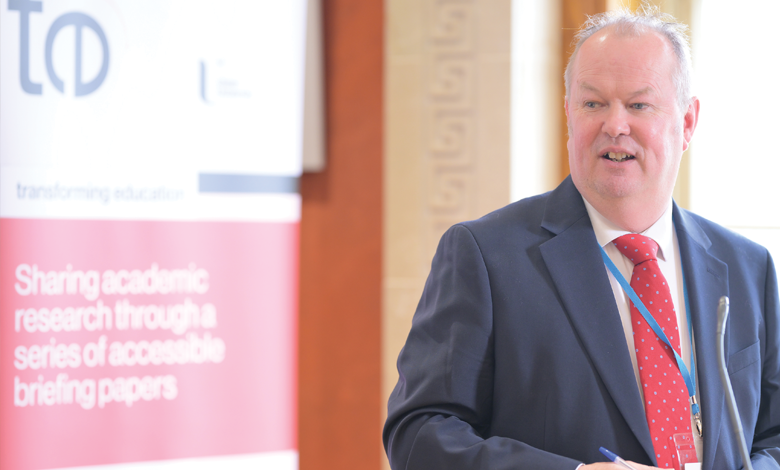
Paul Caskey, Chief Executive of the Integrated Education Fund, asks whether integrated education can be part of the solution for the current education crisis.
Northern Ireland has a choice to make, it can rationalise the schools’ estate within the existing school sectors, or it can seize an opportunity to do things differently. The question is whether we will maintain the status quo or embrace an opportunity to build a more shared future for generations to come.
No one can deny education in Northern Ireland is in a financial crisis after years of chronic underfunding, but it is also true that the warning signs have been visible for decades.
Almost 20 years ago, the Independent Strategic Review of Education, led by George Bain, recommended action to address the overprovision of schools at a time when birth rates were falling. A 2023 Independent Review chaired by Keir Bloomer also emphasised the need for change, recommending the reconfiguration of up to 177 schools on jointly managed community basis and the creation of an independent area planning commission. The review stated that changes should be made on a ‘sector-blind’ basis and could generate annual savings of around £100 million for reinvestment.
Ulster University’s ‘Transforming Education’ project estimates that the total additional cost of maintaining a divided education system is up to £150 million each year. It highlights the duplication of services, with schools delivering the same curriculum by teachers with identical qualifications, but to different groups of children.
Nearly 30 years after the Belfast/Good Friday Agreement, we still largely educate children separately according to perceived religious and cultural identity. Whilst all schools are legally ‘open to all’, the reality is less than 2 per cent of children attending Catholic-maintained schools identify as Protestant and less than 8 per cent of those pupils attending controlled schools identify as Catholic.
The IEF would contend more Integrated schools, together with other innovative cross sectoral solutions, could potentially bring significant financial and social benefits over time.
This why the IEF supports Ulster University’s ‘Future Schools Project,’ with primary and post-primary toolkits, which empowers communities to explore sustainable solutions and models of provision that best serve their children and young people. The IEF is not saying every solution must result in an integrated school, but where communities want integration, one high-quality integrated school serving all children can offer a sustainable long term option.
Northern Ireland is becoming increasingly diverse, with more people identifying as ‘other,’ outside the traditional Protestant/Catholic binary. Integrated education promotes an ethos of respect for all cultural and religious backgrounds, including those with no faith. Children learn with, from, and beside those from different cultures every day, helping to prepare them for life after school in the Northern Ireland of today and tomorrow.
Integrated schools also bring together children with different abilities, socio-economic backgrounds and they are co-educational. Such fully inclusive schools offer the best chance to be truly open to all. They are schools for all the family.
Integrated education is not a panacea, but it has a positive role to play. At a time when schools cannot balance the books; we urgently need action and solutions. We cannot afford to keep doing what we have been doing for another 20 years.
T: 028 9069 4099
W: ief.org.uk