Nationalism surges throughout Britain amid government crisis
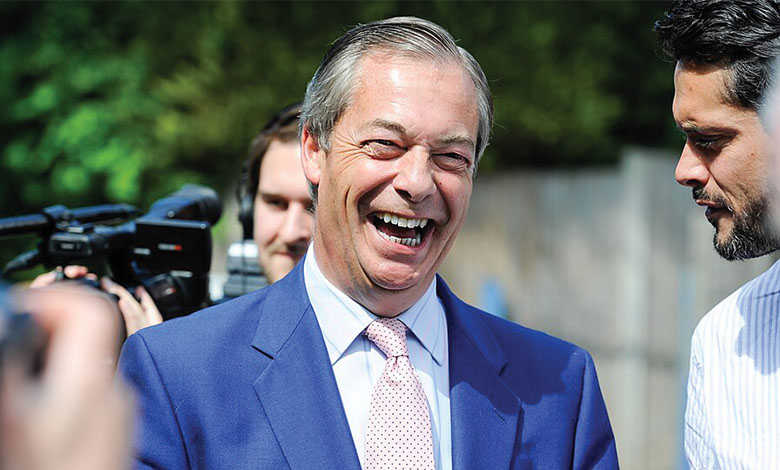
In May 2026, elections took place throughout Britain, with nationalist governments being elected in both Scotland and Wales, while the Labour Party lost more than 1,000 seats at local government and Nigel Farage continues his crusade towards Downing Street, writes Joshua Murray.
At the time of writing, the British Labour Party is in a leadership crisis, with the BBC reporting as of 13 May 2026 that 92 MPs have called on the Prime Minister Keir Starmer to tender his resignation. Labour Party rules stipulate that a leadership election can be triggered with the support of one-fifth (81) of its MPs around a single candidate.
On 15 May 2026, Mayor of Greater Manchester Andy Burnham announced that he would seek election to the House of Commons in the constituency of Makerfield, after sitting MP Josh Simons announced his intentions to resign the seat and endorsed Burnham as his successor. While winning this Reform-Labour marginal seat could prove a challenge for Burnham, if the Manchester Mayor is successful in winning the seat over the summer, the Prime Minister will almost certainly face a leadership challenge by the autumn.
The Labour crisis follows a second consecutive year of disastrous English local election results for the party. However, this time the council elections were confounded by the party being virtually wiped out in its traditional heartland of Wales, where Labour had topped the poll in every election since 1922.
Furthermore, Labour’s hopes of returning to power in Scotland went nowhere either, as John Swinney’s SNP secured a historic fifth term leading the Scottish Government.
Farage’s crusade
While the Prime Minister licks his wounds, Reform UK leader Nigel Farage will be licking his lips at the prospect of moving to 10 Downing Street in the coming years, with his party continuing to sweep through England and Wales, and even making a significant dent in Scotland.
Farage has cited the now defunct Canadian Reform Party as his inspiration, and is now confidently predicting that he will be the UK Prime Minister, and serve into his 70s. However, in Canada, Reform never led the government and eventually merged with the Progressive Conservative Party to form the current Conservative Party in 2003.
However, Farage’s prospects may be better as Reform has shown itself to have the ability to compete for both traditional Tory strongholds and win working class votes. For example, Reform was victorious in winning the traditionally Tory councils of Essex and Suffolk, while it was also able to wipe out Labour in its traditional heartlands of Newcastle and Sunderland.
British politics has evolved into a five-party system, with the added complication of a surge in nationalism in both Scotland and Wales, but it does not have an electoral system which reflects this. Therefore, it is entirely possible that if Reform continues to top the polls in the high 20s, this could result in Farage’s party winning a majority of seats in the House of Commons in 2029.
For Labour, the writing is on the wall for Starmer. His speech following the Labour party’s disastrous election results has triggered a tidal wave of calls for his resignation, and there is a significant chance that the popular Mayor of Greater Manchester, Andy Burnham, is poised for a return to parliament if he wins his by-election in Makerfield, which will require him to defeat Reform in a strongly Brexit-supporting constituency.
Other ‘soft left’ candidates such as former Deputy Prime Minister Angela Rayner and Energy Secretary Ed Miliband stand ready after Labour right favourite Wes Streeting resigned from the cabinet, declared he has no confidence in the Prime Minister, and announced his intention to mount a leadership challenge.
If Burnham can make it back to parliament, Labour may recover, but if Starmer stays on or if he is succeeded by one of his unpopular rivals such as Streeting or Rayner, the prospects for Labour look bleak.
‘Chwyldro Cymreig’
Scotland and Northern Ireland have long been at the focal point on discussions on separatism within the UK. Flying under the radar since 1925 has been Plaid Cymru – The Party of Wales. Plaid has long been a minority voice in Welsh politics, operating under the vast shadow of the Labour Party and its giants such as Nye Bevin and Neil Kinnock.
However, in May 2026, the people of Wales revolted at the ballot box, ousting both Labour and the Conservatives in overwhelming numbers, and electing Plaid Cymru to lead the Government, with Reform to lead the Opposition.
While Plaid has not won a majority, the scale of its victory and how upended Welsh politics has been cannot be overstated. Labour has governed Wales since devolution was introduced in 1999.
Plaid leader and First Minister Rhun ap Iorwerth purposely went out of his way to state that Plaid was not seeking a mandate for independence in this election, which reflects the state of affairs in Wales where independence is still only supported by an average of 30 per cent of the population. However, ap Iorwerth has outlined that the Plaid government will establish a commission on the future of Wales, which may outline the constitutional options for Wales.
SNP wins again
In 2024, John Swinney became the leader of the SNP at a time of crisis for the party following the resignation of Humza Yousaf and the aftermath of the fallout between Nicola Sturgeon and the late Alex Salmond. Swinney was tasked with ‘steadying the ship’ like a caretaker manager in football, and his election as SNP leader was swiftly followed by Labour’s landslide victory in the UK general election, with the SNP reduced to just nine seats, down from 48 in 2019.
Two years on, and the mood has changed. With Starmer polling as the most unpopular British Prime Minister since Ipsos started taking polls in the 1970s, the SNP has been able to rally and secure an unprecedented fifth consecutive term leading the Scottish government.
Swinney, unlike his counterparts in Wales, stated that a vote for the SNP was a mandate for independence and has outlined his ambition to secure a referendum on Scottish independence. If, as expected, the UK Government rejects this request, Swinney has mooted the prospect of a unilateral referendum being organised by the Scottish government.
While the SNP lost seats and votes compared to 2021, it has won 58 of the 129 seats in the Parliament, and the Scottish Green Party has surged to win 15 seats in the parliament and will likely support the SNP government. Crucially, the Green Party also supports independence, meaning that 57 per cent of the seats in the Scottish Parliament are held by members who support independence.
Broad analysis
These sets of elections have been nothing short of disastrous for the Labour Party and the establishment in Britain more broadly. Nationalism has surged through Reform’s radical right-wing British nationalism, as well as separatist nationalism in both Scotland and Wales.
In particular, the fact that the SNP has experienced its own leadership crisis in recent years and still comfortably won re-election demonstrates deep fractures in the United Kingdom. Plaid Cymru and Wales are at an earlier stage in the process, akin to the rise of the SNP in 2007 when Alex Salmond became First Minister under a minority government.
Reform UK’s surge reflects dissatisfaction towards Starmer, as well as continued long-term anger towards the Conservative Party and neoliberal politics more broadly. However, although Reform has strong numbers in Wales and has made gains in the Scottish Parliament, Nigel Farage is still broadly received as a toxic figure in both these countries, and his relationship with Northern Ireland unionists has been complicated.
Therefore, if Reform continues to surge and the Labour Party does not recover, it is possible that the first bricks have been loosened in the wall of the United Kingdom, and that nationalism in the four nations and regions may put an end to the UK.