Beyond the lost Census
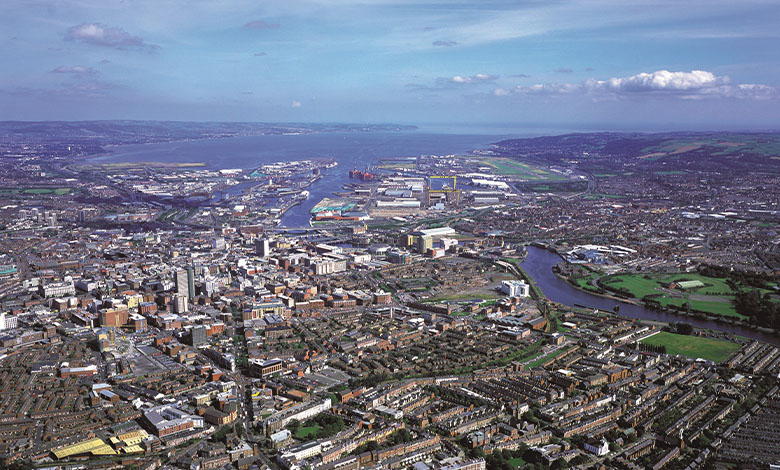
The centenary of Northern Ireland’s first census, due to the fact that the 1921 census was lost because of the Irish War of Independence, reveals how the region’s population has changed significantly in a century, becoming older and more religiously diverse.
Northern Ireland: A Century of Change in Statistics highlights the transformation in Northern Ireland’s population from its first census in 1926 to its most recent in 2021.
The 1926 Census took place across the island of Ireland five tears after the creation of Northern Ireland. The planned 1921 Census did not take place because of the Irish war of Independence.
Unlike the Republic, individual household returns for Northern Ireland from the 1926 Census are not available because they are understood to have been destroyed, possibly during the Second World War as part of a waste paper campaign.
Northern Ireland’s population grew significantly between 1926 and 2021, increasing by 51 per cent, rising from 1,256,561 in 1926, to 1,903,175 in 2021.
This growth has not been evenly distributed, as the population of Derry grew from 139,693 to 252,230, an 81 per cent increase, while Fermanagh’s population rose by just 10 per cent, from 57,984 to 63,585.
Alongside this population growth, Northern Ireland has experienced substantial demographic changes.
Northern Ireland now has a significantly older population than it did nearly a century ago.
The proportion of the population under 20 years of age decreased from 39 per cent in 1926 to 25 per cent in 2021, while the proportion of the population aged 65 and over has more than doubled, rising from 8 per cent to 17 per cent in the same period.
This represents a potential challenge for the region, as an aging population results in a lower proportion of the population in employment and higher public expenditure on pensions and healthcare.
Perhaps the most significant demographic change in Northern Ireland since 1926 has been the shift in religious attitudes.
The religious landscape has changed considerably, with the largest change happening within the ‘Protestant and other Christian’ population.
Despite the population growth that has taken place in Northern Ireland since 1926, the number of Protestants and other Christians has declined by 120,000 in 2021, dropping from 66 per cent of the population to 37 per cent.
There was almost 10 per cent more Catholics living in Northern Ireland in 2021 compared to 1926, growing from 33 per cent of the population to 42 per cent.
This means that in just under a century, Northern Ireland has shifted from a region with almost half as many Catholics as Protestants and other Christians to one with 5 per cent more Catholics.
Overall, Northern Ireland has become a far less religious place than it was a century ago.
In 2021, 17 per cent of people reported having no religious beliefs, whereas in 1926 that was virtually unheard of, as only 0.02 per cent, less than 200 people were not religious.
Northern Ireland has also become a lot more diverse since 1926, as the share of residents born outside the UK and Ireland is significantly larger than it was a century ago.
In 1926, only 0.5 per cent of the Northern Ireland population were born outside the UK and Ireland, and in 2021 that had risen to 6.5 per cent of residents.
Lifestyle changes
Comparisons of the census highlight the progress Northern Ireland has made, particularly in housing.
This improvement is shown by the 192 per cent increase in the number of homes in Northern Ireland, which is more than three times larger than the population growth of 51 per cent.
This has resulted in Northern Ireland’s current housing supply being full of homes with improved size and space compared to a century prior.
This is reflected in the substantial decrease in the number of houses with between one and three rooms, dropping from 31.7 per cent of total households in 1926 to 13.2 in 2021.
These improvements have facilitated a significant increase in living conditions across Northern Ireland. In 1926, 18 per cent of people living in households were in homes with more than two persons per room, and by contrast, in 2021, this figure has fallen to 0.2 per cent.
Employment habits also highlight a starkly different region and reflect the decline of traditional sectors and the rise of the service economy.
In 1926, manufacturing was the largest industry, containing 39 per cent of employees, followed by agriculture and fishing with 26 per cent. By 2021, these sectors had significantly shrunk to 18 per cent and 3 per cent, respectively.
In contrast, professional occupations such as teachers, engineers and dentists grew from 3 per cent of employment to 31 per cent, while commerce and finance employment also rose from 12 per cent to 20 per cent.
Philip Wales, Chief Executive of NIRSA and Registrar General for Northern Ireland, says: “This report reflects on how Northern Ireland has changes over the past 100 years. By comparing the 1926 and 2021 censuses, we can clearly see that the scale of social, economic, and demographic change, from improvements in education and housing, to shifts in how people live and work.”