TRADE UNION DESK: Levelling the field
Back in the days before surveillance of everyone and everything became ubiquitous, critics of CCTV on every corner were corrected with the maxim that “if you’ve nothing to hide, then you’ve nothing to fear”, writes John O’Farrell of the Irish Congress of trade Unions (ICTU).
CCTV prevents crime, as well as assisting investigators and juries. This is widely accepted as people accept that a shop having CCTV is not an accusation of the inherent criminality of every customer, but a means of identifying and deterring the minority tempted to purloin goods without payment.
Likewise, just because we have health and safety laws which apply to all employers, there is no implication that they are necessary in all workplaces. A clearly defined and understood law defends everyone: bosses, workers, and customers alike.
The same applies to employment law. Good employers will have nothing to worry about, apart from some competitors who will try and skip their responsibilities and undercut fellow traders. We see the consequences of this behaviour at an annual event the trade unions host in the grounds of Stormont.
Workers Memorial Day is marked around the world on or around 28 April every year as a way of remembering workers who have died, been injured, or made sick at or because of work. For decades, trade unions have championed workplace safety, campaigning for robust health and safety laws to protect workers from harm.
NIC-ICTU planted a tree in Stormont in 2011 along with the GMB trade union and dedicated it to the memory of David Leyland, a young man whose life was tragically cut short by a horrific incident while he was at work in a BIFFA landfill site.
In gathering annually at this tree, trade unionists, the Health and Safety Executive, and MLAs from all parties remember David and his family and all of those workers and families whose lives have been ended or blighted by poor safety practice at work, especially in sectors with extra levels of risk for workers, such as agriculture, construction and manufacturing.
In addition, we highlight retailers and shop workers who are calling for greater security against theft and assault, and we stand with emergency service staff and educators who receive threats and abuse while serving all of the public.
This year, we highlighted the aspects of the Good Jobs Bill which will make workplaces less dangerous, in particular trade union access. TUC research has clearly demonstrated that the presence of fully trained union health and safety reps prevents thousands of major injuries at work every year.
Union reps help to lower accident rates at work by ensuring safe working practices and reducing stress-related ill health caused by, for example, working long hours, being bullied or working in poor quality environments. The more trade union training the reps get, the more marked the ‘union safety effect’.
The same applies to other aspects of the Good Jobs Bill. If there is widespread support for updated law to facilitate safety, family time and carers leave, then for those policies to ‘bed in’ we require a trade union presence to ensure the laws are respected.
If there are fears that any union representative misbehaves, there will be an agreed Code of Practice to remedy the situation. Likewise for any bad boss who think they can avoid their duty to their staff. Good regulation works when it levels the playing field between competitors. If there is nothing to hide, there is nothing to fear.
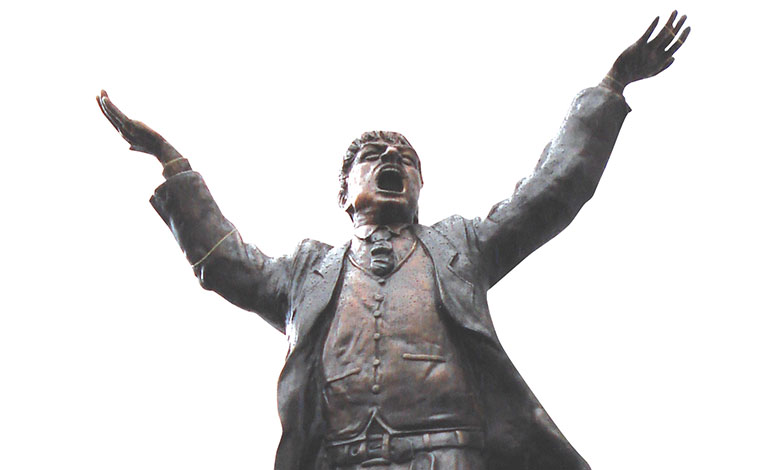
We are over a century from when death and injury were so frequent that James Connolly could observe that “our shipyards offer up a daily sacrifice of life and limb on the altar of capitalism. The clang of the ambulance bell is one of the most familiar sounds on the streets between our shipyards and our hospitals. It has been computed that some seventeen lives were lost on the Titanic before she left the Lagan…”
More recently, we have the examples of the trade unionists who were bullied and attacked for ensuring the laws passed in the late 1980s to make workplaces welcoming to Catholics. May 2026 saw the publication of a tribute to Pearse McKenna, who was shot for his efforts as a shop steward at Belfast’s Ormeau Bakery, seeking the removal of loyalist flags and emblems from the shop floor.
Subsequently, McKenna continued his work in defence of workers through his involvement with Counteract, an organisation established by trade unions to combat sectarianism and intimidation in the workplace.
The point is that for that for overt workplace sectarianism to be challenged and eradicated, we needed trade union reps to ensure the law was respected. Good reps equals good jobs.
John O’Farrell is Communications Officer at the Irish Congress of Trade Unions in Northern Ireland and long-time contributor to agendaNi.