From the priesthood to politics: A profile of Chris Bryant MP
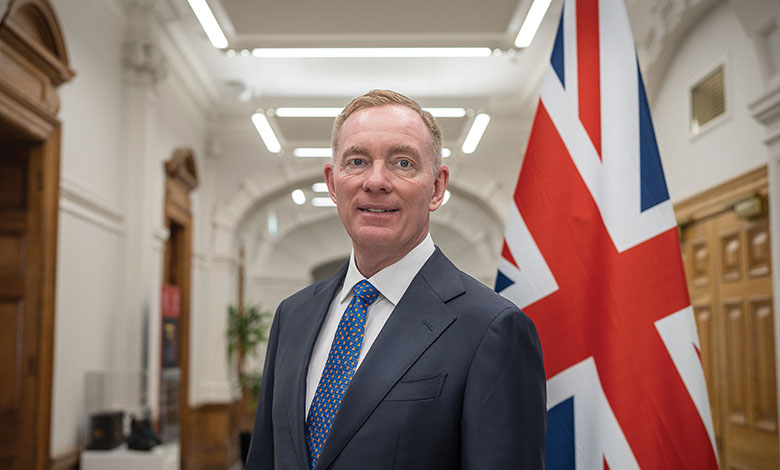
From coordinating a letter calling for Tony Blair’s resignation to battling lung cancer, Chris Bryant MP has been no stranger to confrontation of all kinds during his more than 30-year political career. Cahal McAuley profiles the Secretary of State.
Chris Bryant MP, the Secretary of State for Northern Ireland and former Anglican priest will need all his past conviction and then some as he takes on the poisoned chalice of managing the Northern Ireland Office (NIO) in the midst of a deeply divided Executive and a severe funding crisis.
Deadlock in agreeing a multi-year budget, dealing with the legacy of ‘the Troubles’, and attempting to deal with Drumcree parade standoff have all caused the Secretary of State headaches since his appointment as Hillary Benn’s successor in July 2026.
Though Benn’s removal by Prime Minister Andy Burnham came as a surprise to many due to former’s ongoing work in negotiating the budget, Bryant, a former Tory, can certainly not be accused of lacking experience.
Early life and career
Born in Cardiff in 1962 to a Scottish mother and Welsh father, Bryant grew up in his home city before studying English at Oxford.
After completing his first degree, he trained for a ministry and was ordained as a Church of England priest in 1987.
Having spent time in England and Latin America, Bryant left ordained ministry after deciding that his identity as a gay man was not compatible with life in the priesthood.
Though he has been a member of the Labour Party for four decades, Bryant was previously a member of the Conservative Party and an elected officeholder in the Oxford University Conservative Association before making the switch in 1986.
His first foray into office came with his election to Hackney Borough Council in 1993, a position he held until 1998.
A spell as Head of European Affairs at the BBC came between an unsuccessful campaign to become an MP for Wycombe in 1997 and his first General Election win in the Welsh constituency of Rhondda in 2001.
Bryant has been re-elected a further six times with his share of the vote dropping below 50 per cent on just one occasion in the safe Labour seat.
In September 2006, he helped to coordinate a letter, signed by 15 new Labour backbenchers, calling for Tony Blair to set out a timeline for his departure.
The beleaguered Blair acquiesced just days later by stating that the 2006 Labour conference would be his last as leader.
This would not be the last time Bryant moved against a party leader. He resigned from his post as Shadow Leader of the House of Commons 10 years later to apply similar pressure on Jeremy Corbyn to relinquish his leadership of the party.
“It doesn’t matter what team you support, what language you speak, what band you play in, whether you hate ABBA or love bingo or keep your toaster in the cupboard.” Chris Bryant MP at the Labour Party Conference
Climbing the party ranks
Bryant joined the front bench for the first time as Deputy Leader of the House of Commons in 2008 under Gordon Brown.
He went on to serve as Under-Secretary of State for Europe and Asia from 2009-2010 before his party’s defeat in the 2010 General Election.
Before becoming a shadow Europe minister in Ed Miliband’s opposition, Bryant made history by entering a civil partnership with his now-husband Jared Cranney in March 2010, the first ceremony of its kind to be held in the Houses of Parliament.
After further positions under Miliband as a shadow home and justice minister before resigning his Shadow Leader of the House of Commons position in opposition to Corbyn, it would be a further seven years until Bryant was back on the frontbench.
He made calls for a second Brexit referendum during his time on the backbenches and said earlier this year that he hopes to see Britain rejoin the EU in during his lifetime.
In the meantime, personal battles joined political ones. The Welshman underwent surgery for stage three melanoma in 2019 before the cancer spread to his lung.
During that year, he narrowly missed out on being elected as Speaker, falling in the final round of voting against Lindsay Hoyle.
He completed immunotherapy and said his cancer appeared to be in remission in July 2025.
Bryant returned to the front bench and later to government as a minister of state for several departments during Keir Starmer’s government.
Although he has held multiple shadow ministerial and minister of state positions, his selection as Secretary of State for Northern Ireland marks his first promotion to a Cabinet role.
Northern Ireland
At the Labour Party Conference in September 2026, Bryant made an impassioned plea to all parties in Northern Ireland, with undertones of Derry Girls diplomacy, by stating: “I say to everyone in Northern Ireland politics, work with me.
“That way we can build a stronger, more united future for Northern Ireland in which it doesn’t matter what team you support, what language you speak, what band you play in, whether you hate ABBA or love bingo or keep your toaster in the cupboard.”
These seemingly well-intentioned, though somewhat ham-fisted sentiments have not come to fruition in a tumultuous start for Bryant where he has come under fire from all sides of the political spectrum.
Stormont parties have been united in their rejection of London’s assertions that there can be no additional funding for Northern Ireland, and the Executive must find its own solutions to bridge its deficit of up to £1.6 billion.
First Minister Michelle O’Neill accused the Secretary of being “out of touch” while UUP Minister for Health Robbie Butler said Bryant “has fallen short”.
Bryant showed signs of impatience with the current back and forth of the debate on BBC Radio Ulster saying he had “made it absolutely clear about 17 times now” that there was no further funding available and that minister’s perceived overspending was “irresponsible”.
The Secretary has also drawn the anger of many unionist politicians after stepping in to ban the divisive Drumcree parade from marching on the Garvaghy Road; a step he only took after being formally asked by the PSNI chief constable following Bryant’s apparent misinterpretation of the Public Processions Act 1998.
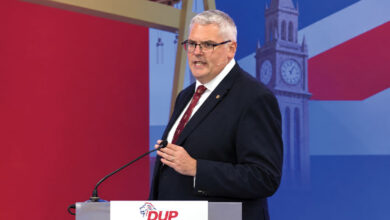
DUP leader Gavin Robinson accused Bryant of having “bent the knee” to “threats of violence and intimidation”.
Some in Robinson’s party are sure to remember Bryant’s role among LGBT+ Labour MPs in protesting the confidence and supply agreement between the DUP and Teresa May’s Conservatives over DUP opposition to same-sex marriage and abortion.
Bryant will be well aware of the long list of obstacles he faces heading into his first full year as Secretary of State, but weeks of delay in taking action on Drumcree, combative comments around the budget, and accusations of a UK Government power grab in legacy legislation have alienated all parties in Northern Ireland and raise questions on his ability to act as the steady hand needed to lead the NIO through the upcoming period of uncertainty.