Sweeping changes for Northern Ireland’s oldest newspaper
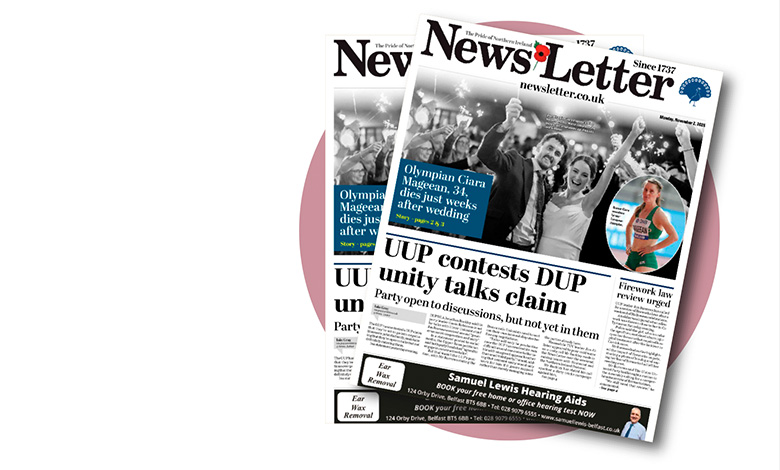
The departure of Ben Lowry as editor of the News Letter was met with shock by many in Northern Ireland and has prompted an unelected de facto loyalist leader to proclaim that the paper’s ownership is “a unionist-hating cabal”.
Founded in 1737, the News Letter has been a fixture on the northeast of this island for centuries and was already 184 years old when Northern Ireland was invented in 1921. A bastion of unionism, it has, for most of its 288 years, played a key role in upholding this island’s union with Britain, and its editors’ political viewpoints have reflected that.
The paper’s founder, Francis Joy, was grandfather of Henry Joy McCracken, one of the leaders of the 1798 United Irishmen rebellion. However, after the quashing of the rebellion, the paper evolved and became a strongly unionist publication from the early 19th century.
The News Letter has maintained this stance through Northern Ireland’s troubled history. However, over the last two decades, the paper’s readership, which was already significantly lower than both The Irish News and Belfast Telegraph, has declined further and its circulation was last recorded at 9,000 in June 2021.
As the News Letter’s circulation reporting to ABC ended in 2021, the editorship of Ben Lowry began. Lowry is a highly experienced journalist who worked as a mid-ranking reporter in the Belfast Telegraph before being made redundant in 2007. He swiftly moved to the News Letter, later becoming deputy editor before being made editor in 2021.
Lowry brought with him strong unionism, typifying the News Letter’s traditional loyalist stances. Highlights of his editorship included an attack on the GAA in 2023, saying there was “nothing integrated” about the organisation and that it was “deeply imbued in a republican culture”.
While not explicitly opposing Casement Park’s proposed use for the Euro 2028 football tournament, Lowry did say that it was “very strange that an organisation like the GAA will be hosting these main games”.
The period has been overshadowed by a troubled period for Ulster unionism with the DUP consigned to second place to Sinn Féin, the introduction of the Irish Sea border, and the Jeffrey Donaldson scandal among many big events which have served to subvert unionism.
Writing in the Belfast Telegraph in August 2026, journalist Sam McBride – a former colleague of Lowry at the News Letter – asserted that Lowry was removed suddenly from his role, and that the News Letter is now to operate without an editor.
Unionists have criticised the change and some have sought to link it to the paper’s new owners. In 2025, the News Letter was bought by Media Concierge, a London-based group led by Malcolm Denmark and owner of the Irish regional publisher Iconic Newspapers. Iconic Newspapers is the owner of 24 local newspapers throughout the island of Ireland.
Loyalist activist and convicted criminal Jamie Bryson claimed in October 2026 that ownership of the News Letter constitutes “essentially a takeover by a unionist-hating cabal, with some very questionable characters” and that it is “really serious”.
“It was the last bastion of traditional unionism. Inevitably the traditional readership will abandon it, which will likely be fatal for its survival. It was once a great institution. It’s now a platform for nationalist propaganda. Unionists should really cease engaging with it.”
Later that month, the News Letter wrote in an editorial that Bryson is “leading unionism down a ruinous dead end”.
While it does not have a new editor, the de facto replacement of Lowry appears to be Rodney Edwards, a long-time journalist at The Irish News and Belfast Telegraph, and more recently editor of The Impartial Reporter.
In his aforementioned August 2026 article, McBride wrote: “There are suggestions that the News Letter’s owner was considering accepting Irish Government funding from the Shared Island Media Fund.
“If so, Lowry’s final editorial was pointed. It lambasted the fund, claiming that the Irish Government was ‘tempting the media with money for more subtle propaganda’.”
Whether, as insinuated, the News Letter begins to move away from unionism or even towards a more liberal form of unionism, remains to be seen, as do the results from this editorial reshuffle.