Naomi Long MLA: The case for reforming Stormont
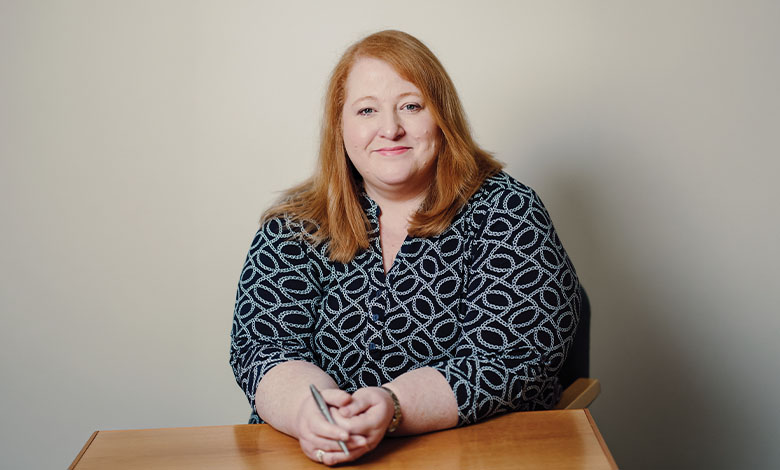
The Good Friday Agreement offered an historic opportunity to the people of Northern Ireland; one in which we would have a more peaceful and inclusive future, in which the politics of division could be replaced by the politics of cooperation and of delivery, writes Alliance Party leader Naomi Long MLA.
However, despite the undeniable transformation in our community, it is an inescapable fact that our political institutions have not kept pace with that transformation or that vision.
It is an indictment on the political system that the Assembly and Executive have been suspended for almost half of their lifetime. Even when operational, they are not fully functional; too often beset by deadlock and dysfunction rather than focused on delivery for the people who elect us.
The damage those suspensions have inflicted on our public services, our economy and, most importantly, on people right across our community, is immeasurable. They have wasted time and energy that would have been better invested in what truly matters: healing division in our society and delivering real progress for our community.
The legacy of stop-start government is evident in everyday life. We have had long periods without a Health Minister in post to address health reform, tackle waiting lists, and improve community care.
Policing numbers fell from 7,100 in the last mandate to around 6,300 at the start of this one due to political and financial uncertainty. The pollution of Lough Neagh was allowed to continue with no Executive to take action when the most serious algal blooms appeared in 2023. Local businesses and foreign direct investment faltered due to that same lack of political leadership.
More worrying still, even when the Executive is in place, the vetoes granted by the Good Friday Agreement to the two main parties have frustrated progress in areas such as reducing alcohol-related harms, the net zero transition strategy, and hate crime protections for transgender people.
Alliance first identified these potential weaknesses in 1999 and we have been proposing reform of the institutions since. It is also why the party has recently published our Democratic Renewal paper, outlining the steps needed to mature the system not only to better reflect a Northern Ireland politic comprised of many minorities, but also to incentivise and enable stability and delivery for everyone.
The paper sets out our plans to reform and renew Stormont: removing vetoes, strengthening accountability, increasing transparency, and creating institutions reflecting the society we have become and aspire to for the future rather than those limited by the divisions we inherited from our past.
Northern Ireland has never consisted of just two communities. However, increasing numbers of people refuse to be defined or constrained by their perceived backgrounds, and are demanding political institutions reflecting that change. Our institutions must evolve to reflect current reality and deliver better or we risk large sections of the public being completely alienated from them.
Many people already feel Stormont does not improve their lives as they hoped; those of us in politics to do precisely that share their frustration at times.
But Alliance recognises it does not have to be this way. Alliance’s proposals are progressive, practical, pragmatic, and represent the best opportunity to modernise our institutions, deliver on the promise of the Good Friday Agreement and, crucially, future-proof against future challenges.
A year out from the election, rather than increased focus on legislative delivery, we have seen increasing eye-poking between the two largest parties, while the lack of an agreed budget looms large over the institutions over a month into the new financial year. Alliance reforms would help insulate our fragile system from the jeopardy attached to such high-stakes party politicking.
“It is an indictment on the political system that the Assembly and Executive have been suspended for almost half of their lifetime.”
Justice Minister Naomi Long MLA
For example, we want to reform the Northern Ireland Act so if either of the two biggest parties fail to nominate or resign, the next biggest can step in; ending random politics and creating stability.
We have also proposed replacing parallel consent votes with a weighted majority system as a measure of cross-community support for key votes such as the election of the Speaker, agreeing the budget, and other key decisions.
This would end the effective veto of the two largest parties over functioning of the Assembly, but also address a significant democratic deficit, whereby the votes of those not designated as unionist or nationalist current count for less on key votes.
With 18 of 90 MLAs currently falling into this category, the current system is both discriminatory and anti-democratic. Our intention is to ultimately remove the anti-democratic system of designations entirely. It is both divisive and a barrier to genuine cross-community cooperation on issues that do not differentiate between unionist, nationalist, and other.
Alliance also wants to restrict cross-community votes at the Executive and use of the petition of concern mechanism which currently operate as an effective veto for the two largest parties, with no clear criteria to constrain how they are deployed. This impedes Executive functioning and grants greater power to the bigger parties, not only at the expense of others in government, but also good government itself.
Finally, changing the titles of First and deputy First Minister to Joint First Ministers would be an appropriate move, given the equal nature of the offices.
Taken together, and along with our other reforms on openness and transparency, we can reset our politics, improving the functioning of Stormont, and start to rebuild trust in the ability of government to deliver.
However, reform cannot be left to local parties alone. The UK and Irish governments have a duty to lead and challenge as co-guarantors of the Good Friday Agreement. Failure to do so risks condemning the institutions to death either by a thousand collapses or by a slow bleed of public confidence in their ability to deliver.
There is an opportunity to change our system for the better and make it deliver. That must surely be the ambition for everyone with an interest in stable politics here, with an interest in our people.
Together, we can seize this opportunity to transform our broken politics into something not just stable but open, accountable, and focused on delivering really improvements in people’s lives. We must not squander that chance.