Before Northern Ireland signs a 25-year cheque, look hard at the price
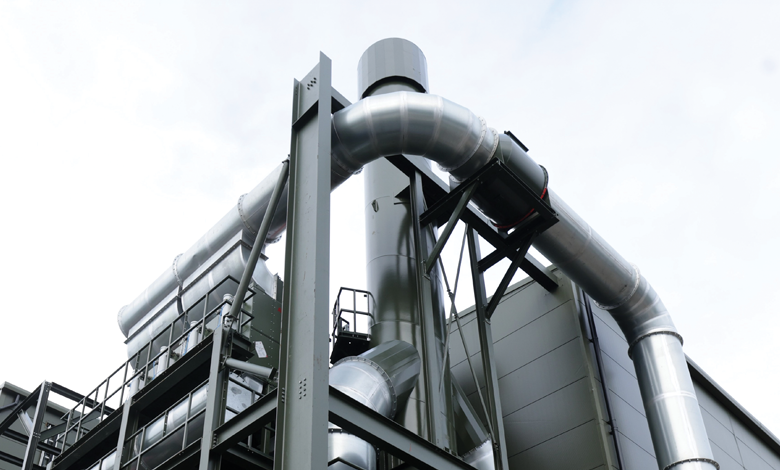
The proposed Belfast incinerator is being sold as a ready-made answer to a looming crisis. Before a single signature commits ratepayers for a generation, the numbers deserve far more scrutiny than they are getting.
Northern Ireland genuinely does need to decide how it treats the waste that cannot yet be recycled. Nobody sensible disputes that. But there is a difference between solving a problem and rushing into the most expensive, least flexible version of a solution and then locking ratepayers into it for the next quarter of a century.
This is the real choice now facing councils and the Department for Infrastructure over the large incinerator proposed for the outskirts of Belfast. The developer’s case rests on a simple, reassuring story: there is a crisis coming, here is a ready-made plant, it needs no public money up front, and all that is missing is a minister’s signature. It is a tidy story. It also does not survive contact with the figures.
A price tag from another era
Start with the number everyone repeats: £250 million. That figure was first set well over a decade ago, when the project was originally conceived. Construction costs for major infrastructure have risen enormously since then, and comparable energy-from-waste plants being built across Britain and Ireland today are costing many hundreds of millions of pounds, some far more. The idea that this plant can still be delivered for its original price belongs to the past. No council should sign a 25-year contract against a cost estimate that old without an independent, up-to-date figure on the table.
The promise that it “does not rely on initial public sector capital investment” is the most misleading part of the pitch, because the word doing the work is “initial”. The capital may be raised privately, but it is paid back, with a return, through the gate fees councils pay to use the plant year after year for decades. Those fees come from ratepayers. No upfront public capital is not the same as no public cost: it is a 25-year bill, not a free asset, and households will carry it in their rates long after the ribbon is cut.
The bill only grows from here
The cost case gets worse, not better, over the life of the plant. Carbon pricing is coming to energy-from-waste: by around the end of this decade, plants like this are expected to start paying for the fossil carbon they emit – mostly from burning plastic – for the first time. It is a charge that did not exist when this project was designed, that will rise over time, and that will be passed straight through to councils and their ratepayers. Committing now to burning hundreds of thousands of tonnes a year is committing to a carbon bill that climbs for the life of the plant.
There is a deeper problem with building something this big. A plant of this scale needs a guaranteed diet of waste to make the sums work – typically locked in through long-term contracts that oblige councils to keep supplying it, or pay anyway. That creates exactly the wrong incentive: once you have an expensive furnace to feed, the pressure is to keep feeding it, not to reduce, reuse and recycle more. A 25-year commitment to burning is a 25-year brake on doing better.
The green case is softer than it looks
The environmental argument is not as clean as the brochure suggests, either. The plant’s headline carbon “saving” is measured against landfill – but landfill is closing anyway, so that is the wrong comparison. Measured against modern energy recovery, the advantage shrinks. Unless the plant captures and uses its heat from day one, an electricity-only incinerator turns only around a quarter to a third of the energy in the waste into anything useful. The heat use that would make it genuinely efficient is described in the proposal as a future “potential,” not a firm commitment.
Putting all our eggs in one basket
There is also a resilience question that cuts against the whole “self-reliance” argument. Building one very large plant to handle the residual waste of most of Northern Ireland’s population creates a single point of failure. When a facility like that goes offline – for planned maintenance or an unplanned breakdown – the waste does not stop arriving. It still has to go somewhere, at short notice and high cost. A system built around one giant asset is more fragile, not less.
The rest of the world is stepping back
Supporters like to say Northern Ireland is an outlier because others have built these plants. That was true a decade ago. It is not the direction of travel now. Wales has stopped approving large new incinerators. Scotland has turned firmly against new capacity. Denmark is working to shrink its incineration fleet, and the Netherlands is taxing it. Even in England, the rules for new plants have been tightened. Northern Ireland would be signing up, for 25 years, to a technology that our nearest neighbours are quietly stepping away from.
There is a better path and it is not ‘do nothing’
None of this means ignoring the problem. It means being smarter than a single oversized burner – and starting from what has changed since this project was drawn up. When it was first envisaged, there was little you could do with black-bin waste but bury it or burn it. That is no longer true. Today’s sorting technology, increasingly driven by AI and robotics, already recovers far more metal, plastic and other material from the residual stream than was possible a decade ago, and it improves year on year. A plant sized to burn today’s black bin waste would well within its 25-year life be burning material that we will by then be able to recover and put back to use. You do not lock that in; you leave room for it.
Then, for what genuinely cannot be recycled, think differently about scale and where these plants go. Instead of one enormous facility, Northern Ireland could build smaller, modern plants on industrial estates, sited well away from homes, where heavy waste infrastructure belongs, and far less likely to trouble residents with traffic or odour. Smaller plants also allow something a single mega-facility never can: a staged approach. Build one, watch how waste volumes and recycling actually evolve over the next few years, and then decide whether a second or third is really needed, rather than betting a quarter of a billion pounds and 25 years on a single guess made against decade-old assumptions.
That flexibility is the whole point. The make-up of our waste is changing as producers cut packaging and more materials become recyclable, and the technology keeps moving. A modular, right-sized network of plants can adapt as that happens. One giant furnace, locked in for a generation, cannot.
These are the questions government and councils should be asking before any signature commits ratepayers for the next 25 years. What will this really cost, over its full life, once carbon charges and gate fees are counted? What happens to recycling once councils are contractually bound to keep a furnace fed? Why commit to the largest, least flexible option when smaller, staged plants could do the same job with far less risk? It is a decision timed conveniently ahead of an election really being given the scrutiny that a choice of this magnitude deserves?
The waste needs dealing with. But the people who will pay for it deserve the real numbers and the real alternatives first.