Irish unity: Where the Dáil stands
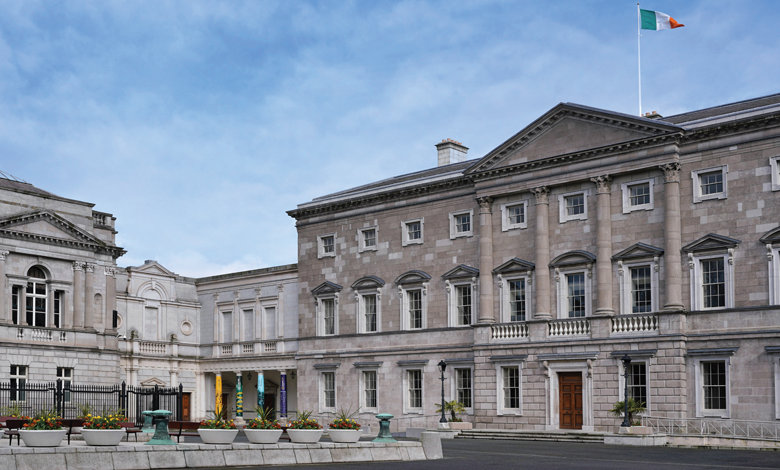
As Fine Gael prepares a blueprint on Irish unity, Sinn Féin calls for a border poll by 2030, and Fianna Fáil hides behind the Shared Island initiative, Ciaran Brennan examines where constitutional change is in the politics of the Republic of Ireland.
Fine Gael is due to publish a blueprint for Irish unity during its ard fheis in November 2026. Announcing the blueprint, Fine Gael leader and Tánaiste Simon Harris said all political parties are “duty bound to make a positive, credible contribution” to prepare for unity.
Harris, who is due to become Taoiseach in November 2027, said the blueprint is to set out what a united Ireland could mean in “practical terms, politically, economically, and societally”. It is to examine fiscal implications, public services, and potential economic opportunities including all-island infrastructure, labour mobility, and EU market access.
This places Fine Gael at the forefront of a movement it long ignored. However, it was a movement that former leader and Taoiseach and Leo Varadkar got the party behind prior to leaving office. Varadkar has also become one of the most prominent pro-unity voices in Irish politics since his resignation.
Unity was a matter that Harris did not prioritise upon becoming Taoiseach in April 2024. When discussing it in his first interview as Fine Gael leader, days before becoming Taoiseach, he said: “It’s a legitimate political aspiration for people in our country to want to see a united Ireland.
“That’s not where my focus and priority is right now and quite frankly, it’s not where I believe our focus and priority should be.”
Harris also said: “I’m also, if I’m being very honest, of a generation where people are more familiar now with London and Berlin and Paris than they might be with Belfast or Derry.
“I think we really have to challenge ourselves – how do we actually make sure people on this island and these islands get to know each other better?”
By the 2024 general election, Harris had changed his stance, with Fine Gael identifying achieving Irish unity as an objective in its manifesto. However, in January 2025, following Fine Gael’s poor showing in the election, Harris once again stated that Irish unity was not a priority for him in his new role.
The forthcoming publication of the blueprint marks another change in Harris’ stance on Irish unity. It also comes after the poor general election campaign in 2024 and an embarrassing presidential election campaign in 2025.
While Harris may have finally settled on a proactive pro-unity stance, it is equally likely that this blueprint is less about stimulating the debate on Irish unity and more about growing Fine Gael’s voter base which has decline under his leadership.
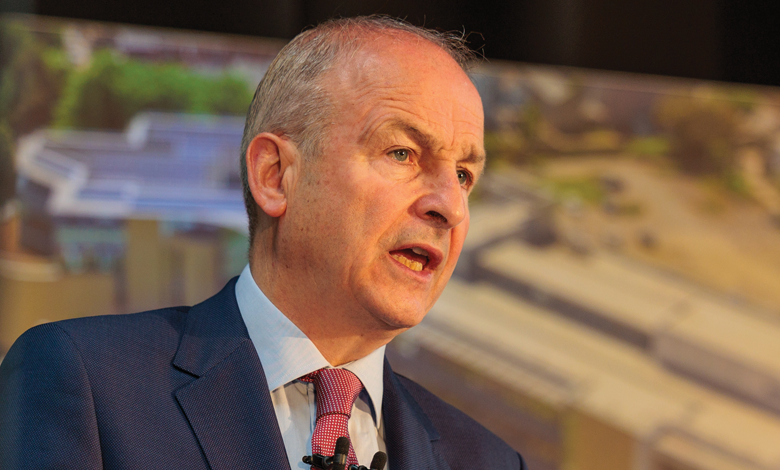
2030 border poll
Sinn Féin has identified the need to set out a clear vision setting out what a united Ireland would entail. The party has stated that this would be key to ensure a border poll would deliver a verdict in favour of Irish unity.
Despite this, the party has declined to set out its own vision for a united Ireland. Sinn Féin has also repeatedly called for a border poll by 2030 which, by its own logic, would fail without the clear vision it identifies as key to its success.
A bill introduced to Dáil Éireann by the party in July 2026 demonstrated its powerlessness. Firstly, the bill sought the publication of a Green Paper on Irish unity by the Government. Secondly it sought the establishment of a citizens’ assembly on the matter.
The citizens’ assembly was to comprise 99 citizens and one moderator. An 18-month timeline was given for publication of the Green Paper and, following its publication, 12 months was given for the establishment of the assembly.
It was voted down by 79 votes to 69, with the Government stating that the outlined timelines were unrealistic and that a citizens’ assembly was not the appropriate mechanism.
While Sinn Féin continues to call for a border poll by 2030, it is evident that the party has no power to take substantive action and has little ambition to offer alternatives the Government it criticises. Furthermore, Sinn Féin could utilise its Executive departments to prepare for unity, but appears not to do so.
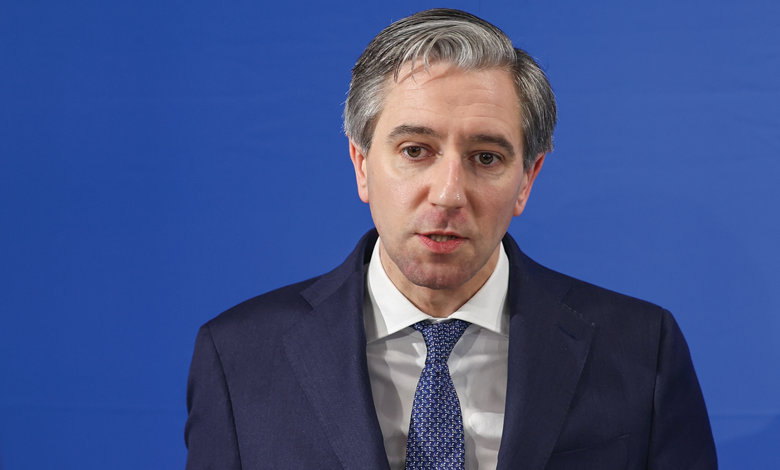
Shared Island initiative
Fianna Fáil was founded in 1926 with two stated aims: Irish unity and revival of the Irish language. Since its foundation, the party has been seen as the political vehicle for Irish unity.
This dedication to republicanism and the North is what has made it the most successful party in the Republic of Ireland. Indeed, it was these values which drew current leader and Taoiseach Micheál Martin to the party, as he revealed in a 2014 interview on The Late Late Show.
Despite this, it is difficult to definitively identify Martin’s current stance on Irish unity. In August 2026, he sparked anger from Northern Ireland nationalists when he said: “I go bananas when fellows talk to me and say, ‘What about a border poll?’.
“In the name of God, we did the Good Friday Agreement, we did the Downing Street Agreement, we are doing Shared Ireland. We are people who care about it. We are not into rhetoric.”
However, in September 2026, Martin stated that the criteria for calling a border poll is “an issue that has to be discussed”, suggesting that it is on his list of priorities. Conflicting statements such as this paired with Martin’s general reluctance to advocate for a united Ireland have placed Fianna Fáil on ambiguous ground on the Irish unity debate.
Under Martin, Fianna Fáil has become what could be perceived as either apologetically pro-unity or indifferent. The Taoiseach rarely states that the party aims to achieve Irish unity. Instead, Martin has prioritised achieving “reconciliation” throughout the island through the Shared Island initiative.
Launched in 2020, it aims to implement the practical cooperation envisaged by the Good Friday Agreement. In June 2026, funding allocated through the initiative surpassed €1 billion.
The initiative has improved relations north and south, but Martin himself has stated that it is not an instrument to achieve Irish unity. Therefore, he cannot hide behind it when questioned on what he is doing to deliver on one of the policy goals his party was founded on.