Assembly reform necessary but not sufficient
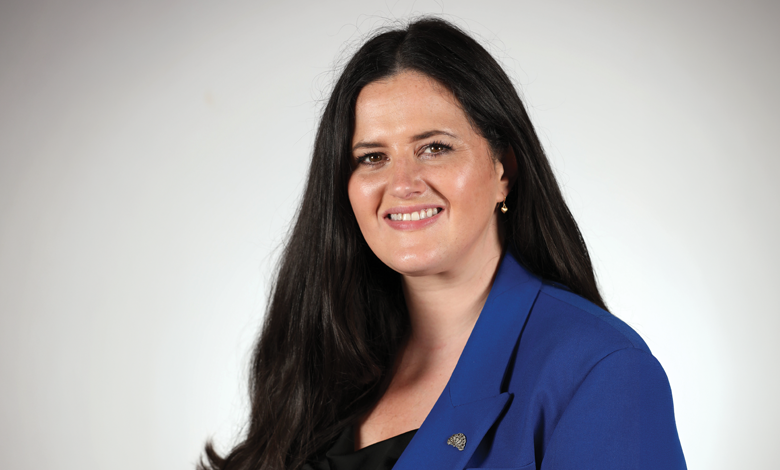
Writing in agendaNi, independent MLA Claire Sugden sets out her belief that while power-sharing across constitutional perspectives remains fundamental, compulsory coalition in its present form does not have to be.
There have been renewed calls for reform of Stormont in recent months. Executive parties have set out proposals to change how our institutions operate, largely in response to frustration with how this Executive has functioned. Ironically, it is an Executive of which they have all been part.
Recent exchanges perhaps demonstrate the problem. Parties blame one another when decisions cannot be agreed, warn about the ‘wheels coming off’, while also insisting they will not be the ones driving the car when they do.
There is an obvious debate to be had about reform, but I think it starts in the wrong place. Of course Northern Ireland needs stable government, but stability should not be our ambition, but rather our starting point. The more important question is what kind of government Northern Ireland needs now and whether our institutions, and those operating within them, are capable of delivering it.
The Good Friday Agreement achieved something remarkable. It created structures through which people with fundamentally different constitutional views could share government. Almost years later, success cannot continue to be measured by whether Stormont simply exists.
I know our main political parties can work together because I saw it first hand inside government. I served as the independent Justice Minister in an Executive led by the DUP and Sinn Féin. Given how spectacularly it collapsed, it is hard to imagine those parties working well together, but they did, until they did not.
The structures did not make cooperation impossible then and they do not now. The more difficult problem is what happens when governing together becomes politically uncomfortable.
When services deteriorate, people are rightly frustrated and expect politicians to fix them. Too often the political response is to create distance from Executive colleagues and avoid association with failure. This becomes self-defeating. Poor government fuels public frustration, which puts greater pressure on politicians and can make collective government more difficult. Stormont itself would probably be more politically stable if people’s everyday lives felt more stable.
The answer to that frustration is not more distance between politicians. Quite the opposite. It requires greater cohesion and better government.
That does not make our constitutional differences unimportant. I have always resisted the suggestion that unionism and nationalism are outdated labels we should somehow engineer out of our institutions. They are legitimate constitutional opinions.
My unionism is a belief that Northern Ireland’s place within the United Kingdom provides the best political, economic, and social framework in which to deliver good public services, create opportunity, and improve people’s lives. Culture and identity matter to me too, but I do not regard them as the same thing.
Power-sharing across those constitutional perspectives therefore remains fundamental. Compulsory coalition, however, in its present form does not have to be. There is value in considering whether parties could choose to enter government on the basis of an agreed programme, while retaining safeguards to ensure neither constitutional perspective could be excluded.
Coalition requires compromise. Parties taking ministerial offices, budgets, and powers cannot simultaneously pretend they are not part of the government they agreed to join. Equally, changing the structures cannot become an excuse for political failure. The current Executive could govern considerably better within the arrangements it already has.
Perhaps my experience as an independent shapes how I look at this. Independence does not mean standing apart. It requires me to work with others where we agree, challenge where we do not, and judge proposals on whether they work rather than where they originated. That is how I get things done.
One of my greatest regrets from the Executive in which I served was that we never had the opportunity to fully embed an outcomes-based approach to government. Instead of beginning with departmental responsibilities and budgets, we could start with what we wanted to achieve for people and organise government around those outcomes.
Our ageing population demonstrates why this matters. It is too often discussed as a health and social care issue when demographic change is already reshaping our workforce, economy, housing, transport, education, childcare, and family life, as well as health and social care. We should have been preparing for this years ago. Instead, we deal with its consequences department by department, without a sufficiently overarching Executive approach.
For years we have talked about joined-up government, yet we continue to ask departments and ministers to cooperate across boundaries rather than questioning whether those boundaries themselves are right. Perhaps reform should consider whether government could be organised more around shared outcomes. Outcomes should drive structures, budgets and accountability rather than expecting complex problems to fit conveniently inside departmental lines.
Institutional arrangements should be capable of evolving too. D’Hondt, the relationship between the Executive and Assembly, scrutiny, Opposition, and the organisation of departments are all worth examining. The exceptional arrangements around the Justice Ministry should not automatically exist forever either.
But we should be clear about what we are trying to achieve. A government can remain standing and still fail. Simply keeping Stormont open is not enough to demonstrate the value of devolution to people watching services deteriorate around them. Government has to improve people’s lives, or at least create the conditions in which they can live healthy, secure, and fulfilling lives.
There is a financial reality too. Transformation requires sustainable funding, particularly when so many services are starting from such a poor baseline. Additional money cannot simply sustain systems we know are not working. It must create the capacity to change them.
Ten years ago, I hoped we would move from transition to transformation. The uncomfortable truth is that we did not. The Good Friday Agreement enabled Northern Ireland to transition from conflict to shared democratic government. What followed should have transformed how we govern and how our public services work. Too much of that remains unfinished.
Ultimately, the public will not judge us by whether Stormont survives another mandate, but by whether families can access healthcare, children have greater opportunities, older people can remain independent, businesses can grow, communities are safer, and the next generation inherits stronger public services than the last.
Those are the outcomes that matter.
If reform helps us achieve them, it is worth pursuing. If it simply changes the machinery while leaving people’s lives largely unchanged, we will have mistaken institutional reform for meaningful progress.
Claire Sugden is an independent unionist MLA representing the constituency of East Londonderry.