Chris Hazzard MP: Regional asset status for the Mournes
As Ulster’s largest and highest mountain range, the Mournes Mountains – Na Beanna Boirche – are among Ireland’s greatest natural assets. This reality must now receive practical recognition in policy, writes Chris Hazzard MP.
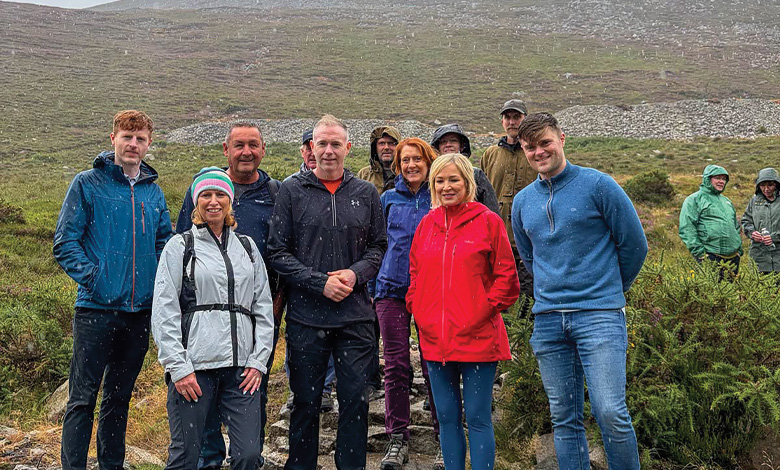
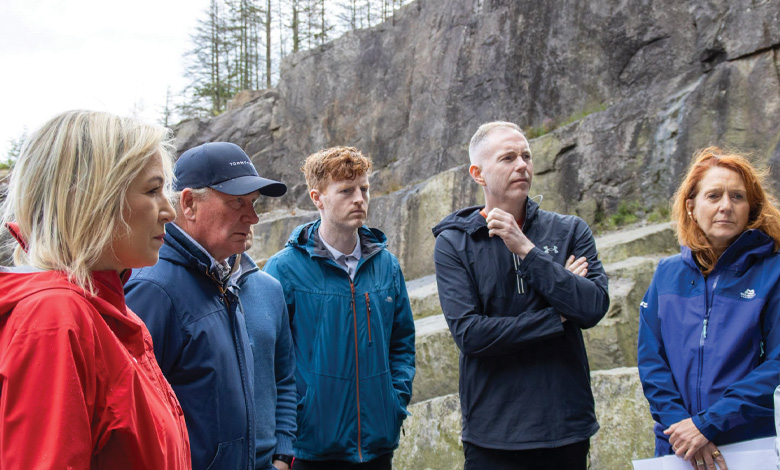
In August, alongside the Forever Mournes Partnership, I was delighted to host a visit by First Minister Michelle O’Neill to the heart of South Down.
It was a timely inflection point. During a hike along the granite trail, we observed both landscape fire damage and peatland restoration efforts.
It symbolically encapsulated the work being undertaken by key stakeholders to preserve a fragile environment alongside perhaps the most visible challenge they face.
While the Mourne Mountains are a defining landmark of outstanding natural beauty with deep cultural significance in County Down and beyond, they are also a landscape under immense environmental pressure. As well as landscape fires – which loom large in the public consciousness – peatland erosion and land management failures are equally as threatening.
If we are serious about protecting the Mournes for generations to come, then we must now take the decisive step of assigning ‘regional asset status’ through the development of a dedicated ‘Mourne Mountains Policy’.
Recently, I wrote to Environment Minister Andrew Muir to welcome the announcement that a Strategic Mournes Group will be established and made the case for the inclusion of local elected representatives within membership of the group.
Rather than a talking shop, the group must become a vehicle for policy development that is well informed, inclusive, and accountable.
Each year, the Kingdom of Mourne welcomes almost 500,000 recreational visitors. Such footfall would challenge even the most resilient natural environments, but in the Mournes, where habitats are already fragile and recovery is slow, the risk is particularly acute.
With the imminent completion of the Narrow Water Bridge linking counties Down and Louth, visitor numbers are set to spike. Without a coordinated plan in place, this increased pressure could accelerate erosion, damage sensitive habitats, and undermine the long‑term sustainability of a designated area of outstanding natural beauty.
Furthermore, the Mournes comprise the North’s most significant upland water catchment area which continues to supply most of County Down and a considerable proportion of greater Belfast.
The integrity of this catchment hinges on ecological health of the surrounding environment. As such, rather than posing an abstract threat, the environmental challenges pose an immediate risk to critical infrastructure.
We have a shared responsibility across the Executive, local council, communities, landowners, and visitors to ensure that the Mournes are preserved, restored, and protected. That means supporting habitat recovery initiatives, improving land management practices, and ensuring that tourism is sustainable rather than extractive.
It also means recognising that the challenges faced in the Mournes are different from those faced elsewhere. This is a unique landscape with unique pressures requiring a tailored response.
The Executive must acknowledge that the Mournes will not be safeguarded through fragmented or ad hoc departmental interventions. Given the overlapping nature of the challenges with environmental degradation, climate resilience, land management, rural development, sustainable tourism, critical infrastructure, community wellbeing, and heritage, the solutions must be equally cross-cutting.
No single department can deliver the scale of action or investment required. That is why regional asset status is essential. It will unlock the cross‑departmental, place‑based framework needed to plan, invest, and act effectively.
We already have a successful precedent. The Rathlin Island Policy demonstrated the value of a dedicated Executive‑level strategy for a unique and environmentally sensitive region.
Rathlin Island benefited from:
• a clear strategic vision;
• effective cross-departmental collaboration via a dedicated ministerial forum;
• an iterative coordinated action plan;
• monitoring and reporting against agreed metrics; and
• an explicit recognition that policies applied to Rathlin may differ from those applied elsewhere.
The Executive must now apply the same principles to the Mournes.
A Mourne Mountains Policy would provide the structure needed to balance environmental protection, climate resilience, land management, rural development, sustainable tourism, critical infrastructure, community wellbeing, and heritage. It would ensure that departmental decisions are cohesive and contribute to a coherent long‑term strategic vision for the entire region.
Central to this must be community empowerment. The people who live in the Mournes are the ones who understand the landscape better than anyone, and they must be at the heart of shaping its future.
Groups such as the Forever Mournes Partnership, alongside communities, farmers, landowners, and environmental organisations, should play a leading role in designing a Mourne Mountains Policy and any accompanying action plan. Their experience and insight are indispensable.
The strategic aims of a Mourne Mountains Policy must be clear. A cross‑departmental, place‑based policy framework that:
• protects and restores of the environmental integrity of the Mournes;
• empowers local communities and stakeholders;
• unlocks sustainable land management, agriculture, tourism, and infrastructure provision; and
• transparent actions, governance, and accountability.
Crucially, the policy must recognise that the Mournes’ unique context means that solutions here may differ from those applied elsewhere. A one‑size‑fits‑all approach will not work.
Granting the Mournes a regional asset status is not symbolic, it is practical. It creates the mechanism for coordinated Executive action and targeted investment. It ensures that environmental protection, sustainable tourism, infrastructure planning, and community wellbeing are interconnected priorities rather than competing interests. It provides the long‑term strategic focus needed to safeguard this iconic landscape.
Here in County Down, and beyond, the Mournes are inherently of us. A landscape encapsulating personal and cultural memory. They deserve more than reactive management, ad hoc fixes, and short-termism. They demand a coherent, ambitious, and properly resourced strategy that reflects their resonance to Ireland as a whole.
Regional asset status is the first step in delivering that future and Sinn Féin will continue to be at the forefront of delivering a sustainable future for Na Banna Boirche.
Chris Hazzard has been the Sinn Féin MP for South Down since 2017.