Digital classrooms of the future

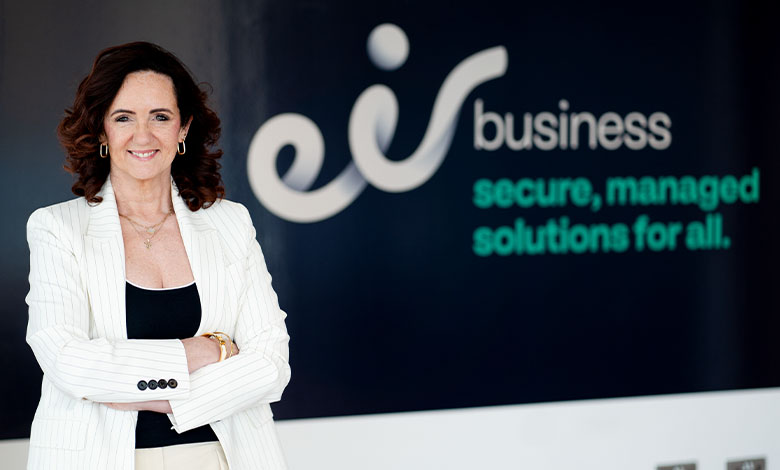
Clair Gheel, Sales and Operations Director, of eir business in Northern Ireland, speaks to Joshua Murray about the future of education connectivity, the lessons of the recent C2K cyberattack, and why Northern Ireland must treat digital infrastructure as a national strategic priority.
For Clair Gheel, the next generation of the Education Network for Northern Ireland (EDIS/C2K) must go beyond replicating existing systems with updated hardware, and instead must provide the foundation for a modern, resilient, and equitable education system capable of supporting future learning technologies and protecting schools from increasingly sophisticated cyber threats.
“A minimum ambition for this reprocurement would be replacing what we already have with something more modern, but if that is all we do, it would be a missed opportunity. This needs to be viewed as a decision about the full digital platform that supports teaching, learning, and security, not simply about upgrading infrastructure decision,” she says.
That distinction is central to her argument. While public debate around education technology often focuses on visible elements such as devices, laptops, or software licences, Gheel insists that connectivity is the essential layer underpinning all digital learning.
“eir business supports a broad range of public sector organisations across the country and every day, we see how connectivity is the invisible enabler. You can provide every student with a device and every teacher with access to AI tools, but if the network cannot carry the load, everything else falls apart.”
The recent cyberattack affecting the C2K education network has reinforced that point. Occurring during one of the most important periods of the academic year, the disruption impacted access to coursework, revision materials, and communication systems for approximately 300,000 pupils and 20,000 teachers across Northern Ireland.
“When connectivity fails, everything fails.”
“When connectivity fails, everything fails. The attack demonstrated very clearly why security can no longer be treated as an afterthought,” Gheel says.
Building resilience
Gheel states that the education network of the future must be designed with resilience and cybersecurity embedded from the outset.
“The network itself is not just a conduit for learning, it is the first line of defence. That means designing systems capable of supporting not only today’s digital requirements, such as cloud learning platforms and video conferencing, but also the technologies likely to shape classrooms over the next decade.
“The AI tools we are discussing today will look very different in three or five years. This infrastructure will likely remain in place for more than a decade, so it has to be future-ready.”
Emerging technologies such as AI-powered personalised learning, immersive digital environments, and virtual reality applications will place significantly greater demands on school connectivity, according to Gheel. The challenge is ensuring that infrastructure deployed today can evolve alongside those changes.
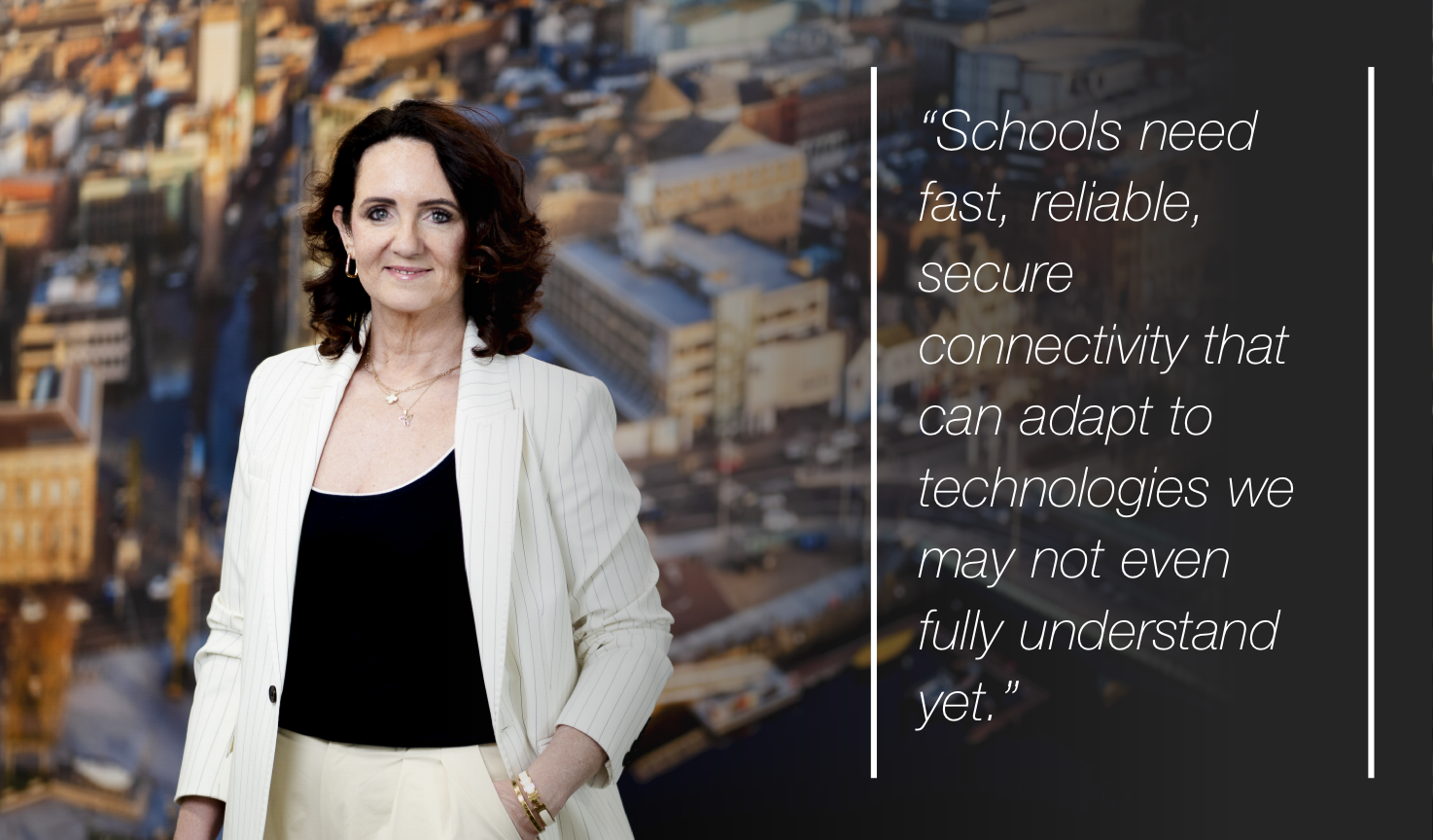
“The pace of technological change is accelerating all the time. Schools need fast, reliable, secure connectivity that can adapt to technologies we may not even fully understand yet,” she says.
Cybersecurity is now an equally important component of that infrastructure conversation. Gheel believes that the education sector, along with many public and private organisations, has underestimated the scale of the threat landscape.
“We are not taking cybersecurity seriously enough. That is not unique to education, but schools are particularly vulnerable because of the amount of sensitive information they hold.”
Educational institutions manage extensive volumes of personal data, including safeguarding information, family records, and special educational needs data, while often relying on relatively small IT teams without specialist cybersecurity expertise.
“Schools are expected to defend against increasingly sophisticated attacks without having access to the same security resources as sectors like finance or healthcare,” Gheel explains.
The result, she says, is that cybersecurity “can no longer be considered an optional enhancement added onto existing infrastructure”.
“A central part of our work at eir business is helping organisations embed these capabilities rather than bolting them on as an afterthought.
“Threat monitoring, endpoint protection, data segmentation, and rapid response capability are all foundational requirements now,” she says.
Closing the digital divide
Alongside resilience, Gheel repeatedly returns to the question of digital equality. She believes the reprocurement process offers Northern Ireland an opportunity to address longstanding disparities in connectivity between urban and rural schools.
“A school in rural Northern Ireland should have the same digital experience as a school in Belfast, but at the moment, I do not think that is consistently true.”
According to Gheel, unequal connectivity risks creating unequal educational outcomes. “Schools with reliable, high-capacity fibre infrastructure are far better positioned to adopt AI-enabled learning tools and advanced digital platforms than those operating with inconsistent or lower-bandwidth connections.
“A school with strong full-fibre connectivity can deliver almost any digital capability, but a school with unreliable connectivity cannot. That issue is particularly significant in rural or disadvantaged communities, where infrastructure limitations can compound wider economic inequalities.
“When technology is introduced without an equity lens, it tends to benefit those who are already advantaged and leaves others further behind,” Gheel explains.
She argues that equity should therefore become a formal design principle within the next procurement process itself.
“I would like to see an equity audit built into the reprocurement so that we can understand the gaps, the investment needed to close them, and the metrics through which we measure progress.”
Learning from Estonia
International examples are shaping much of Gheel’s thinking around how Northern Ireland should approach digital transformation in education.
Among the countries she references, Estonia stands out as the strongest comparison. “Estonia is genuinely inspiring not just because of the results they have achieved, but because of the way they approached the challenge.”
She points to the country’s AI Leap initiative, launched in 2025, which integrated AI learning tools into schools through a coordinated national strategy involving both government and private-sector partners.
What particularly stands out to Gheel is that Estonia approached digital transformation as a national mission rather than a standalone technology programme.
“They started with a national conversation about what kind of society they wanted to become and then built backwards from there,” she says.
Northern Ireland, she argues, shares several structural similarities with Estonia, including a relatively small population, a unified education authority, and an increasingly strong technology sector.
“We have more advantages than people perhaps realise,” she says. “We have the opportunity to make meaningful structural change.”
However, she believes one of the most important lessons from Estonia relates to how AI was introduced into classrooms.
“They trained the teachers first,” Gheel says. “By the time students gained access to the tools, the majority of teachers were already using AI confidently themselves. This is absolutely vital because teacher confidence will be critical in determining whether AI becomes a genuinely positive force within education.”
Supporting teachers
The rapid emergence of AI technologies has generated understandable scepticism among parts of the education workforce, particularly around workload pressures and fears that technology could undermine teaching itself.
Gheel acknowledges the reasons for this reluctance. “Teachers are right to be cautious. Technology cannot solve issues around workload, pay, or retention, and it will never replace the human aspect of teaching.”
However, she also believes AI has the potential to significantly reduce administrative pressures if implemented properly. “One of the biggest frustrations teachers talk about is not having enough time,” she says. “They are overwhelmed with marking, administration, and reporting responsibilities.”
Used effectively, Gheel believes that AI could help reduce those burdens and allow teachers to focus more directly on teaching, mentoring, and supporting pupils.
“If implemented correctly, AI could give teachers back the thing they most need, which is time, but that transition requires meaningful investment in training and professional development. We cannot just deploy the licences and consider the job done, teachers need support, training, and confidence in how these tools are used.”
“If implemented correctly, AI could give teachers back the thing they most need, which is time, but that transition requires meaningful investment in training and professional development.”
Student safety
Gheel believes that discussions around digital infrastructure must also extend beyond institutional cybersecurity and include the broader online safety of children and young people.
“Young people are navigating incredibly complex online environments,” she says. “That includes cyberbullying, harmful content, grooming, and increasingly sophisticated forms of online manipulation.”
Modern school networks can play an important role in addressing those risks through filtering systems, domain name system protection, and monitoring capabilities capable of identifying safeguarding concerns.
“A properly managed network can help prevent access to harmful or malicious content and support safeguarding processes,” she says.
However, Gheel stresses that technology alone cannot solve the problem. “Filtering and monitoring are important, but they are not enough by themselves,” she says.
Instead, she advocates for a broader focus on digital citizenship education, helping young people understand online risk, digital footprints, consent, and responsible use of AI technologies.
Again referencing international examples, she points to Singapore’s Cyber Wellness programme, which embeds online safety and digital literacy directly into the national curriculum.
Despite the scale of the challenge, Gheel remains optimistic about Northern Ireland’s ability to position itself at the forefront of digital education innovation.
“This reprocurement gives Northern Ireland a genuine opportunity to build something modern, resilient, and equitable, requiring strong collaboration between government, the education sector, and industry partners. The question now is whether we are ambitious enough to take it,” Gheel concludes.