Assessing the quality of education

Northern Ireland’s education system has no clear definition of what constitutes “quality of education” and there are high rates of non-compliance with school development planning (SDP), with 62 per cent of all schools not submitting SDPs in 2024/25, a report has found.
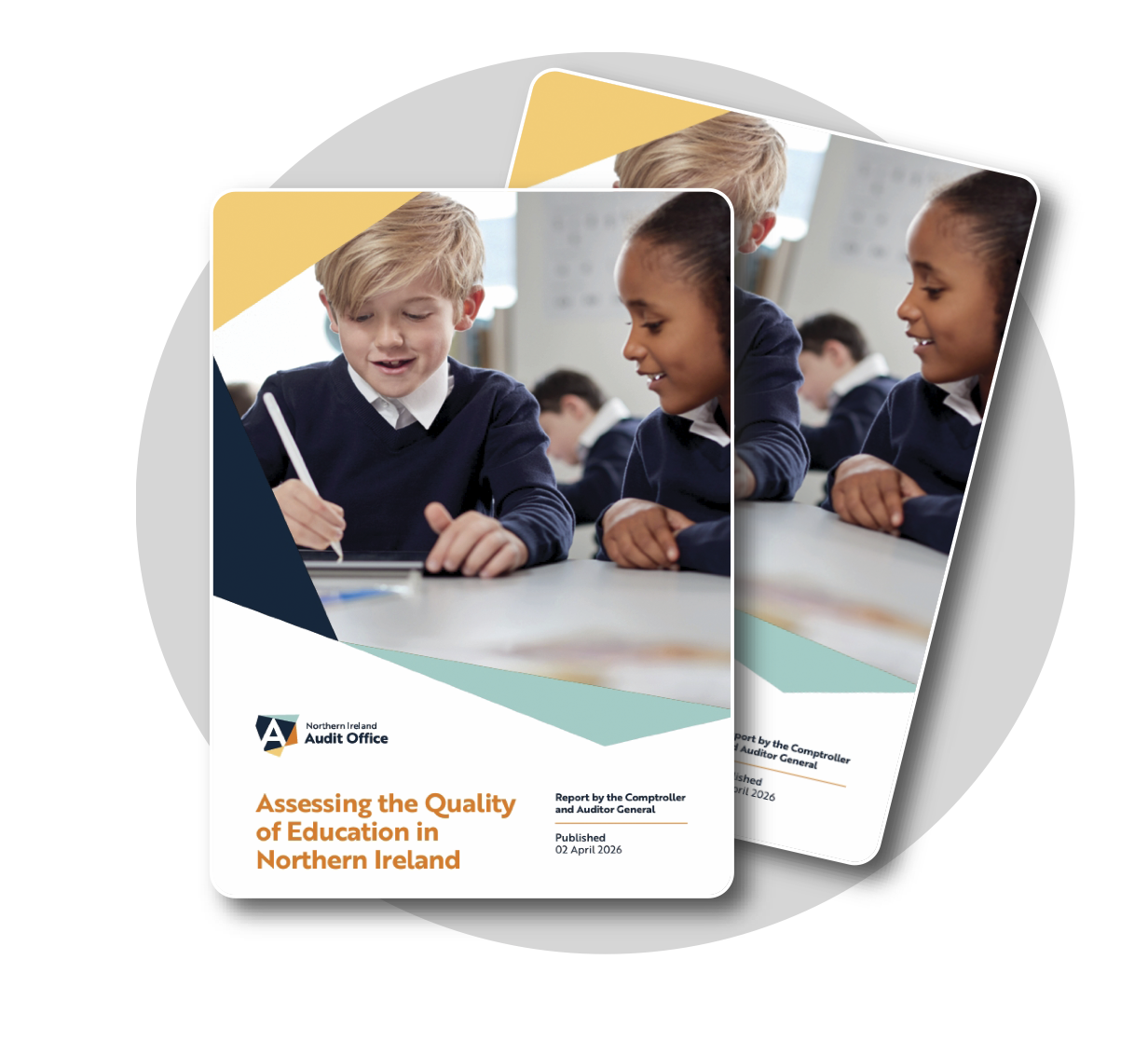
Assessing the Quality of Education in Northern Ireland, published in April 2026 by the Northern Ireland Audit Office (NIAO), finds that while the education system does deliver strong performances in certain areas, there are “significant weaknesses”.
The report finds that only 13 primary schools received school inspections that were not impacted by industrial action short of strike (ASoS) from 2018 to 2020.
In the same period, no post-primary schools received a full inspection. The report highlights three key recommendations to improve the quality of education in Northern Ireland.
School development plan regulations
School development plan (SDP) regulations are an integral part of the planning progress as they are used as a central document to guide discussions on areas such as strategic leadership, curriculum development, and governance.
On SDP regulations, which are statutory requirements, the Audit Office recommends that areas identified as priority for improvement should be informed by a school’s own self-evaluation. However, the report highlights the lack of schools submitting their SDPs, with only 414 (38 per cent) having submitted SDPs in the academic year 2024/25 after being asked by the Education Authority (EA) to have them submitted by 20 December 2024.
The report also reveals that although SDPs should give schools’ plans and priorities for a three-year time frame, since the Covid-19 pandemic, there is a variation on how long schools are planning for, with some schools continuing to plan on a one-year basis.
The NIAO recommends that the Department of Education has measures in place to ensure that schools are compliant with the school development planning process.
Refinement
Currently in Northern Ireland, exams and assessments are the only quantitative measures used by the Department to analyse the strength of the education system, with robust data only available for key stages four (GCSEs) and five (A levels). However, the audit report finds these exams to be “very late in a child’s education journey” to determine the quality of education being provided in schools, with the report highlighting it is potentially “too late to target support and address underachievement”.
Limited assessment data is available for lower key stages one (primary school years three and four), two (years five, six, and seven), and three (post-primary years eight, nine, and ten). The report says this is due to a “limited number of schools” submitting data between 2014 and 2019 due to industrial action being taken. Data is also insufficient due to the suspension of exams during the Covid-19 pandemic from 2020 to 2023, which has created a “substantial gap” in the evidence base.
The report also states that the data gap has “impacted on the Department’s ability to monitor educational outcomes, evaluate policy impact, and direct resources effectively”.
The Audit Office recommends the Department refines performance data to identify areas for improvement. The department should also be able to demonstrate quality education for all pupils, and how it will identify, obtain, and analyse data.
Quality of education
The report states that the lack of definition of the “quality of education” makes it “extremely challenging to adequately monitor the quality of education provided”, according to the report. While there is a recognition that quality education is “not just based in academic achievement” in documents such as the Independent Review of Education and the Department of Education’s corporate plan for Northern Ireland, there is no clear definition of “quality of education” in departmental policy or documents.
The report recommends the creation of a definition of the quality of education, and “outline the mechanisms through which they will get feedback on the quality of the education system”.
The report finds that widespread ASoS has limited classroom observation, weakening the Education and Training Inspectorate (ETI) evidence base. There was a sharp increase (51 per cent) in pupils being identified with SEN between 2017-18 and 2023-24, with nearly one in five pupils in Northern Ireland having SEN.
TransformED
The report outlines that the Department aims to improve access to information through the TransformED NI education strategy, published in March 2025. It is aimed at “achieving educational excellence through reform” of key areas such as educational disadvantage, the curriculum, and assessments.
The strategy outlines new propositions to align Northern Ireland’s education system with the rest of the UK and Ireland. One of these propositions was new statutory guidelines making it a requirement for all schools to comply with SDP on a three-year basis which was published in May 2026.
Comptroller and Auditor General Dorinnia Carville says: “Good data, effective inspection, and clear accountability are the cornerstones of system improvement. The Department’s TransformED NI strategy includes ambitions for making such improvements.
“These include proposals for earlier assessment, additional attainment measures, and reforms that will align Northern Ireland with the legislative protections for inspection seen in other UK regions.”
Education Minister Paul Givan MLA says: “I am committed to building a modern, data rich, high trust education system in which every learner can thrive. The NIAO report provides important external scrutiny, and the Department will act swiftly to implement the recommendations and fully realise the ambitions set out in TransformED.”