Q&A: Minister Liz Kimmins MLA
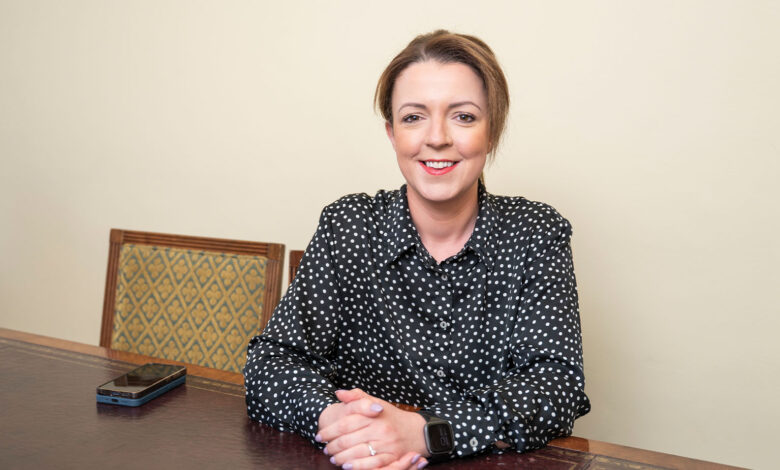
Minister for Infrastructure Liz Kimmins MLA speaks to agendaNi about her priorities for the remainder of her term, the state of Northern Ireland’s infrastructure, and the reforms necessary to ensure top-class infrastructure going forward.
What are your priorities between now and the end of this Assembly term as Minister for Infrastructure?
The role of Infrastructure Minister is a very important one and it is an office I feel very privileged to hold. Infrastructure is at the very centre of our society and while it is about transport, planning, and water, people are at the heart of everything we do. Infrastructure is about connecting communities, enabling economic growth, protecting our environment, and improving the quality of life for everyone.
My department received 8 per cent of the overall Executive budget in 2025/26 and we make every penny count to deliver for people right across the North.
Road safety is one of my foremost priorities. Every death on our roads is a profound loss to families and friends and communities which is why this issue is of the utmost importance to me. I have just launched a consultation looking at safety of the most vulnerable on our roads: children, particularly when they are getting on and off buses. This is part of a programme of work looking at legislation, education, enforcement, and engineering. The Speed Limits Review, which is currently out to consultation and closing later this month, is aimed at improving road safety as speed is a significant causation factor for collisions.
We are also the first region in these islands to introduce the Graduated Driver Licensing scheme which is the most significant reform to driver licensing and testing in almost 70 years. This scheme is designed to reduce the disproportionate involvement of new, primarily young, drivers in fatal and serious road traffic collisions. I am also taking forward a range of measures to improve road safety including delivering a third tranche of part-time 20mph zones across 40 schools which will bring the total delivered here to 273 schools.
I approved a budget allocation of almost £2 million for road safety promotion for the 2025/26 financial year. Therefore, on your screens and over the airwaves, you will have seen a new anti-drug driving advertising campaign, along with a school bus safety campaign and two new hard-hitting advertisements to address speeding and driver behaviour. Given that over 95 per cent of all road traffic collisions where someone is killed or seriously injured is due to human error it is very important to get the message across.
The A5 remains a key commitment for me. While the A5 has huge strategic importance with the potential to tackle regional imbalance, improve the economy, and connect communities, it is, above all, about saving lives.
Addressing climate change is an important area of work for the Department, and we are delivering key schemes to help alleviate flooding.
“Road safety is one of my foremost priorities. Every death on our roads is a profound loss to families and friends and communities which is why this issue is of the utmost importance to me.”
A number of projects including the £33 million Belfast Tidal Flood Alleviation scheme, which brings enhanced protection for over 3,000 homes and businesses, have been completed and procurement has commenced for the Portadown Flood Alleviation Scheme. Looking forward, I am also progressing the development of a flood forecasting service and am committed to further commencing the Reservoirs Act (NI) 2015 in order to address the public safety risk from an uncontrolled release of water that could occur from a reservoir breach.
Inclusion is high on my agenda and this is at the heart of the Department’s efforts to create accessible transport and infrastructure for everyone. The Concessionary Fares Scheme plays an important role in this by enhancing access to essential services, employment, education, and social activities and enabling people to participate more fully in society.
I am committed to carefully considering the introduction of free public transport for people with disabilities as I fully recognise the personal and societal benefits such a measure could bring. While the current budgetary environment remains challenging, my officials are actively considering how this policy could be implemented should budget be available in the future.
Improving our planning system is also a key priority for me. I am committed to working collaboratively with local government and other stakeholders through the planning improvement programme to strengthen our regional planning system and ensure it becomes more effective, more efficient, and sustainable in the long term.
Another key area of delivery for me is active travel and I am committed to increasing investment in active travel across the North. I intend to bring forward more active travel schemes as well as continuing to provide grant funding to local councils to support the delivery of greenways and other active travel initiatives.
How would you rank Northern Ireland’s infrastructure compared to both the Republic and Britain?
Infrastructure underpins everything that makes society work and that is the case both here in the North and right across these islands. My department is responsible for directly managing £37 billion of public assets, roads, bridges, and footways which must be maintained and improved, and supports Translink and NI Water in the delivery of their services and assets.
To do that, I got just 8 per cent of the overall Executive budget so of course there are challenges; many of which are exacerbated by years of underfunding. However, despite those challenges, my first year in office has been one of delivery. I am committed to increasing investment in active travel across the North and recognise its benefits to the lives of people who want greater choice in how they travel, particularly for shorter, everyday journeys.
This year has seen progress made in a number of projects including the delivery of schemes in Lagmore Avenue, West Belfast Greenway Phase One as well as the commencement of the £430,000 active travel scheme for Cookstown. Consultants have also recently been commissioned to advance a further six major active travel schemes for the Department. Looking forward, I intend to bring forward more active travel schemes as well as continuing to provide grant funding to local councils to support the delivery of greenways and other active travel initiatives.
I will continue to champion the transformative impact of infrastructure and to collaborate on finding innovative approaches that will enable us to deliver the infrastructure our society needs, despite the financial constraints we face.
Does Northern Ireland need fundamental planning reform analogous to what has taken place in the Republic and is being proposed in Britain?
I am aware of the planning reforms in neighbouring jurisdictions, including the Planning and Development Act in the South and the Planning and Infrastructure Act 2025 (England/Wales). My officials have, and continue to engage with counterpart officials in those jurisdictions, as well as Scotland, to support communication, mutual learning and shared good practice. However, it is important to appreciate that those planning systems operate differently to our own.
In the North, the Planning Act (Northern Ireland) 2011 underpins the reformed two-tier planning system, including the transfer of responsibility for the majority of planning functions from central government to district councils on 1 April 2015. This represented the most significant reform to the planning system here in over 40 years, and the Department, councils, and stakeholders have become increasingly familiar with their respective roles and responsibilities over the past decade.
Good progress has been made on improving the planning system, and I want to pay tribute to everyone within my department and local government who have been involved. We saw improvements in the average processing time for major applications in 2024/25, which saw the lowest processing times since the transfer of planning powers in 2015 and continued improvement in performance of planning statutory consultees with the latest published statistics showing that 79 per cent of responses are on time. Legislation to enable statutory validation checklists is in place and a trainee planner scheme has been introduced to bolster capacity.
“The condition of our roads can be traced back to decades of under investment by the British Government over many years.”
We are working in partnership with local government and key stakeholders to continue to advance the Planning Improvement Programme, with work cutting across legislation, policy, practice, and procedure, as well as resourcing and workforce capacity, to deliver improvements which make a tangible difference to all.
My focus and departmental resources remain on the ongoing planning improvement agenda, including a range of legislative and operational initiatives such as validation checklists, a review of permitted development, planning fees, pre-application community consultation, the review of the Planning (Development Management) Regulations, and publicity and notification requirements. In parallel, however, I have also asked officials to begin an early strategic scoping exercise to consider what the future planning system should involve including regional and strategic policy and the potential scope for a future Planning Bill.
How do you intend to overcome Northern Ireland’s wastewater infrastructure shortage?
Years of underinvestment have left the wastewater system under considerable strain and there is no quick fix to this issue. I have been working in partnership with key water stakeholders to find innovative ways to unlock this wastewater capacity by finding localised solutions.
I have repeatedly said I will not introduce water charges on hard pressed families but continue to develop the three-pronged approach that is already in place – securing more funding from the Executive, introducing the Water, Flooding and Sustainable Drainage Bill, and launching voluntary developer contributions – which underlines my commitment to delivering innovative solutions in partnership with NI Water, Executive colleagues, and the development sector.
The introduction of voluntary developer contributions is an important step in enabling developers to contribute to wastewater infrastructure to address constraints. This offers a potential route for developers to progress much-needed projects, especially new homes, but it also holds out the prospect for prospective homeowners and tenants to access a greater supply of housing in areas currently held back by wastewater limitations.
The initiative is a voluntary contribution scheme for developers. Its purpose is to unlock critical wastewater capacity to allow more residential and commercial properties to be built in some areas where that is currently not possible. If we do nothing, wastewater constraints will continue to limit new housing and help drive up prices. Developer contributions provide one practical route to increase capacity so more homes can be built, and that ultimately helps, not harms, future buyers, and tenants.
In terms of funding, so far this year, NI Water has received over £500 million of public money, which is almost 92 per cent of what they asked for to operate this year.
I and my predecessor, through £30 million of ringfenced allocations, have already enabled the unlocking of wastewater capacity for 5,300 properties, which is above the 4,500 in Price Control (PC) 21 if NI Water had been fully funded to 2028. The second quarter of 2025 has also seen the highest number of new house starts since 2018 and construction output has reached a 15-year high in the North in this period, outperforming Britain.
I am focused on finding solutions to unlock capacity and I believe both innovation and collaboration are key. The connection of 400 properties in Newry shows what can be achieved when we challenge traditional thinking and focus on smarter, more sustainable solutions and my officials continue to work closely with a range of partners through a cross departmental working group to identify potential solutions to enable wastewater connections and to meet the aims and objectives of the Executive’s Housing Supply Strategy.
Are the resources in place to ensure that the recommendations of the All-Island Strategic Rail Review are implemented?
I want to increase the number of rail passengers through an expanded rail network. This could unlock significant benefits for the North driving economic growth, promoting social inclusion, and supporting environmental sustainability.
In December 2025, I published the Rail Project Prioritisation Strategy which outlines the next steps in progressing the implementation of the All-Island Strategic Rail Review and outlines a vision for the future development of our rail network. This includes important longer-term projects such as the new Portadown to Derry railway line, the Portadown to Armagh spur line; and the Lisburn to Antrim line with a link to Belfast International airport.
The review provides a case for investment in a modern rail network which is a long-term infrastructure project. Funding decisions will be over multiple budget cycles that will require the support of the Executive, to ensure that a credible long-term funding strategy is developed and agreed.
In the short term, I ring-fenced £1 million within Translink’s 2025/26 capital budget to further progress the rail feasibility studies. We continue to make plans to ensure that there is the appropriate governance and capability needed to manage a programme of this scale so that advance feasibility and development work can take place.
How can we close the gap in skilled workers needed to ensure delivery of new infrastructure projects?
My Department has around 3,000 staff whose efforts are vital to the success of the infrastructure projects developed here, however, we currently have approximately 680 vacancies of which nearly half are specialist roles which are difficult to fill. We can have all the money in the world, but it is no good to us if we have no staff to go out and do what needs to be done. As a matter of urgency I have established a people subcommittee to look at this issue and ensure we are doing as much as we can.
At present, 41 recruitment campaigns are under way which has enabled approximately 200 new appointments, with a further 200 anticipated soon. Six new trainee planners have been appointed with further candidates taking up posts with local councils. These are the first appointments to the trainee planner grade since planning was reformed in 2015.
We successfully ran a pilot skills academy in civil engineering and launched another one in late-March. This innovative approach is allowing us to provide employment for trainee civil engineering assistants as well as engineering apprentices. We are also piloting a new recruitment approach to support DVA operational roles and industrial road workers.
The initiatives are already starting to yield results and my officials continue to explore every avenue to maximise our available workforce capacity alongside a strategic approach to grow our talent in-house.
Do you believe Belfast should have a tram/underground system akin to other major European cities?
The opening of Grand Central Station; the introduction of late-night buses in Belfast; and hourly train services to Dublin have combined to enhance the public transport experience in the city and beyond.
The hourly Belfast to Dublin service, introduced in October 2024, continues to operate with an increase in passenger journeys of 37 per cent shown in the comparable periods of November 2023 to June 2024 and November 2024 to June 2025. This year will see more improvements to public transport with progress being made to deliver eight new Enterprise trains and the beginning of detailed design of Belfast Rapid Transit 2.
When will people begin to notice an improvement in the condition of Northern Ireland’s roads?
I hope people will have already noticed some immediate improvements as a series of schemes have been rolled out across the North to fix defects in the areas worst affected by what was the wettest January on record. This work was made possible after I established the £10 million Winter Recovery Road Fund, on top of the over £30 million extra funding I allocated for road maintenance since December 2025.
Over the longer term, I want to raise the standard of maintenance across the network. The draft Road Maintenance Strategy harnesses the latest technology and a full digital road survey of all roads in the North is being carried out. Ultimately, this will mean, instead of filling one or two potholes and skipping over others, there will be more patch resurfacing, meaning the repairs will last longer because they will be better quality.
The condition of our roads can be traced back to decades of under investment by the British Government over many years. Maintenance staff will also continue to inspect and make-safe defects in accordance with our policy to help ensure the safety of the travelling public.