
Aligning industry and utilities for economic prosperity
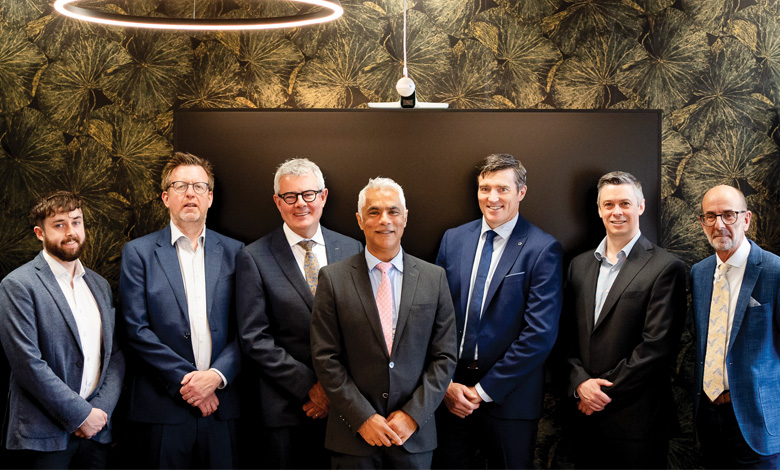
NIE Networks hosts leaders from across the public service for a round table discussion on how collaboration between industry and utilities can unlock economic prosperity.
How can Northern Ireland ensure affordability as well as the investment needed to meet its 2030 infrastructure and decarbonisation targets?
Ciarán McManus
Affordability and investment are not competing objectives. The priority now is to deliver the agreed investment programme at pace, while ensuring it is aligned with a wider plan for electrification, economic growth and decarbonisation. Major infrastructure can take 10 to 15 years to plan, consent, and deliver, so anticipatory investment is essential to facilitate electrification, reduce dependence on imported fossil fuels and protect consumers from volatile global prices. We are already seeing constraints emerge including pressure on grid capacity and significant renewable curtailment at times. Without timely investment, those constraints will become more expensive to resolve and limit the ability to decarbonise and grow. For us, this is about preventative, forward-looking investment under a clear, plan-led approach – building the capacity, resilience and flexibility needed to support long-term affordability, prosperity and competitiveness.
Gerard Carlin
It is a false dichotomy to say that delivering the infrastructure we need must be unaffordable or add to unaffordability. People are feeling pressures now, but well-planned, well-financed, and well-funded infrastructure investment can actually help affordability. The cheapest time to build a project was yesterday, so pace is really important. We need to make sure infrastructure planning is joined up across Northern Ireland and that projects are delivered efficiently. Taking affordability seriously does not mean holding back investment; rather, getting the right investment in place at the right time can reduce costs and support consumers over the longer term.
Terry Waugh
The question is not whether we can afford to do this, but when we are going to get it done. We have legal targets under the Climate Change Act 2022, while the impacts of climate change are becoming increasingly clear. We must pay for health and education, so infrastructure competes for funding like everything else. It is about getting infrastructure as high up the budget as possible. Whatever we invest in, we need to ask two questions: what offers the best value for money, and what will have the biggest impact?
Kailash Chada
On affordability, we need to look at the infrastructure we already have and make sure we are making the best possible use of it. Northern Ireland has a huge diversity of potential, so we need to deploy those resources as effectively as possible and get the biggest bang for our buck. On investment, we are constantly told there is a wall of green investment available. The reality is that it is competitive and mobile, and it will go wherever it sees the best opportunity. We therefore need strong, clear policy on what we want to achieve, a clear pathway, and the regulatory and support mechanisms to make that investment happen.
Oliver Hughes
The conversation so far has rightly focused on the electricity grid, but it is not just about the investments we make; it is about how we sequence them. There are grid enhancements that, if done early or ideally beforehand, can reduce the cost of accessing renewable generation. We can address dispatch-down head-on rather than waiting for it to become a bigger problem. Affordability is not exclusively a grid issue, either. We also need to look at energy efficiency and support households and businesses to invest in it. The National Wealth Fund has been working with financial institutions to develop affordable financing solutions for residential retrofit, including in Northern Ireland where Arbour Housing is retrofitting older housing association stock in Armagh City, Banbridge, and Craigavon with support from Ulster Bank and backing from the Fund.
Gary Curran
Northern Ireland Water is about to publish its next five-year investment plan, so we have a very good view of the investment needs for water. But there are also the wider infrastructure needs for Northern Ireland. Without the infrastructure that we provide, particularly in terms of economic development, it simply will not happen. From a Northern Ireland Executive level, collaboration and alignment need to be there. One of our key criteria is affordability, particularly from a tariff perspective. We are putting together a plan that is affordable, delivers on established needs, and supports the economy, while balancing environmental and climate considerations. Ultimately, you cannot afford not to invest in infrastructure, because without it there will be limited economic development.
What is the biggest challenge to maintaining a secure and reliable supply as we transition to more renewable energy sources?
Kailash Chada
The biggest challenge is ensuring we do not sacrifice reliability as we decarbonise. We need energy systems that provide the population with the right resources 24 hours a day, 365 days a year. Renewable electricity will play a central role, but it will not necessarily meet all our requirements, particularly for heat and heavier industry. Renewable gases will have a role alongside renewable electricity. For Northern Ireland, energy diversity is really important for resilience. We will not achieve resilience without renewable gas, stronger networks, energy storage, and energy efficiency. The key is ensuring we do not create additional risk by focusing on one particular technology. Resilience requires diversity.
“The key is ensuring we do not create additional risk by focusing on one particular technology. Resilience requires diversity.”
Kailash Chada
Ciarán McManus
The biggest challenge is maintaining reliability while moving to a more complex, renewable-led energy system. Decarbonisation is a long journey, and we will need a balanced mix of energy sources and technologies to avoid compromising security of supply. As we increase reliance on variable renewable generation, intermittency becomes a bigger operational challenge, requiring solutions such as long duration energy storage, flexible demand, greater system visibility and active customer participation through smart metering. The real challenge is aligning policy, regulation, industry, and customers around the technologies, behaviours and investment needed to run a secure, reliable and lower-carbon energy system.
Oliver Hughes
We have lived through what happened in Iberia in 2025, so it is not a theoretical concept that things can go wrong if you do not make the appropriate investments in the grid. In Northern Ireland, the grid needs to allow electricity to move from west to east, provide greater connectivity to Great Britain and Europe, enable exports, and help manage frequency and inertia.
Terry Waugh
One of the biggest challenges for the renewable energy industry is opinions about renewable energy. We live in a world of social media, and the amount of bad publicity renewable energy gets is growing. We thought it was a good news story, the solution, and the future. One of the biggest bad news stories at the minute is that people have clued into the fact that a lot of wind being generated is not going onto the grid. Wind turbine owners are being paid to turn turbines off because the grid cannot cope with it. We understand the logic, but the amount of bad publicity that generates is unbelievable. It comes up at conferences all the time, with people asking why turbines are being switched off and paid not to generate.
Gerard Carlin
The complexity in energy is off the scale, but when you take it downstream into the hands of end users, there are lots of positive test cases. We have rolled out hundreds of battery electric buses, with lots more to come, and on every metric it is a success. Customer experience scores jump massively, reliability increases, and operational costs decrease. In the longer term, the biggest challenge is that Northern Ireland is not structurally set up to deliver multi-decadal programmes and projects. A good start would be multi-year funding, which allows organisations receiving government subsidy to plan projects more effectively. Major projects need to be removed from day-to-day planning and funding cycles if we are going to deliver them.
Gary Curran
Northern Ireland Water is one of the biggest consumers of electricity in Northern Ireland, so we are looking at how we can reduce, reuse, and even regenerate energy. Intelligent operation of our works is helping to improve standards and outputs while reducing overall demand. We are also looking at reuse, including pump storage systems, as well as regenerative systems. There is latent energy within our networks, and generators are now putting recovered energy back into the system to support the operation of our works. We are also looking at next-day electricity pricing to balance our demand with likely prices. Ultimately, we are trying to smooth out consumption and demand as much as possible, which should help provide greater security of supply.
“Stronger collaboration across departments at Executive level is fundamental, and that cross-cutting whole-system approach could ultimately make the biggest difference.”
Gary Curran
Beyond 2030, what should Northern Ireland’s infrastructure priorities be to support decarbonisation and economic growth?
Terry Waugh
I think the priority is storage. If we are going to develop more renewable energy to meet our targets, we need to be able to store it. Large-scale battery storage will be crucial, particularly as we see increasing amounts of home-generated renewable energy. That energy needs to be available when it is needed, and that means storage. There are already examples of battery storage in Northern Ireland, but we need to think much longer term. At household level, electric vehicles could also play a role, allowing people to move between vehicle, battery, and home storage. Storage will be fundamental to making renewables work effectively.
Gary Curran
Our plans are endeavouring to support decarbonisation and environmental improvement while also facilitating economic growth, but there is a real tension between those objectives. We have environmental regulators setting increasingly stringent standards, but the non-financial cost of meeting those standards can sometimes be detrimental to the environment. For example, to protect the environment we need to reduce spills. To do this, one option is to provide storage in the form of concrete tanks that are very carbon intensive to construct and run. Our capital allocation is currently around half of what we need, which essentially allows us to maintain existing assets. Without investment, we will be in a very difficult position in the long term. We need substantial funding to invest in better assets and deliver better outcomes. That requires support and facilitation from the Executive.
Gerard Carlin
From a Translink perspective, the priority has to be delivery of the All-Island Strategic Rail Review. It has a strong economic case, with faster, more reliable, and more frequent services between Belfast and Dublin, new airport connections in Northern Ireland; and a new line from Portadown to Derry. That transformation could unlock significant economic growth by connecting parts of Northern Ireland that have not had rail connections for decades. Additionally, transport accounts for more than 20 per cent of Northern Ireland’s carbon emissions, so electrifying our fleet can make a major contribution by encouraging more people to use public transport. We are already seeing significant benefits from battery-electric vehicles across our network.
Ciarán McManus
Enabling growth, not simply reacting to constraints. For electricity, that means continuing the Big Network Rebuild and investing in a stronger, more resilient, and higher-capacity grid that can support electrification, renewable generation, and increasing demand. Smart metering will also be a major priority with the associated data helping to manage demand, improve visibility, support flexibility, and give customers more control over their usage. We also need digital infrastructure and control systems that allow us to operate the network more efficiently and securely, reducing constraints and delivering better value for consumers. This must be part of a clear, plan-led approach aligned with Northern Ireland’s long-term economic and decarbonisation ambitions.
Oliver Hughes
There is not necessarily an inherent tension between decarbonisation and economic growth. Decarbonisation of infrastructure can actually support economic growth by delivering lower electricity prices for industrial users and households, increasing disposable income, making Northern Ireland more attractive to foreign direct investment, and creating supply-chain opportunities. But all of this infrastructure requires significant investment. That means the entities, structures, revenue streams, and projects need to be sufficiently bankable to attract external investment. We also need the grid reinforcement, interconnection, and digitalisation already discussed. The Northern Ireland context is nuanced, but these are solutions that have been implemented elsewhere, with funding models already established.
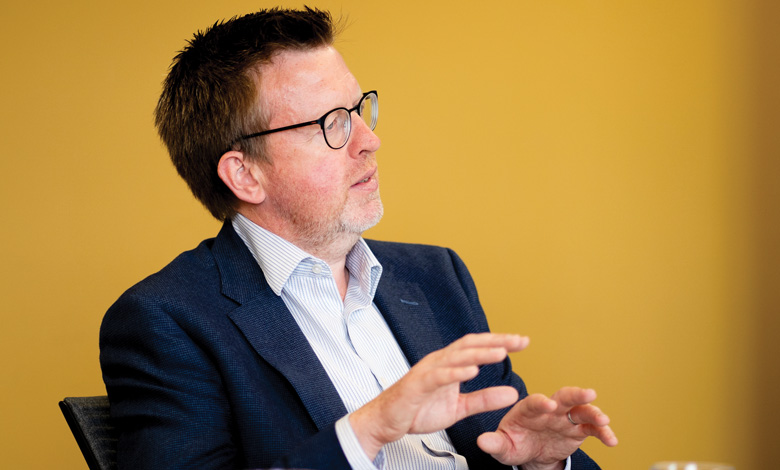
“We need substantial funding to invest in better assets and deliver better outcomes. That requires support and facilitation from the Executive.”
Oliver Hughes
Kailash Chada
We need longer-term infrastructure plans that bring everything together. At present, responsibility is spread across different departments and organisations, but we need a much more joined-up approach. Planning is also a major issue that needs to be addressed. Beyond electricity, we need to broaden the decarbonisation agenda. Electricity currently accounts for only around 13 per cent of energy use, leaving 87 per cent to address. For me, biomethane is a major opportunity. Northern Ireland has significant resources that could support a domestic biomethane economy, strengthen energy security, support rural economies, attract investment, and make better use of existing infrastructure. We need a clear biomethane strategy and supporting regulation.
Gary Curran
We are looking at replacing one of our incinerators at the harbour, with a proposed solution that would produce biomethane as one of its by-products. There is a clear linkage with the agricultural sector and the significant amount of waste that could potentially be converted into biomethane. Our own contribution would be relatively small if the wider system could be connected, but the opportunity is significant. I would completely concur that biomethane represents a major opportunity for Northern Ireland, particularly when you consider the potential to connect energy, agriculture, waste, and economic development.
Where can stronger collaboration between utilities, government, and industry have the greatest impact?
Terry Waugh
Some of the best collaboration ironically took place when Northern Ireland had no government for four years. Utilities and industry worked very closely together, and I think that continued collaboration is important. Even simple things like seminars and conferences can make a difference. If everyone in business did this two or three times a year, it would be phenomenal. Collaboration is essential, particularly when it comes to sharing knowledge and understanding. Government, utilities, and industry need to work much more closely together rather than operating in isolation.

“Some of the best collaboration ironically took place when Northern Ireland had no government for four years.”
Terry Waugh
Gerard Carlin
The organisations around this table already know and work with each other well, but we need to step outside our own lanes. Three of the largest capital projects planned in Northern Ireland over the next 25 years are the A5, the 275kV grid extension, and the new rail line from Portadown to Derry. All run broadly along the same southeast-to-northwest corridor, yet nobody is discussing them together. There are huge commonalities around planning, funding, and economic development. We need to raise these projects to a higher level and coordinate their delivery, with the political conditions in place to make that happen.
Oliver Hughes
Northern Ireland’s decarbonisation solutions may need to look different from those elsewhere in the UK. Agriculture is a particularly important part of that, given its contribution to emissions. We need appropriate incentives for farmers, landowners, and land users, but addressing this will require collaboration across agriculture, food processing, gas, energy, finance, and government. Other countries, including Denmark, the Netherlands, and parts of Germany, are already using agricultural manure and slurry for anaerobic digestion, producing renewable gas while addressing wider environmental issues. This is a system-wide solution and potentially the biggest prize available to Northern Ireland.
Ciarán McManus
The positive thing is alignment around this table. Northern Ireland’s scale can be an advantage because we can bring the key players together and move more quickly than larger systems. Stronger collaboration will have the greatest impact where it helps us agree a long-term, plan-led approach to energy and infrastructure aligned with Northern Ireland’s economic ambitions. Major infrastructure projects operate over much longer timelines than government cycles, so policy clarity, regulatory alignment, planning certainty, and delivery focus are critical. For NIE Networks, our price control settlement gives us a clear investment pathway through to 2031 but wider alignment around an enduring whole-system plan will make best use of resources and support long-term economic growth for all.
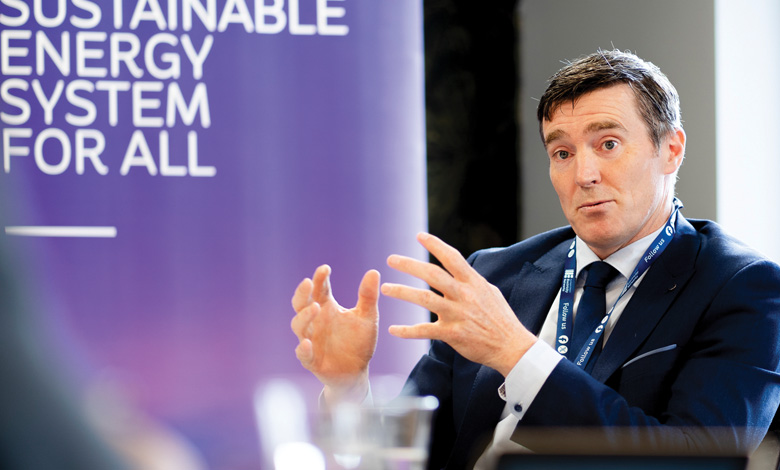
“Stronger collaboration will have the greatest impact where it helps us agree a long-term, plan-led approach to energy and infrastructure aligned with Northern Ireland’s economic ambitions.”
Ciarán McManus
Kailash Chada
Industry should be much more involved in shaping policy. Government can consult widely, but we need industry to come forward with a clear view of what needs to happen and then take responsibility for delivery. We have hundreds of government plans and strategies, but the problem is often delivery. We also need to stop working in silos. For example, biomethane feedstock is largely in the west while demand is in the east, so we need to think about how the gas and electricity networks work together. We should be looking across the system and identifying where joint solutions can deliver the greatest benefit.
Gary Curran
For NI Water, collaboration has to happen at Executive level as well as across industry. Departments need to work together in a genuinely cross-cutting way, because at times they can effectively work against each other. From Northern Ireland Water’s perspective, we can find ourselves caught between environmental requirements, funding decisions, and investment needs. Stronger collaboration across departments at Executive level is fundamental, and that cross-cutting whole-system approach could ultimately make the biggest difference.
What single policy or investment would make the biggest difference to delivering Northern Ireland’s net zero ambitions?
Gerard Carlin
The energy industry has demonstrated the value of a plan-led approach, but we should widen that beyond energy into infrastructure more broadly. Economic strategy and policy should have infrastructure at its heart, covering water, transport, and energy. There is a huge opportunity to improve coordination between major projects, while also bringing together expertise and experience across sectors. Taking a plan-led approach across infrastructure would help us coordinate investment more effectively and maximise the benefits of individual projects.
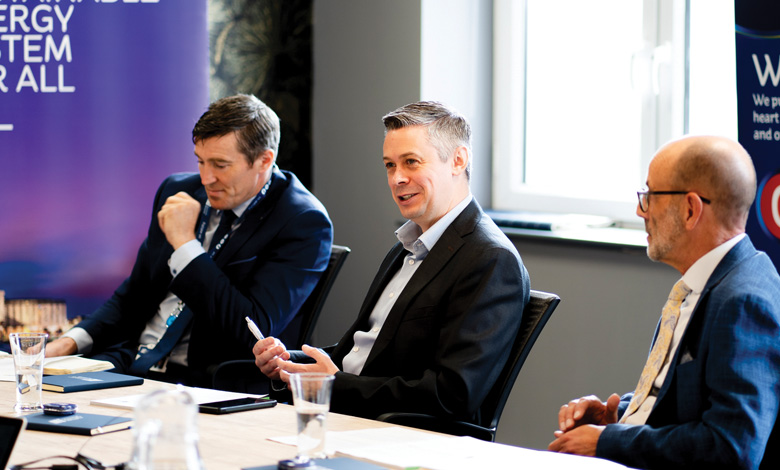
“We need to make sure infrastructure planning is joined up across Northern Ireland and that projects are delivered efficiently.”
Gerard Carlin
Oliver Hughes
The North-South Interconnector remains the single most important investment. Everything we have discussed around reducing electricity costs, reducing dispatch down, improving grid stability and security of supply, and increasing the share of renewable generation is enhanced by that investment. It was originally seen as a critical enabler of the 2030 target, and that remains the case even if the target is delayed. Whatever timeframe we work towards, the North-South Interconnector remains essential to increasing renewable generation and strengthening the energy system. Delivering it will require significant collaboration across the island.
Ciarán McManus
I fully agree that the North-South Interconnector is critical. It is one of the most important infrastructure projects and it is welcome that it is recognised as a priority by both governments given its importance to the energy system across the island. Increasing interconnection will help unlock existing renewable capacity, reduce curtailment and create headroom for future renewable growth. It should also sit alongside wider measures such as continued network investment, storage, flexibility, digital capability and active demand management, so that individual projects contribute to a more resilient and efficient energy system overall. That matters for customers because making better use of lower-cost renewable generation should help put downward pressure on system costs over time.
Terry Waugh
The North-South Interconnector has to be the priority, but we also need a renewable energy support mechanism. That would help protect consumers by reducing or capping electricity costs through fixed-price contracts and auction-based systems. There is also significant potential for investment in offshore wind, with investors ready to put money into Northern Ireland, but that investment is not being realised because we do not have a comparable support scheme to those in Scotland, England, and Wales. A support mechanism could unlock investment while delivering benefits for consumers and communities.
Gary Curran
I would come back to collaboration and innovation. Northern Ireland is very good at innovative thinking and finding solutions outside traditional approaches, and there is a huge opportunity to apply that to the net zero challenge. Innovation needs to happen at both a strategic level and across individual projects and organisations. If we can bring that innovative approach to infrastructure, energy, and environmental challenges, we can find new solutions rather than simply relying on existing models.
Kailash Chada
A clear policy on biomethane is absolutely essential. It could unlock significant investment while making better use of the infrastructure we already have. We have invested more than £1 billion in a modern gas network, so unlocking biomethane’s potential to utilise that investment in to the future should be the next step. We need a clear policy and support mechanism to allow the industry to grow, much as the support framework helped Northern Ireland’s wind industry develop over the past 30 years. Biomethane could similarly build on our existing assets while supporting renewable energy and investment.
