Securing growth, decarbonisation, and affordability

As the economic regulator for Northern Ireland’s electricity, gas and water industries, the Utility Regulator’s responsibility is to support economic growth, enable the transition to a lower-carbon energy system, and protect consumers from unnecessary costs, writes John French, Chief Executive, the Utility Regulator.
These are not abstract policy ambitions. They are urgent choices that will shape household bills, business competitiveness, inward investment, and Northern Ireland’s ability to meet its climate commitments.
The challenge is that these objectives do not always move at the same pace, or in the same direction. That is why the decisions taken matter.
Northern Ireland’s economy needs energy infrastructure that is resilient, modern and ready for growth. Businesses need confidence that electricity and gas networks can support investment, housing and jobs, data-driven industries, advanced manufacturing, and low-carbon technologies.
Decarbonisation will also require major change, from more renewable electricity generation to electrification of heat and transport.
But Northern Ireland cannot deliver a credible energy transition by asking consumers to carry costs that are unclear or unjustified. A just transition must be at the centre of the debate. Affordability remains a serious concern for many households, as outlined in our latest Domestic Consumer Insight Tracker Survey.
For Northern Ireland businesses, energy is not a marginal issue. It is a major operating cost and, for some firms, a factor in whether they can expand or invest. Our latest Non-domestic Consumer Insight Tracker Survey shows that many firms remain concerned about energy bills.
This is the central test for economic regulation in Northern Ireland. It is also a core theme of the Utility Regulator’s Corporate Strategy 2024-2029; protecting consumers on the journey to net zero, while ensuring they receive secure, reliable, and affordable services.
Northern Ireland has set clear ambitions for its energy future. The Energy Strategy sets out a pathway towards net zero carbon and affordable energy, while the Climate Change Act requires at least 80 per cent of electricity consumption to come from renewable sources by 2030.
That ambition must be matched by delivery, and delivery depends on efficient and well-justified investment.
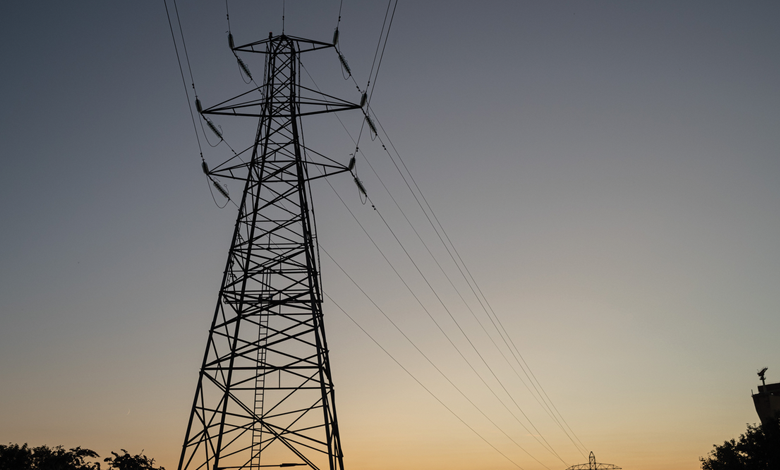
Northern Ireland’s electricity network must evolve quickly to meet changing demand. More renewable generation, electric vehicles, heat pumps, battery storage, flexible connections and new industrial demand will all place pressures on the system. Investment is essential to connect more clean energy and support uptake of low-carbon technologies.
However, investment has consequences. Network costs are ultimately paid by consumers through their bills. Our RP7 price control Final Determination for NIE Networks demonstrates that challenge. The Utility Regulator’s role is to allow the investment Northern Ireland needs, while rigorously testing costs and making sure consumers receive value for money.
That means we must be firm, independent and evidence led. We must challenge assumptions, require companies to prove the need for expenditure, and hold them to account for delivery, service quality and performance.
If Northern Ireland underinvests, we risk slowing decarbonisation, constraining growth, missing renewable targets, and creating higher costs. If we overinvest, or invest ahead of proven need, consumers may pay more than they should.
Good regulation is not about avoiding hard choices. It is about making them openly, fairly, and based on the evidence.
Affordability must remain non-negotiable. A transition that people cannot afford will not command public confidence. One that leaves vulnerable consumers behind will not be fair, and a transition that adds costs without clear, measurable benefits will not be sustainable.
Decarbonisation and affordability are not enemies. Delivered properly, greater use of renewable energy, smarter networks, and improved energy efficiency can reduce Northern Ireland’s exposure to volatile fossil fuel prices.
But the benefits will not appear automatically or immediately. Some benefits of decarbonisation will be realised over the long term, while investment costs may be felt sooner. That demands careful sequencing, transparent decisions and a relentless focus on consumer affordability.
In a small, regionally distinct energy market where public finances, household budgets and business margins are all under pressure, Northern Ireland cannot afford poor decisions. Evidence-based regulation is more important than ever.
Regulation also has a vital role in giving investors confidence. Businesses need a stable, predictable framework if they are to commit capital to long-term infrastructure. Consumers need confidence that companies will be held to account for delivery, performance, resilience, and value for money.
As the energy transition accelerates, regulation will become more demanding. The scrutiny must be sharper, the evidence stronger, as the focus on consumers becomes even more important.
The choices ahead will require collaboration across the Northern Ireland Executive, departments, industry, regulators, consumer bodies, and communities. They will also require public trust. People need to understand why change is happening, what it will cost, and how they will be protected.
For Northern Ireland, a modern, decarbonised energy system can strengthen economic growth, attract investment, reduce emissions, improve resilience and create new opportunities. But it will not happen by chance. It will require disciplined decisions, credible plans, and delivery that consumers can trust.
Growth, decarbonisation, and affordability are not separate debates. The challenge is to recognise today’s pressures while building the infrastructure and energy system Northern Ireland will need tomorrow.
This is the balancing act. It is difficult and urgent, and we must get it right for every household and business in Northern Ireland.
To find out more about the Utility Regulator, visit: