Stacking the odds: A systems approach to the circular bioeconomy
CASE argues that the systems approach to biomethane and the circular bioeconomy represents Northern Ireland’s most compelling economic opportunity of a generation.
Northern Ireland has a well-established habit of outperforming its size. From the linen mills that clothed the world and the shipyards that shaped global trade, to cutting-edge advances in engineering, manufacturing, fintech, and cybersecurity, this region has repeatedly demonstrated that it can compete on the world stage, regardless of geography, scale, or political challenges. Today, a new economic opportunity is presenting itself, one that builds directly on what we already have: our land, our agriculture, our business and research, and our appetite for innovation. That opportunity is the circular bioeconomy, and the time to grasp it is now.
A systems approach is essential, where interventions are collectively planned and coordinated across sectors and technologies, recognising the interconnectedness of our society. Holistically tackling national challenges maximises success for all by optimising cross-sectoral collaboration, delivering whole-of-government cooperation, and cross-regional partnership. The goal is to grow and strengthen the economy by supporting industry, increasing energy security and reducing price volatility while using local resources to generate renewable energy, create new business opportunities and jobs.
In 2023 the CASE ‘Pathway to Our Renewable Future’ report unambiguously established the evidence base. Northern Ireland’s highly productive agricultural sector generates substantial volumes of livestock slurry, representing both an environmental liability and an untapped economic resource. Anaerobic digestion (AD) has the potential to transform those feedstocks into many value-added products such as biomethane for the gas grid, biofertiliser to displace synthetic fertilisers, and biochar with applications in soil improvement, concrete decarbonisation, and carbon markets. CASE demonstrated that up to 82 per cent of Northern Ireland’s fossil gas demand could be displaced using farm wastes and surplus forage, and that existing feedstocks could support 6.1 TWh of biomethane annually, figures subsequently adopted by the Climate Change Committee.
The legal framework leaves little room for delay. The Climate Change Act (Northern Ireland) 2022 imposes binding obligations across government, DAERA’s Nutrient Action Programme demands measurable improvements in water quality and agricultural emissions, and the Department for the Economy’s energy strategy targets 80 per cent renewable electricity by 2030. These obligations do not invite consideration. They demand delivery. The question is no longer whether Northern Ireland must act. It is how!
The CASE systems approach is straightforward but powerful; treating biomethane as a single-product energy solution misses the point. By addressing the interconnected challenges of energy transition, agricultural nutrient management, and carbon reduction simultaneously, AD becomes a platform enabling revenue stacking across three integrated service areas, generating a combined return that transforms the economics of the whole.
- energy services generate biomethane for the gas grid, dispatchable and storable renewable energy that complements the intermittency of wind and solar;
- nutrient services recover phosphorus and ammonia from digestate, producing biofertiliser products that can replace synthetic inputs and address the nutrient surplus impacting our rivers and loughs. Thereby rebalancing agriculture to ensure compliance and position the sector as part of the solution;
- carbon services to sequester atmospheric carbon as biochar and biogenic CO2 for use by industry. CASE demonstrated that co-producing biochar from AD and digestate pyrolysis could sequester up to 0.4 MtCO2eq annually in Northern Ireland.
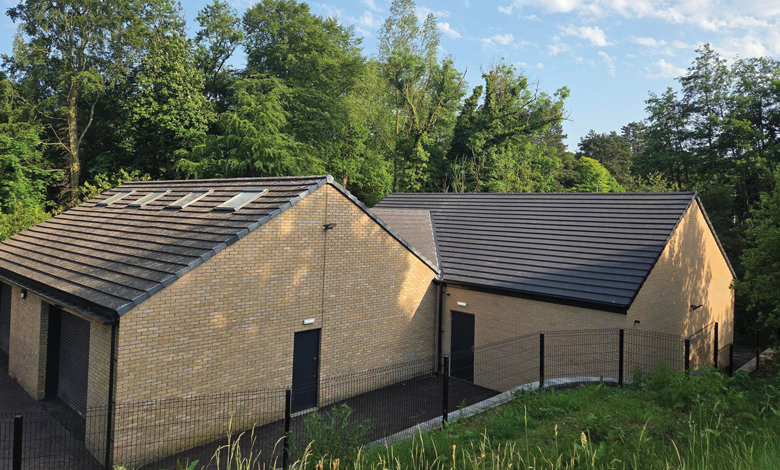
These developments have been demonstrated at scale. Working with industry partners across Northern Ireland, researchers on CASE-funded projects successfully incorporated biochar derived from agricultural waste into concrete products. Factory-scale trials produced biochar roof tiles with up to 20 per cent lower carbon emissions than conventional alternatives, showcasing a practical route to decarbonising the construction sector. The innovation has now moved beyond the laboratory, with biochar roof tiles installed on a Queen’s University Belfast building at Elms Village, Queen’s Student Accommodation, highlighting the real-world potential of low-carbon construction materials to significantly reduce embodied carbon for roads and buildings.
Separately, DAERA-funded research into the development of biofertiliser production from AD digestate under The Sustainable Utilisation of Livestock Slurries (SULS) programme has confirmed that properly processed digestate can replace synthetic nitrogen and phosphorus inputs with measurable agronomic benefit, provided a recognised quality standard is established thereby presenting an excellent opportunity to develop and grow an indigenous biofertiliser industry.
Stacking the odds
The strategy recognises genuine budgetary constraints and the need to avoid additional costs on domestic consumers. Working together with targeted interventions and multiple revenue streams as part of a strategic plan will ensure we are stacking the odds in our favour.
The economic prize extends well beyond energy. As the CASE pathway sets out, an advanced biorefinery sector built on AD and circular nutrient management would position Northern Ireland as leaders on a global pathway to ‘rebalancing’ economies. The circular bioeconomy is not a niche environmental project. It is an industrial strategy to grow the economy. Northern Ireland has the resources, the evidence base, and the knowledge to grasp this opportunity and deliver.