Planning for demand, delivering for the future
 Tim Halley, Chief Development Officer at Belfast City Airport, explains how the airport’s Master Plan 2040 can strengthen connectivity, support Northern Ireland’s economy, and balance future development with environmental responsibilities and community interests.
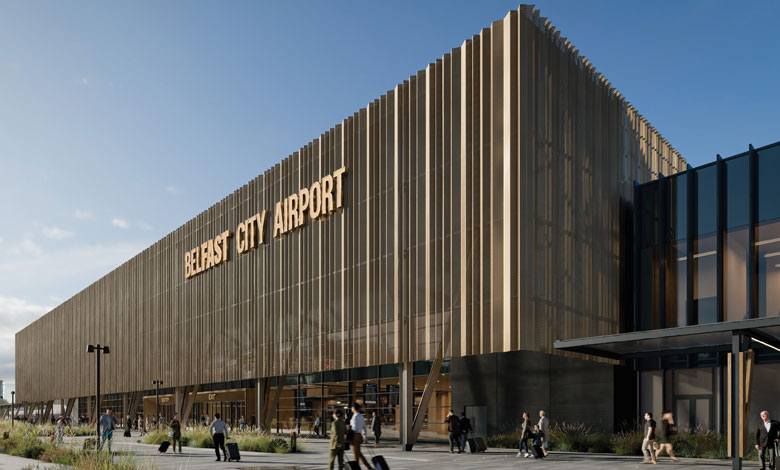
Belfast City Airport’s Master Plan 2040 sets out a long-term vision for growth, backed by a proposed £200 million investment programme.
Major infrastructure is a carefully planned, phased process. From concept design and planning approvals to investment decisions and construction, each stage plays an important role in turning long-term ambition into reality. This approach underpins Belfast City Airport’s Master Plan 2040.
The need to plan ahead is clear. Forecasts suggest air travel demand across the island of Ireland could double, reaching 90 million passengers annually by the early 2040s. For airports across the region, meeting that passenger demand will require long-term planning, investment and careful coordination.
Belfast City Airport’s Master Plan sets out how the airport could accommodate up to seven million passengers annually by 2040 through a phased programme of investment in its facilities and infrastructure.
The economic opportunity associated with this investment is significant. Belfast City Airport already plays a significant role in supporting employment, tourism and business connectivity across Northern Ireland. If delivered, the Master Plan could create more than 1,100 jobs at the airport and support more than 24,000 jobs across Northern Ireland by 2040. Annual economic contribution could reach £2 billion.
Tim Halley says those figures demonstrate why infrastructure investment should be viewed as more than an airport development project.
“Strong connectivity supports investment, tourism and trade. It helps businesses access new markets, strengthens Northern Ireland’s competitiveness and creates opportunities for people across the region.”
The proposed £200 million investment programme will focus on delivering a world-class terminal experience, providing additional capacity, and improving how passengers travel to and from the airport.
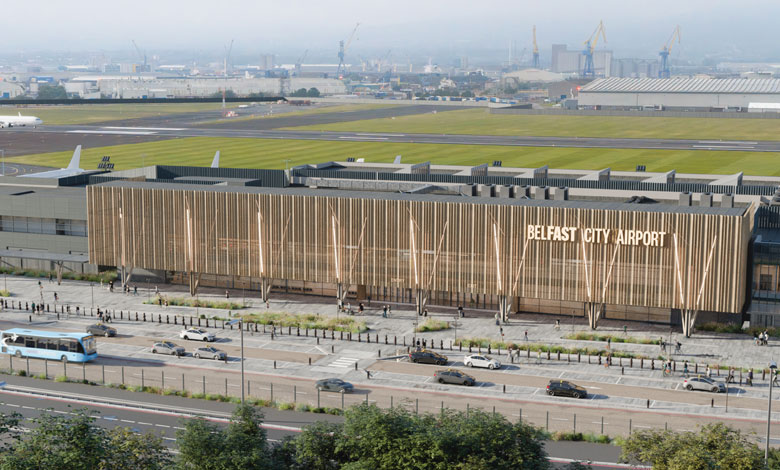
The draft proposals include enhancements to the terminal building to better serve passengers, new aircraft stands to accommodate the next generation of cleaner, quieter aircraft, and a multimodal forecourt designed to encourage greater use of public transport. Complementary developments, including provision for a hotel, will also form part of the proposals.
Alongside physical infrastructure, changes to operational controls, including the number of annual flights and operating hours, are proposed to help the airport respond to increasing passenger demand and strengthen connectivity to destinations across the UK and Europe.
“If you wait for demand to arrive before you begin planning, you are already behind,” says Halley.
“Major infrastructure requires careful planning, investment and delivery. The purpose of the Master Plan 2040 is to ensure that we are prepared for the future, with a clear vision which enables us to respond to increasing passenger demand in a sustainable and responsible way.”
Importantly, the proposed infrastructure investment and changes to operational controls will be delivered within the airport’s existing noise contour. A runway extension will not be required.
For Belfast City Airport, planning for increased capacity must go hand in hand with its wider environmental and community responsibilities.
“Our proposals have been developed with our environmental responsibilities firmly in mind. We see this potential investment as an opportunity to accelerate our sustainability aspirations and journey towards net zero operations.”
Alongside its environmental ambitions, the airport is committed to strengthening its contribution to the local community, building on existing initiatives and creating further opportunities for people across the region, including a scaling up of its apprenticeship programme.
“Being part of our local community is something we value. We want to continue building positive relationships with those around us, while ensuring that people have opportunities to benefit from the airport, whether that is through skills development, employment or our wider community initiatives,” Halley says.
For major infrastructure projects, planning extends beyond engineering and design.
Over recent months, the airport has carried out a programme of public consultation and stakeholder engagement, giving residents, businesses, elected representatives, and community groups the opportunity to learn more about the draft proposals and share their views.
For Halley, meaningful engagement is a vital part of shaping the airport’s future.
“At Belfast City Airport, we enjoy a long-standing relationship with our local community, and maintaining that relationship is incredibly important to us. Engagement is about creating opportunities for people to learn more about our proposals and share their perspectives,” he says.
“We welcome that dialogue as it helps ensure future development is informed, transparent and reflects the needs of those with an interest in the airport’s future.”
As the airport reviews feedback received during the consultation period, those conversations will continue to play an important role in the next stages of the process.
“Our aim is to support the region’s future connectivity and economic growth in a way that is balanced and responsible. The consultation process has provided valuable insights, and we remain committed to listening, engaging and working with stakeholders as the Master Plan progresses.”
As part of its Master Plan 2040 vision, Belfast City Airport has also identified a unique opportunity to become the first rail-served airport on the island of Ireland. The airport recently signed a Memorandum of Understanding with Translink, establishing a framework for both organisations to work together to explore and progress the potential for a rail halt directly serving the new airport development.
“Belfast City Airport’s location at the heart of Belfast is one of its greatest strengths, and we want to build on that by making journeys to and from the airport as accessible and efficient as possible.
“Working with Translink gives us an opportunity to explore how improved rail connectivity could form part of that vision, offering passengers and employees another sustainable travel option while delivering wider benefits for the region.
“Becoming the first rail-served airport on the island of Ireland would be a significant milestone, and we are looking forward to working jointly with Translink to further explore the opportunity.”
Looking ahead, Halley believes success will be measured not simply by passenger numbers, but by the airport’s contribution to Northern Ireland’s wider economic and social development.
“Ultimately, this is about planning responsibly for the future. It is about ensuring Belfast City Airport continues to support investment, tourism, trade and connectivity, while delivering growth in a way that is sustainable, responsible and beneficial for Northern Ireland over the long term.”
Click here to find out more about Belfast City Airport’s Master Plan.