Minister Liz Kimmins MLA: ‘Looking back and planning ahead’

Writing in agendaNi, Minister for Infrastructure Liz Kimmins MLA discusses progress in the planning system as well as her vision for ensuring planning is “recognised and valued as a positive force” for infrastructure delivery.
As I approach the end of my second year as Infrastructure Minister, it is a timely opportunity to reflect on the progress made across the North’s planning system and to consider the role it will play in shaping our future.
Planning often works quietly in the background, yet almost every aspect of our daily lives from the homes we live in, the roads we travel on, the schools our children attend, and the businesses that create jobs, are shaped by planning.
But this responsibility also brings significant challenges. Economic uncertainty continues to affect businesses and communities. The health of our natural environment is under growing pressure from pollution and biodiversity loss. Housing affordability and housing supply are some of our most pressing issues. Climate change requires us to rethink how and where we build. Infrastructure networks face increasing pressure while public finances remain constrained.
However, at the same time, we have enormous strengths with a planning profession committed to delivering positive outcomes. As Infrastructure Minister, I am committed to ensuring that those strengths continue to grow and develop.
Progress through partnership
Over recent years, much attention has rightly focused on improving the performance of the planning system. Timely and effective decision-making is essential for communities, investors, and applicants alike. Confidence in the system depends on it.
This is why collaboration through the Planning Improvement Programme remains so important. By working closely with local government and key stakeholders, tangible progress is being made.
The latest figures show that average processing times for major planning applications during 2024/25 were the lowest recorded since planning powers transferred to councils in 2015. Statutory consultee performance has also improved, with response times continuing to move in the right direction.
Behind these figures lies a significant volume of work. Departmental planning officials are currently progressing a range of regionally significant and called-in planning applications, each requiring detailed assessment and careful consideration and it is important the system has the resources needed to drive forward progress.
“The decisions being made today will affect the North for decades. They will influence where homes are built, how people travel, where investment is directed, and how we balance economic growth with environmental responsibility.”
Liz Kimmins MLA, Minister for Infrastructure
My department also continues to play an important role as statutory consultee and one of oversight in the local development plan (LDP) programme and is encouraged that the 10th council has consulted on its draft strategy, and the first council with the next stage, draft local policies plan is imminent. Experience and lessons learned are helping shape LDP efficiencies and streamlining.
Investing in the next generation
The future success of planning depends not only on processes and performance, but on people.
One of the most encouraging developments of the past year has been the appointment of 11 trainee planners who have started their foundation degree programme at Belfast Metropolitan College. This is the first trainee intake since planning reform was introduced in 2015 and represents an important investment in the profession’s future.
Alongside this, my department has welcomed new planners across three grades; they are already becoming valued members of their teams and making positive contributions across the system.
These appointments strengthen capacity while helping to address longer-term recruitment and retention challenges. More importantly, they demonstrate my commitment to building a skilled and resilient profession capable of meeting current and future demands.
Strengthening the system
Building capacity is not just about workforce planning. It is also about ensuring that the planning system has the tools and flexibility needed to operate effectively.
£3 million was secured from Public Sector Transformation which is funding a project to put arrangements in place to enable my department to exercise its powers under the Planning (Northern Ireland) Act 2011 for the first time to appoint independent persons to carry out ‘hear and report’ work.
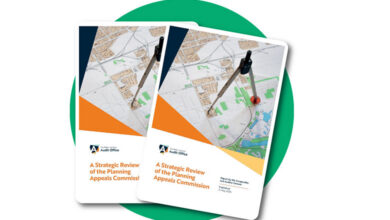
This project offers an additional option alongside the Planning Appeals Commission for progressing ‘hear and report’ work associated with local development plan independent examinations, and public local inquiries and hearings in relation to regionally significant or called in planning applications.
Following the formal appointment process, my department has now established an open list of independent inspectors who may be appointed to undertake statutory hear and report functions, where appropriate. While improvements in performance remains important, we must not lose sight of the bigger picture and our vision for the North over the next 10, 20, and 30 years.
Looking beyond today’s challenges
While improving performance remains important, planning is ultimately about much more than statistics and timescales.
The decisions being made today will affect the North for decades. They will influence where homes are built, how people travel, where investment is directed, and how we balance economic growth with environmental responsibility.
These are long-term questions that require strategic thinking and strong collaboration across government, industry, communities, and environmental interests.
That thinking is already reflected in work such as the recently launched consultation on the draft Eastern Transport Plan. The proposals aim to improve connectivity, expand travel choice, and support sustainable growth while encouraging greater use of public transport and active travel. As further transport plans emerge alongside local development plans, they will help provide an integrated framework for future development.
Shaping a shared future
Demographic change, climate obligations, technological advancement, changing patterns of work and movement, and evolving economic priorities all require us to think differently about how places grow and develop.
As Infrastructure Minister, I want the North to be a place where investment is supported by the infrastructure it needs. A place where communities have access to high-quality homes and services, where our towns and cities continue to evolve and prosper. A place where we embrace innovation while protecting the natural and built heritage that makes us unique. And most importantly, a place where planning is recognised and valued as a positive force for delivering these outcomes.
Planning is a powerful tool to achieve that ambition. By continuing to work together, we can all ensure it delivers lasting benefits for our economy, our communities, and future generations.
Liz Kimmins MLA has been the Minister for Infrastructure since 2024.