Revitalising Scottish social housing

Stephanie Elliot, head of operations for smart housing at the Scottish Federation of Housing Associations (SFHA) outlines how the organisation’s financial inclusion pilot is improving tenant outcomes, reducing staff burden, and supporting financial digital inclusion goals.
Stephanie Elliot explains that the main responsibility for the technology-enabled care programme aims to “upscale housing’s contributions to digital health and care strategies in Scotland”. This is done in partnership with Link Housing, which provides affordable housing, property management, advice, financial inclusion, and employability services, and Lightning Reach, which connects people to multiple forms of benefits, grants, and other supports. SFHA aimed to test if a digital first option would improve access to funds and grants, whilst also freeing up frontline staff’s time to ensure better quality care.
Elliot says Lightning Reach provided a digital platform, “designed to streamline access to financial support”, by connecting individuals with grants, benefits, and other assistance through a single online platform, which any of the users could access.
Link Housing tenants would complete a “short application”, which would match them with relevant schemes based on their self-reported circumstances. Elliot explains that “the platform is built to support both self-service and assisted journeys”, making it particularly valuable to both tenants that face financial vulnerability and staff who are stretched beyond capacity.
The partners would then analyse the tenant profile engagement by tracking tenants’ applications and the services they were applying to. They would then check to see what schemes they had matched and engaged with. Application journeys were monitored including the time taken to create a profile and get online.
Results
Over the 12-month pilot period, 1,100 tenants engaged with communications sent out by the partners, through SMS, email, or social media, and went to the platform, with 1,028 of them completing profiles. Nearly 700 tenants engaged with support such as performing a benefit check or accessing applications for funds and grants.
Elliot says 457 users clicked on ‘external matches’, which helps users identify grants or funding from the platform; however, she explains that “there is no data or a completed user journey for anyone who went out with the platform”. A total of 227 individuals submitted direct applications via the portal, with 98 users completing a benefits check. Within those checks, Elliot reveals that they unearthed £50,700 in potential monthly entitlements for those tenants, with a further 19 tenants receiving direct awards totalling just over £14,000 with an average of £785.
The categories in which people required the most support was energy and utilities, furniture and appliances, food and essentials, advice services, and holidays and activity costs which also includes respite support for individuals who have caring responsibilities.
“We did note that external schemes saw higher engagement and potential financial impact, but there was a limited number of direct awards which suggests procedural barriers which we have taken up with the provider. The patterns underscore the need for housing providers to offer targeted follow-ups and digital support,” Elliot explains.
Elliot asserts that the housing sector can turn digital access into meaningful impact for tenants, with 98 per cent of the 1,100 tenants having self-accessed. Tenants were not identified as almost all of the data set was anonymised. However, SFHA and its partners used key demographic trends to construct the make-up of potential tenants to demonstrate the effectiveness of the pilot.
Streamlining
Elliot states that the partners wanted to streamline the benefits checking process to provide more targeted debt advice, offer reminders and alerts for benefit changes or deadlines, and to connect users to additional services such as mental health support and food banks.
Elliot says Lightning Reach was available to tenants daily. Communications were staggered and multichannel including SMS, emails, newsletters, postcards, social media, and in person community events to maximise reach and limit digital exclusion.
“Because of the data from the platform, we were able to see that it took around 14 minutes to create that profile. We also had an experienced member of the housing team mirror this in real life, and they also took stock of the time it took them. It would have taken the best part of six months for Links Advice Service to deal with all 1,100, if they all required support.”
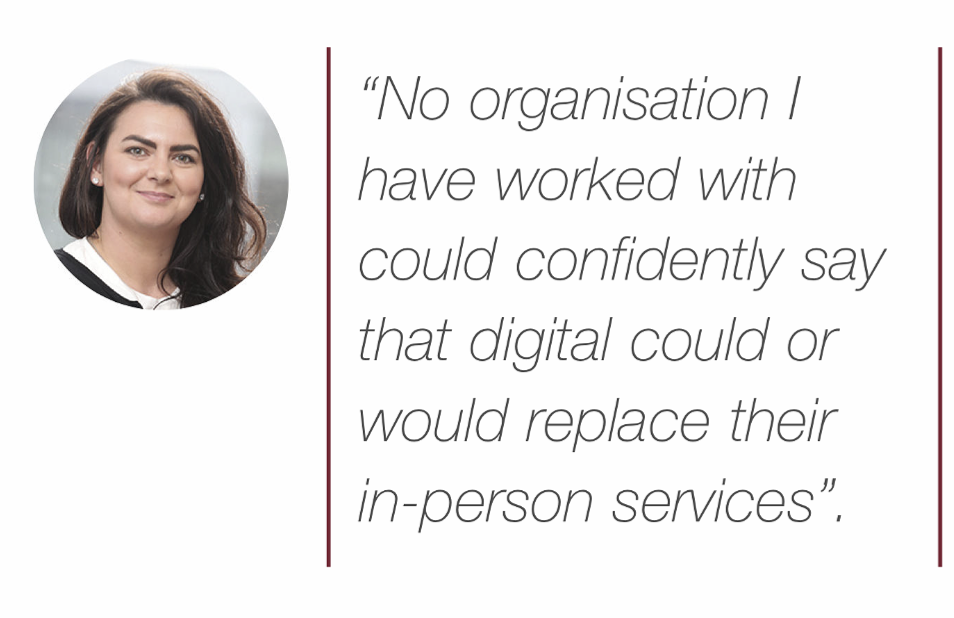
Elliot states that technology partners need to “champion a co-designing structure with tenants and staff to ensure useability and cultural fit”. She continues by saying that she understands the “level of scepticism” surrounding a digital-first design but adds that “no organisation I have worked with could confidently say that digital could or would replace their in-person services”.
Concluding, Elliot calls for financial inclusion to be seen as a “core component” of tenancy sustainment and housing policy “essential for reducing arrears, sustaining tenancies, and achieving national anti-poverty goals”.