2025/26 Budget: Keeping the lights on
Northern Ireland’s 2025/26 Budget delivers increased funding for public services and earmarks over £425 million for Programme for Government (PfG) priorities. However, the Northern Ireland Fiscal Council has warned that the Executive is still not meeting overwhelming departmental pressures and is merely “kicking the can down the road” towards a funding cliff-edge.
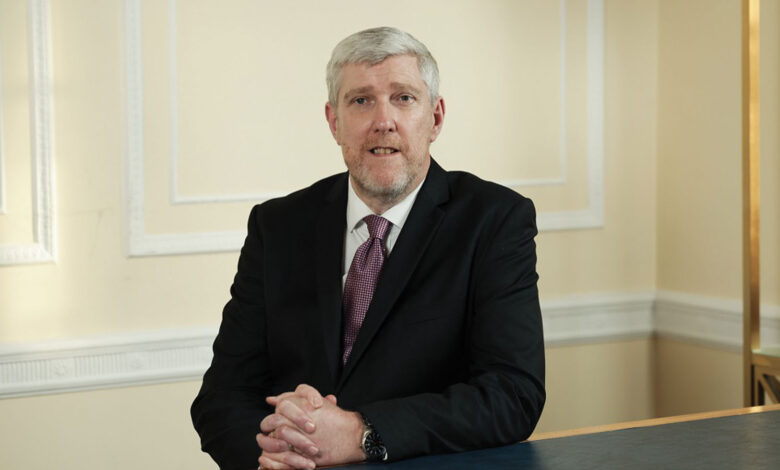
Informing the Assembly of the final Budget on 3 April 2025, Finance Minister John O’Dowd MLA stated that the Budget “reflects our Programme for Government commitment to doing what matters most” and “shows this executive’s determination to work together to deliver”.
The Sinn Féin minister asserted that the Budget “provides funding to cut waiting lists, deliver affordable childcare, support special educational needs, invest in skills, make our communities safer, [and] fund actions towards ending violence against women and girls”.
However, analysis by the Northern Ireland Fiscal Council’s (NIFC) presents a contrasting view, characterising the budget as one of short-term relief that fails to meet the vast majority of new funding bids from departments.
With a significant drop in funding projected from 2026/27, the Executive’s spending plans are built on the assumption of substantial savings and leave many rising costs potentially underfunded.
Public finances
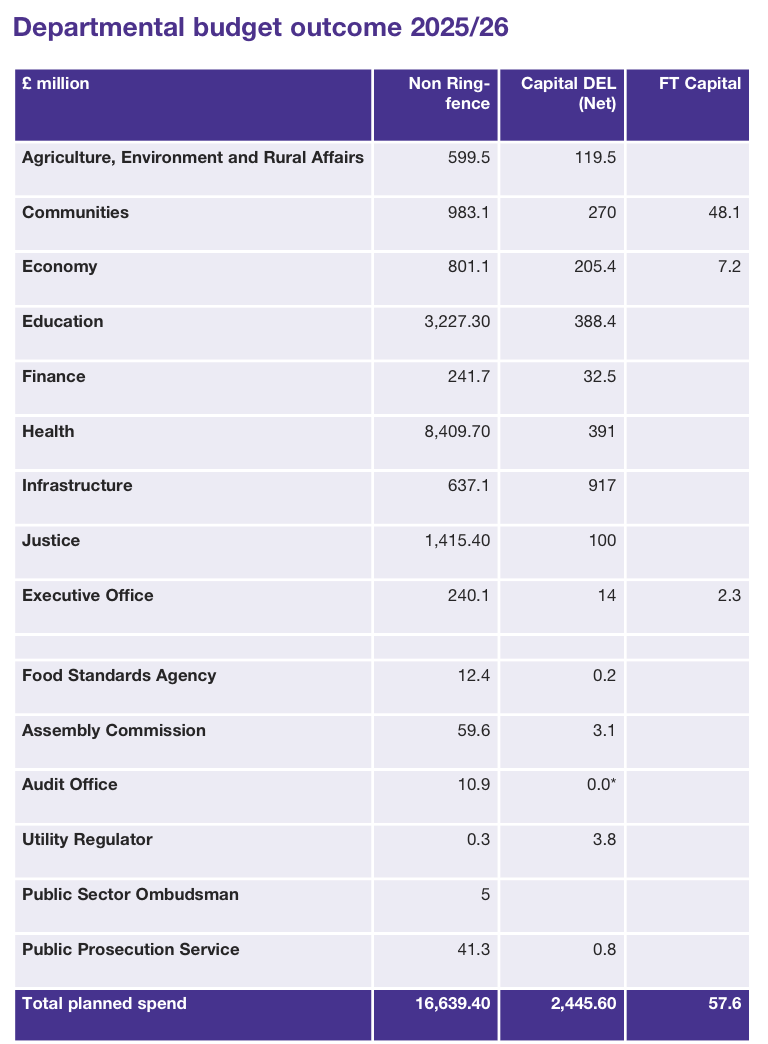
The total budget for day-to-day spending (Resource DEL) is set at just under £17 billion, with a further £2.5 billion for capital projects. This represents a nominal increase across all departments, with Health receiving the largest allocation.
The NIFC’s analysis reveals that departments submitted pressure bids totalling £4.2 billion, but less than 30 per cent of this (around £1.26 billion) could be accommodated. The council warned that this leaves many services “under strain”, with departments forced to assume significant savings.
Crucially, the Budget relies on a one-off £600 million deal with the UK Treasury to smooth over immediate gaps. The NIFC warns of a sharp “cliff-edge” when this temporary support ends after 2025/26, which could force severe cuts or a crisis in public finances.
Earmarked allocations
A central feature of the Minister’s statement is the emphasis on earmarked funding for specific initiatives. O’Dowd confirmed that “combined with the Draft Budget allocation, this brings funding provided specifically for PfG Priorities to some £425 million”.
This includes £215 million earmarked for cutting health waiting times, with £85 million from the final budget and a £50 million indicative allocation from June Monitoring. The Budget also outlined indicative June Monitoring allocations for other priorities, including the allocation of £15 million to the Department of Education (DE) for special educational needs and £5 million for protecting Lough Neagh.
Health
The Department of Health remains the single largest cost, accounting for roughly 51 per cent of the entire resource budget. The £215 million earmarked for waiting lists is a significant targeted investment.
Despite this, the NIFC points out that when earmarked items are stripped out, the Department of Health’s core uplift was smaller than those for the Department of Education and the Department of Justice respectively. With the department still required to find £200 million in savings and facing other unfunded pressures, equality assessments indicate difficult trade-offs affecting non-statutory services are likely.
Infrastructure and capital
The Minister’s statement outlined changes in capital requirements, stating that the Department for Infrastructure (DfI) identified an easement of £15.7 million in Executive earmarked funding provided in the original draft Budget which can now be reallocated.
The resulting £15.4 million was allocated on an equal basis, as a general capital allocation to DE and DfI.
Broad analysis
The Executive’s budget clearly prioritises targeted spending on key social objectives. Minister O’Dowd asserts that the budget “sets out a direction of travel which shows this executive is prepared to do things differently and use our limited resources to do what matters most”.
The Fiscal Council’s analysis, however, serves as a critical rebuttal to this optimism, warning that the “cliff-edge” of funding in 2026/27 could force difficult choices. Its assessment suggests that the failure to meet departmental bids and the reliance on temporary UK Treasury fixes create a high risk for service delivery, meaning the short-term respite of the 2025/26 Budget may quickly give way to another severe financial crisis.