Infrastructure delivery shortfall
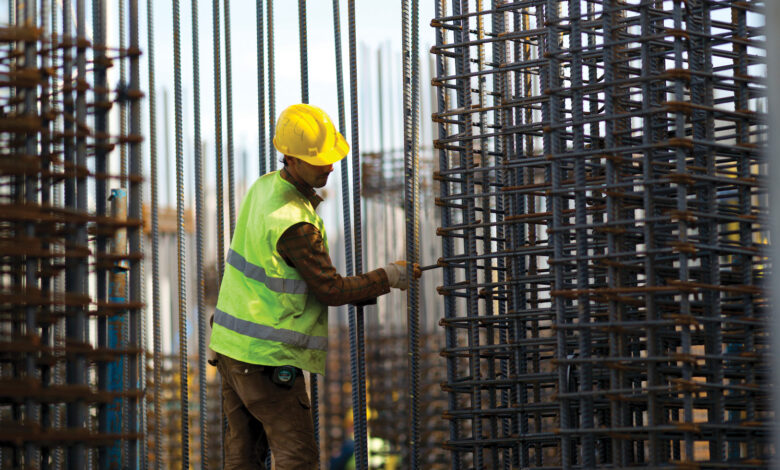
The completion of large infrastructure projects in Northern Ireland has been consistently marked by delay, cost escalation, and governance challenges. agendaNi examines the state of infrastructure delivery.
Despite the ambitions set out in the Executive’s Investment Strategy for Northern Ireland 2050, progress across many major schemes remains slow, contributing to an infrastructure deficit that impacts transport, housing, utilities, and economic competitiveness.
The difficulties of project delivery are long established. The York Street Interchange, first proposed in 1967 as part of the Belfast Urban Motorway, remains incomplete. Similarly, the Ballykelly bypass, under discussion since the 1970s, has not progressed. These early examples reflect the pattern seen in current projects such as the A5 Western Transport Corridor, Casement Park, and the wastewater system.
Wastewater
NI Water has warned that the wastewater system is “at breaking point”, with untreated effluent continuing to enter Lough Neagh. The Northern Ireland Fiscal Council has highlighted that NI Water’s funding model, reliant on short-term allocations, restricts its ability to plan strategically.
The £1.9 billion Living With Water programme, aimed at modernising Belfast’s drainage and sewage systems, has been scaled back, with major works at Sydenham, Whitehouse, Kinnegar, and Greenisland deferred indefinitely. This has had knock-on effects for housing approvals, with developments delayed or refused due to lack of wastewater capacity.
Although water charging is standard in other UK and European jurisdictions, it remains politically unviable in Northern Ireland, leaving NI Water unable to borrow or invest at the scale required.
Transport
The A5 Western Transport Corridor was approved in 2006, with plans to dual 53 miles of road between Aughnacloy and Derry at a projected cost of £1.7 billion. It has since faced repeated delays and legal challenges. In June 2025, the High Court halted the project on the basis that it did not comply with Stormont’s climate change targets. Infrastructure Minister Liz Kimmins MLA says: “Despite the setback of the judgment, I am determined to find a way forward that sees the road built as soon as possible to ensure that we save lives.
“The most important point made by the court was the need for a new and safer A5 dual carriageway; that is my focus. My Department has lodged an appeal against the recent judgment which will be heard in December 2025. My officials and legal team have been working round the clock on the preparation of a robust and comprehensive appeal.”
Other schemes, such as the A6 dual carriageway, have progressed more quickly, though still years behind schedule. In addition, of 28 schemes planned by the Department for Infrastructure, 17 have been paused due to financial or environmental issues.
Furthermore, regions outside of Belfast remain chronically under connected, with rail infrastructure falling significantly short of need in spite of an increase in services between Belfast and Dublin. The aspirational All-Island Strategic Rail Review calls for the delivery of some new rail lines by 2050, however, under the proposals, Fermanagh would remain without any rail connectivity, and DfI has hinted that its priorities are expanding services of existing rail links, which means that several large ‘commuter’ towns remain with no rail infrastructure, which is likely to continue for the medium term.
One new ambitious project comes in the announcement of a long-term aspiration to connect Belfast City Airport to a railway line, which would make it the first airport on the island of Ireland to have a direct rail link. The draft 2040 masterplan asserts that delivery of the project would deliver £1.7 billion for the Northern Ireland economy. However, there is far from any certainty that the project will be delivered on time.
Casement Park
Casement Park closed in 2013, with redevelopment first announced in 2011 as part of a broader stadium programme alongside Windsor Park and Ravenhill. While the latter two projects were completed, Casement Park’s progress was blocked when the High Court overturned planning permission in 2015 following local challenges.
A £50 million pledge from Chancellor Rachel Reeves MP in June 2025 provides partial support, however, the project remains short of its full funding requirement. Both the Executive and the Irish Government continue discussions on the stadium’s delivery, however, it is certain that Casement Park will not host Euro 2028, meaning that Northern Ireland will not host the tournament.
Other delayed projects
Several other flagship capital projects have been subject to major delays or cost escalation:
- Regional Children’s Hospital: Initially costed at £250 million, delivery has been delayed by several years with costs rising substantially.
- Flagship portfolio (2015): Of seven projects identified, only the Belfast Rapid Transit system has been completed on time. Others, including the Belfast Transport Hub and A5, have exceeded both budget and schedule.
- Private sector regeneration: The £500 million Tribeca Belfast scheme, first announced in 2005 and approved in 2020, has not progressed, with the site still characterised by vacancy and dereliction.
The most significant recent completion has been Translink’s £340 million Grand Central Station, opened in 2023. The project has been widely welcomed as a modern transport hub for the region, although it exceeded its original budget by £140 million and related works remain ongoing.
Oversight and audit
Reports from the Northern Ireland Audit Office (NIAO) and the Assembly’s Public Accounts Committee (PAC) highlight widespread problems with delivery. Between 2019 and 2023, the cost of 77 major capital projects increased from an estimated £5.6 billion to £8.1 billion, which is a 44 per cent rise. The PAC has described overspends of more than £3 billion across major projects as “unacceptable”.
Only a small proportion of projects have been completed within their original time and cost estimates. Audit reviews point to issues with governance, planning approvals, procurement processes, and the absence of multi-year funding certainty.
ISNI
The Investment Strategy for Northern Ireland 2050 sets out priorities across transport, water, energy, housing, education, and health. The Northern Ireland Fiscal Council has estimated that between £2 billion and £3 billion per year would be needed to meet investment requirements. Current allocations fall short of this level, and repeated interruptions to devolved government undermine the ability to plan on a multi-year basis.
In comparison, the Republic’s National Development Plan commits €165 billion over 10 years, underpinned by multi-annual budgets and central oversight. The scale of that commitment highlights the relative uncertainty of the Northern Ireland framework.
Despite the publication of long-term strategies and repeated ministerial commitments, delivery of infrastructure in Northern Ireland remains constrained by funding shortfalls, political instability, and structural challenges in planning and procurement. The result is a growing gap between ambition and execution, with delayed projects and cost escalations continuing to dominate the capital investment landscape.