Research at the heart of better health outcomes
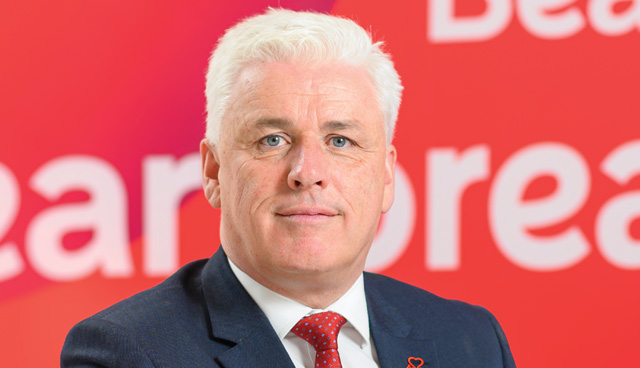
New Head of British Heart Foundation Northern Ireland (BHF NI) Fearghal McKinney talks to David Whelan about ambitions to help improve the quality of life of people with heart and circulatory disease through their new strategy to 2030 and build on the charity’s achievements over the past six decades.
Although relatively new in post as the Head of the heart research charity, McKinney, who will oversee Northern Ireland’s largest independent funder of heart and circulatory disease research, is already well immersed in the role BHF NI plays in constantly striving for improved heart health.
The British Heart Foundation (BHF) recently published its strategy to 2030 which sets out a vision for significantly improved survival rates from heart attacks, strokes and cardiac arrests across the whole of the UK. McKinney is well aware of the impact BHF research can have on the general population but it is on a much more personal level where he feels he has been given the best insight into the importance of the charity’s work.
“The BHF isn’t just a charity for research, it is a cause and being able to engage and work with the people supporting and supported by this cause has been the best part of the job so far.”
“It’s been a rapid learning curve on a whole range of fronts,” he says, outlining his willingness to engage with staff and stakeholders, for a better understanding in the earliest stages.
“One of my first engagements was taking a call from a couple in County Down. The husband had been living with heart failure for some time and was being well cared for by heart failure nurses in the health service, some of whom were originally funded by BHF. That couple had his health at the front of their minds but their instinct was to reach out and help others.”
McKinney explains that the £2,500 raised by the couple through a coffee morning epitomised the spirit that exists within Northern Ireland and is just one example of many where people have been through a negative experience but used that experience to help others.
“The BHF isn’t just a charity for research, it is a cause and being able to engage and work with the people supporting and supported by this cause has been the best part of the job so far.”
McKinney, a well-known public figure from his earlier careers in journalism and politics, believes that his skillset was well matched to the “exciting” role as Head of BHF NI and he relates to the ambitions of BHF to change people’s lives.
However, he is well aware a wider network is required to realise these ambitions: “Much like a politician, who is only the candidate in an election, I’m only the Head of BHF NI. We have excellent people throughout the various different directorates ranging from healthcare innovation to fundraising, retail and communications all of whom are working together to further the aims and ambitions of the organisation.”
Outlining the scale of the challenge facing BHF, McKinney highlights that in 1961, the year the charity was founded, more than half of all deaths in the UK were due to heart and circulatory disease. Advancements in treatment through research funded by the BHF and others has helped reduce this figure to one in four today but he recognises a slowing of this rate as a clear signal of the “urgent” work still needed to be done in the fight against heart and circulatory disease and to ward off complacency.
BHF’s strategy to 2030 sets out an ambition to “beat heartbreak forever”, working towards a world free from the fear of heart and circulatory diseases. Amidst its ambitions is a plan to invest more than £1 billion in research over the next 10 years. McKinney is in no doubt about the impact that research has and how funding it is critical to driving change at a national, local and community level.
“BHF has achieved so much already but there’s much more that needs to be done. We want to see thousands more people surviving a heart attack, increase heart attack survival by 2030, to halve premature death and disability from stroke and to triple the number of people who survive an out-of-hospital cardiac arrest,” he states.
“£1 in a bucket today leads to research tomorrow and a product the day after,” says McKinney, highlighting the importance of local contributions to the BHF, which gets no financial support from government.
“That was the spirit that led to Frank Pantridge developing the portable defibrillator and look how many lives have been saved since.”
McKinney uses the example of the Miles Frost Fund, a fund set up in memory of the son of broadcaster David Frost, who died suddenly of a hidden inherited heart condition, hypertrophic cardiomyopathy (HCM).
Following the tragic death of Miles Frost at the age of 31, the Frost family partnered with BHF to roll out cascade testing of people at suspicion of having a gene that causes HCM.
The Inherited Cardiac Conditions service within the Belfast Trust was the first in the UK to work with BHF and develop a Miles Frost service two years ago. So far nearly 600 people have gone through the service, leading to improved treatment and ultimately saving lives.
“Our work with the Miles Frost Fund is a prime example of how saving and improving lives is at the core of what we do,” says McKinney.
“It’s also a significant contrast to 1961, when we were closer to putting a man on the Moon than we were to knowing what was the cause of heart attacks and the main medical advice was bed rest. It shows how far we’ve come in that time and with help and support we’re proposing to make even greater strides to 2030.”
Research funded by the charity has led to the development of the portable defibrillator, new surgical techniques for children born with congenital heart disease, the discovery of genes that can lead to sudden death, statins and the development of stents. However, challenges to progress exist. As survival rates from heart attack and stroke have risen, people are now living longer and are therefore more likely to develop multiple conditions.
Reducing the one in four deaths due to heart and circulatory disease figure will require a “bold new approach”. Coupled with this challenge is an issue of complacency amongst the general population with regards to heart health, described by McKinney.
“Rising risk factors like obesity and diabetes are putting our progress at risk. Also, health inequalities still persist. By building evidence, influencing decision-makers and involving people in their own health and care, we can drive change.”
Working for Northern Ireland to directorate ambitions, BHF NI benefit from the wider reach of the BHF but remain focussed on delivering better outcomes in Northern Ireland. BHF has funded around £4 million into research at Queen’s University Belfast to date, providing two thirds of post-primary schools with free equipment to train their pupils in CPR and is about to formally launch a blood pressure project through the Healthy Living Centres in the Western Trust area that aims to detect and manage high blood pressure in areas which are not as well reached by the health service.
CVD taskforce
One area on which they are currently focussed is the development of a strategy to help tackle heart and circulatory disease (cardiovascular disease) for Northern Ireland. Cardiovascular disease (CVD) kills around 10 people each day in Northern Ireland but there remains no strategic approach to tackle it.
“The CVD taskforce, which is working with the Department of Health and various expert stakeholders, will focus on a wide range of issues from prevention and early detection through to rehabilitation and palliative care. Similar work in Scotland has worked to great effect and we believe a strategy can provide good pathways to ensure the stress on the individual and the stress on the system is reduced.”
Quizzed on whether the absence of Stormont and uncertainty around Brexit is having an impact on BHF’s ambitions, McKinney says: “One of the greatest things about this organisation is that it thinks big. Recently BHF launched a global heart fund called the Big Beat Challenge, a single research award of up to £30 million for the world’s greatest minds to tackle the world’s biggest killers. We recognise that our cause is a global one, everyone has a heart and so we have established, and long-standing, working relationships with health and research stakeholders.
“By building evidence, influencing decision-makers and involving people in their own health and care, we can drive change.”
“It is vital that ties with EU researchers and institutions are preserved as the UK leaves the EU, and that EU researchers’ ability to live and work in the UK and contribute to UK-based research projects is not hindered.
“I recently attended a conference in Dublin and was encouraged by the extent of engagement between universities across these islands to ensure that the highest levels of research are maintained and funded.
“Although the possibility of a no-deal Brexit seems to be off the table at the moment, contingency plans to continue the supply of medicines need to be made to ensure people with health problems don’t suffer from any political fallout.
“Locally, while we recognise the absence of a minister, our job is to get on with it and continue to work with the aim of presenting to a future minister relevant information and practical answers to some of the problems that persist in the cardiovascular world. We are uniquely qualified through size and scale to bring forward solutions.”
Making a difference
Another policy focus for BHF NI going forward is in the area of mandatory CPR training in schools. The English and Scottish governments are all well-advanced in the introduction of mandatory training, however, no such plans exist in Northern Ireland.
“Despite the absence of an Executive here, BHF NI will continue to campaign on this issue and are seeking support from all local authorities in the promotion of this. We would clearly like a government in place to make these decisions but we will not be deterred in the absence of one.”
Similarly, thanks to a current campaign, five councils in Northern Ireland have passed motions in support of the introduction of a soft opt-out system for organ donation. The switch is one that BHF has long campaigned for and one that they believe reflects public opinion. A recent BHF commissioned poll carried out by YouGov showed that 68 per cent of people here support a soft opt out system.
In September, to mark Organ Donation Week, families shared their experience of their heart transplant journey in a series of BHF NI videos which reached over 250,000 people.
Environment
As well as through fundraising, BHF also rely on their retail offering to fund research. The charity has over 700 shops, eight of which are in Northern Ireland. While high street retail in general is facing a difficult time, McKinney notes a change in attitude that is assisting BHF’s shops.
“In the past charity shops were often viewed as somewhere that you dropped stuff off to but we need people to buy as well as donate. Younger people, particularly millennials, are recognising the need for a circular economy and the prevention of waste. We save an enormous amount of items from going to landfill every year and I think there’s a growing recognition of the opportunities that exist in helping the environment and the cause,” he says.
“Going forward I see opportunity to enhance our environmental impact not just in clothing but also in electrical goods and furniture.”
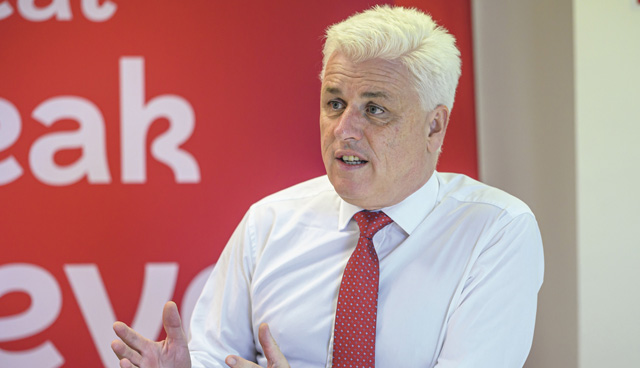
“It is vital that ties with EU researchers and institutions are preserved as the UK leaves the EU, and that EU researchers’ ability to live and work in the UK and contribute to UK-based research projects is not hindered.”
The environment and its link to population health outcomes is a policy area in which BHF has invested itself. While the issues are wide ranging, one example of where BHF can exert influence, highlighted by McKinney, is around air quality.
“Research has concluded that exposure to particulate matter that comes from industry emissions, household heating and our diesel engines, may cause increased mortality, from heart and circulatory disease for example.
“We know that the tiniest of particulates actually go beyond the lungs and clog arteries. However, across the UK we don’t measure the extent of these particulates effectively enough. Effecting change will be a massive job but it’s a real focus of our ambition. In 2020 you will be hearing a lot more from us on this issue.”
Turning to those future ambitions, completing his first year in post and beyond, McKinney says: “I want to see this charity in the place that it belongs, recognised as the leading heart research charity in Northern Ireland. We’re the biggest independent investor in research on heart and circulatory conditions in Northern Ireland but we recognise an ability to grow this further.
“We want more people here to join the cause by applying for research grants, donating or shopping in their local BHF store, or giving their time or money, it will all help. We know, given our history, that investment in research works and produces results in the form of better health outcomes for the general population.”
Fearghal McKinney
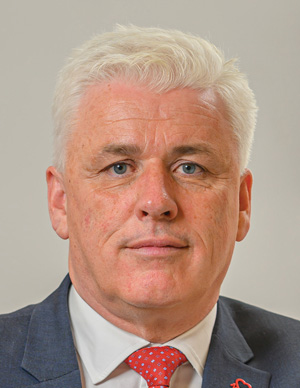 Derry-born Fearghal McKinney developed a public profile as a journalist and presenter for UTV before entering politics as an MLA, taking on the role of deputy leader of the SDLP. His career, he says, has been well rounded and gave him insight into local communities and the health sector which have equipped him well for the role at BHF.
Fearghal is a father of three girls and has recently found time to be more active through badminton and cycling. Fearghal says that he is vastly enjoying his new role but also respecting the challenges that come with it.