Technology for digital inclusion
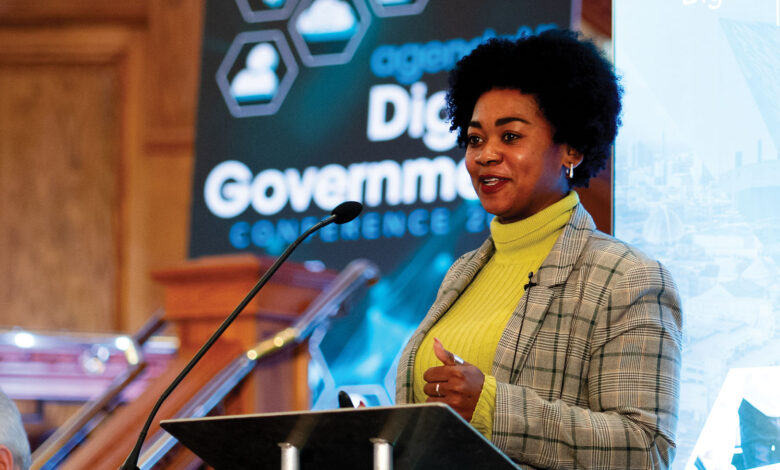
Digital inclusion is essential for delivering AI-ready cities, says Sherelle Fairweather, Digital Strategy Lead at Manchester City Council.
Fairweather states that the growth of tech in Manchester is the largest of any city in the UK outside of London. However, she adds that a large percentage of young people and families are continuing to experience poverty. She describes the statistics around this as “harrowing”, and insists that it means many people are not feeling the benefits of tech growth in the city.
Fairweather asserts that Manchester City Council takes a human-centred approach to technology. She explains that the authority is endeavouring to make Manchester an “AI-ready city”, adding that it is important to consider what this entails for the city and if it will lead to “sustainable growth for all”.
The city of Manchester is part of the ‘smart city’ movement. This has included development of internet of things (IoT) infrastructure, integrating ICT systems around core infrastructure assets, and scaling up IoT projects in urban areas.
Fairweather discusses Manchester’s digital strategy, Doing Digital Together. It contains four thematic areas. First is ‘Remarkable People, Extraordinary Opportunities’, under which the council aims to ensure everyone in Manchester is represented.
Second is ‘Connecting Places, Enhancing Lives’, which underpins the city’s aim to provide the digital infrastructure that drives digital inclusion and provides capacity for AI uptake.
Third is ‘Pioneering The Future, Prosperity For All’. Fairweather explains: “As more big tech companies move to the city, that pipeline for smaller not-for-profit, tech-for-good organisations is not necessarily growing. How do we retain that legacy knowledge from those organisations?”
Fourth is ‘Rising To Challenges, Future-Proofing Our City’ which underpins the strategy’s aim to “mindfully” deploy tech and use it to address challenges such as emissions targets.
Digital inclusion
Fairweather asserts that digital inclusion is the core of everything the strategy delivers. “We do not think we can grow, sustain, scale, and digitally transform without ensuring people have access to the things they need,” she says.
“A lot of this work started after the pandemic and there were lots of attempts to support people but initially not much thought was given to people’s capacity to access it online.”
To address this, Manchester City Council created a team which focused on this area. Initially, the team was reacting to emerging problems. Now, the team operates more in a consultancy capacity for services and community organisations to help them identify their challenges and deliver impactful digital inclusion initiatives.
Fairweather explains: “We have been using a data-led approach to understand where there might be specific challenges in the city through an open-sourced model called the Digital Exclusion Risk Index. It is not perfect but it is helping us to focus resources.”
Fairweather asserts that the council intends to make the strategy “more intentional”. She explains that building is not a challenge for Manchester as it is “seen as quite an attractive city for industry”. However, challenges remain such as overbuilding and connectivity quality.
“We have been working with Inakalum and Network UX to map the quality of mobile connectivity and, furthermore, Ofcom and Greater Manchester Combined Authority to gather more data around high footfall spaces such as events or travel spaces.
“Quality often depends on how many people are accessing at once. Buildings, such as high-rise apartments, can also impact the quality of someone’s connectivity.
“This is where we are being more intentional. We are focusing more on areas of deprivation.”
Fairweather explains that the council is also assessing how it shares infrastructure. The council is set to roll out EV charging points and Fairweather asserts that areas where they are rolled out will need to have appropriate internet quality ensuring smart, safe, and reliable operation.
“People sometimes trust the technology but they do not tend to trust us. People assume that they do not trust the technology, but there is that challenge of trust in us as officers or leaders.”
AI
Fairweather states that Manchester is recognised as being the “most AI-ready city” in the UK outside of London. She states that there is significant focus on the cost-saving benefits of AI and economic growth but adds that there should be consideration given to what these costs can be used for and the wider social benefits.
Continuing, Fairweather says Manchester City Council is “focussed on how we can put the human back into AI”. She adds that the council aims to achieve this is through its ‘People Panel for AI’.
The council is working with Manchester Metropolitan University to ensure people are involved in the design of services. Using the risk index, the council identifies people likely to be excluded from the AI conversation. It then travels to these areas to talk to them about various uses for AI as well as provide training.
Citizens can then opt in to become paid panel members, where they provide feedback to people creating services and products with AI. A report follows these discussions outlining how the council has acted upon views expressed.
Concluding, Fairweather says: “People sometimes trust the technology but they do not tend to trust us. People assume that they do not trust the technology, but there is that challenge of trust in us as officers or leaders.”