New wave of focus for marine protected areas
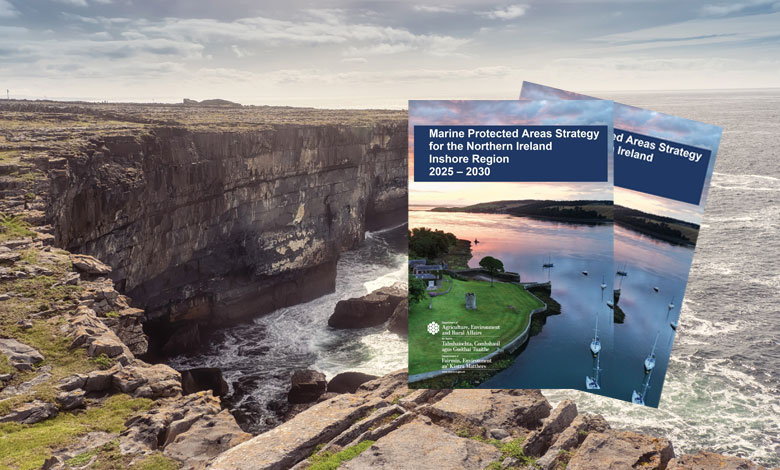
An updated five-year strategy for the continued protection of marine protected areas (MPAs), with renewed focus on management systems, has been outlined in the Marine Protected Areas Strategy for the Northern Ireland Inshore Region 2026-2030.
The strategy, published in February 2026, aims to support the recovery of key habitats and species, close ecological gaps and support the growth of nature-based solutions.
Overall, 85 per cent of wetlands, 75 per cent of land, and 66 per cent of all oceans have been significantly altered by humans since the pre-industrial era, according to the United Nations Environment Programme. The United Kingdom’s climate has been warming at a rate of 0.25 degrees Celsius per decade, with the years 2022 to 2024 being in the top five warmest on record.
The MPA strategy’s predecessor, known as the 2014 strategy, focused on the establishment of an MPA network. By its update, it had set up 48 MPAs in Northern Ireland, around 38 per cent of Northern Ireland’s inshore regions.
The implementation of management measures, with the application of appropriate monitoring and adaptive management approaches, alongside further development, and management of the MPA network are the core aims of the strategy. Nine objectives are outlined in the strategy, alongside necessary actions to implement them.
Objectives and actions
Objective one, focused on communication and stakeholder engagement, is the development and publishing of an engagement, outreach, and communications framework by 2028. To achieve this, DAERA must publish a governance structure within the first three months of the strategy being published, and increase public awareness of existing MPAs including making information more accessible. Further action necessary is the promotion of data from the Centre for Environment Data and Research (CEDaR), and the maintenance of community engagement to maximise awareness.
Objectives two and three are focused on designations to address gaps and improve ecological coherence. For this to be successful, DAERA will need to review the MPA network to identify gaps, and introduce new designations or amend sites, if necessary, by 2028. By 2030, the Department will need to provide an updated MPA network report to the Assembly, evaluating the 2025-2030 strategy.
The third objective is to maintain and enhance, where relevant, the MPA OSPAR network design. To follow international standards for marine conservation, the Department will need to invest in research to understand how MPAs contribute to climate change mitigation and adaptation. Studying the risks to marine ecosystems and ensuring that the network stays adaptable as scientific knowledge and environmental conditions change.
Objectives four to seven are set under management and restoration, aiming to enable good environmental status by 2030. Actions needed for this to happen include the introduction of management plans for new MPAs added to the network, the development and implementation of management measures for protected areas, and publication of annual MPA management progress reports.
Objective five is exploring the benefits of implementing management approaches from strict non-extractive highly protected marine areas (HPMAs). DAERA aims to achieve this by exploring the economic and environmental costs and benefits of different management approaches. The strategy also says the Department will aim to develop policy guidelines on management approaches.
Objective six sets out how other effective area-based conservation measures (OECMs) are to complement the MPA network. This includes working with UK partners to develop clear definitions and criteria for OECMs and develop policies on how OECMs could support and complement the MPA network.
Objective seven, regarding investment in restoration projects, aims to identify restoration actions within current marine recovery programmes by 2026. The Department aims for the development of proposals for funding restoration projects in collaboration with partners and to encourage stakeholders to use other funding sources such as the Environmental Fund and Peace Plus.
Objective eight is to develop and publish a new MPA monitoring and reporting framework which will outline statutory requirements and policy drivers to be completed by 2027. To achieve this, DAERA aims to create the framework for MPAs and for blue carbon habitats. The Department is also mandated to develop a method for evaluating management effectiveness aligned with the UK approach.
The ninth objective is development in approaches to scope and measure the costs and benefits of the MPA network. This is to help understand the social and economic impacts of marine conservation. The strategy says DAERA will consider the recommendations from the NI-MANACA, and commission follow-on projects to fill evidence gaps.
Minister of Agriculture, Environment and Rural Affairs Andrew Muir MLA says: “This strategy recognises the critical contribution marine protected areas (MPAs) can make in addressing biodiversity loss and their capacity to deliver nature-based solutions to climate challenges.”