Developing a biomethane economy

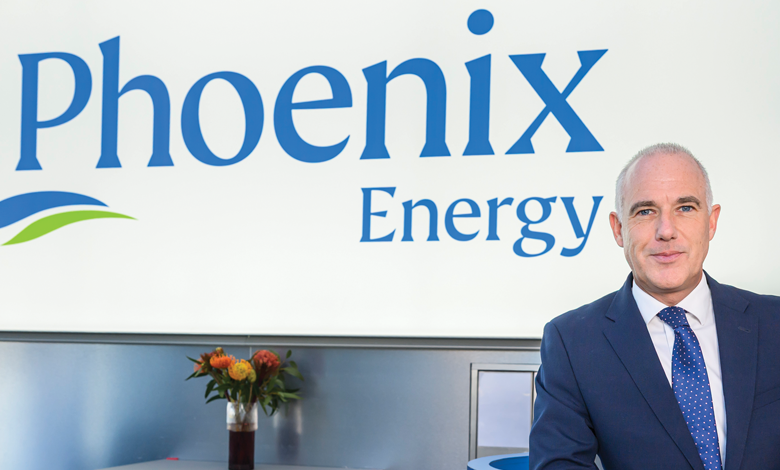
Jonathan Martindale, Director of Business Development at Phoenix Energy, talks to Owen McQuade about the opportunity to develop a biomethane economy in Northern Ireland and its role in an integrated and decarbonised future energy system.
Jonathan Martindale is at the forefront of the thrust to develop a biomethane economy in Northern Ireland. He is optimistic about the prospects of achieving that on the back of an industry conference the previous week that acknowledged significant progress over the last four to five years. There is now a wider recognition of the need for an integrated energy system that incorporates all Northern Ireland’s regional assets. “Climate change is a global challenge but, it will be addressed by regional solutions, including the gas network,” he says.
Martindale believes that there is now a recognition amongst policymakers that if we can get the right supporting policy, Northern Ireland’s energy sector can make relatively good progress in its decarbonisation journey. Although, with the new uncertain global policy landscape there has been some retrenchment on climate action, he says that the wider benefits of decarbonisation are now much better understood: “These benefits include system security and resilience, sustainability and social responsibility, and those wider economic and social benefits of decarbonisation are now better understood,” he adds.

“Climate change is a global challenge but, it will be addressed by regional solutions, including the gas network.”
From a gas industry perspective, the focus in recent years has been on future network solutions, such as biomethane and hydrogen. Increasingly, in the near term, the focus is now on connecting the 200,000 homes that have gas outside their front door, but who use oil for heating, to the gas network. If those 200,000 homes were converted to natural gas that would save 408,000 tonnes of CO2 per annum, which is 24 per cent of all carbon emissions from the residential sector in Northern Ireland. “With the fiscal constraints at Stormont, that represents the best value for removing carbon,” he observes. This was recognised in the Executive’s Climate Action Plan, published in June 2025, that has the move from oil to gas as part of Northern Ireland’s path to net zero.
However, the vast majority of the industry’s work streams are focused on the future network and the target of net zero by 2050. “The key enabler is the gas network; the ‘hero’ asset that provides natural gas to 550,000 homes in Northern Ireland.” One statistic that Martindale says that has not been highlighted over the last 29 years the network has been in operation is its reliability at 99.98 per cent. With energy system resilience being increasingly valued, that equates to an unplanned interruption every 140 years.
Emerging solutions
Phoenix Energy’s “laser focus” is on biomethane as a future gas for its network. “We believe that there is not the bandwidth locally at both industry and policy levels to move forward on numerous fronts. Biomethane offers a significant near-term opportunity”, he says.
The development of the biomethane industry requires three key building blocks. In 2022, the CASE centre at Queen’s University Belfast quantified the potential biomethane in Northern Ireland and determined that there was the potential to displace 100 per cent of the natural gas in the distribution system. The follow-up to this study was Phoenix Energy’s 2024 request for information that was issued to the industry to identify potential biomethane investors. There were 86 potential plants identified that had access to feedstock and the wherewithal to develop anaerobic digestion (AD) plants that produce biomethane from farm waste. This equates to 3.5 TWh, which is around 60 per cent of the amount identified in the CASE report.
“Our focus is now working with these potential operators to get a route to market with biomethane injected into the gas network locally. We are also buoyed by the huge opportunities emerging in the Republic of Ireland and more recently in Great Britain. In the Republic, the Renewable Heat Obligation was passed in June 2025 and will go live in early 2026. That one piece of policy clarity has unlocked huge investment into the sector. Nephin Energy, Cycle0, and Greengate Biogas are all making substantial commitments in the development of biomethane injection facilities since the Bill has passed,” he explains.
Martindale observes that the policy backdrop in the Republic is similar to that in Northern Ireland; a high amount of agricultural waste and nutrification issues. He sees a similar policy clarity having the same impact in Northern Ireland. In Great Britain, the policy focus up until now has been on hydrogen development. “Although the focus on hydrogen will continue, it will not give them the near-term opportunities available from biomethane. This was reflected in NESO’s [National Energy System Operator] scenarios report in June 2025 that recognised the progress to date but highlighted the need to accelerate biomethane production that would be required to provide a clean, affordable, and secure energy system.”
Future policy
Martindale says that one of the biggest challenges is the desire to have a policy landscape detailed out to 2050 that is accurate and robust. “That is simply impossible with so many variables and uncertainty two or three decades into the future. Biomethane is seen as a high added value product that could be used by many sectors to decarbonise: transport, the power sector, or the gas network companies. Policymakers are looking for certainty as to what sector biomethane will be used, but we would argue that we should start building the biomethane economy and thereafter the market will determine where it is used,” he says.
Although the sector still looks for policy clarity, Martindale says: “The policy signals in 2025 have been very encouraging.” The Department for the Economy’s 2025 Action Plan (action 6) states that the department is supportive of a sustainable biomethane economy. That statement was supported by three workstreams: a support mechanism; a certification scheme; and policy direction on the cost allocation of production sites. From an industry perspective, these are three key policy actions. To build on this Martindale sees the period to the next Programme for Government (PfG) post April 2027 as a period for building consensus between the key stakeholders in the agriculture, power, and large energy user sectors on what needs to done. In support of this, there are three workstreams to build evidence to inform policy for developing a biomethane economy in Northern Ireland.
Network constraints
The first of these workstreams is on networks constraints; something that has not been an issue for the gas industry over the last 30 years, as the network has been built to meet peak demand (a one in 20 year peak demand winter). “But we are now looking to inject high volumes of biomethane in areas that are typically rural with fewer large energy users and then move that gas to areas where the demand centres are, predominantly in the east,” observes Martindale.
“Our focus is now working with these potential operators to get a route to market with biomethane injected into the gas network locally.”
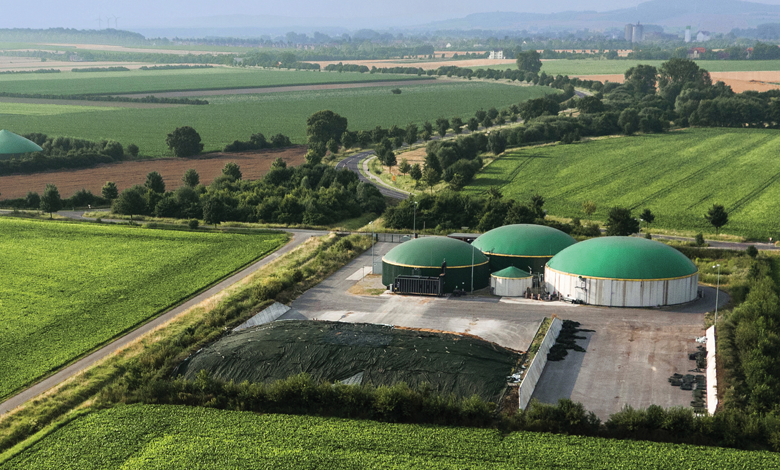
A project funded under the Utility Regulator’s Energy Strategy Fund has identified areas of constraint in the network. The project, due to be published in late 2025, shows that the areas of constraint are in the west as gas is transported to the east of the region. The project determined that the constraints can be managed using proven technology that has been used in other countries. Reverse compression takes gas from a medium pressure of 4 bar and compresses it into the high pressure transmission network where it can be transported across Northern Ireland.
The cost of doing this does not place unreasonable costs onto the gas consumer base.
Multi-sectoral benefits and challenges
Biomethane is primarily seen as a zero carbon alternative for natural gas. There are also broader benefits such as managing the important attribute of managing nutrient waste. There is also the benefit of self-sufficiency of not having to import natural gas, which enhances energy security. Future work will look at these wider social and economic benefits of developing a biomethane economy in Northern Ireland.
Martindale highlights an example of the cross-cutting nature of developing a biomethane economy and the importance of developing environmental regulations that recognise the value of well-managed AD facilities: “If one of the many farm-based AD plants, wished to produce biomethane and remove significant excess nutrients from the surrounding countryside, of which there are many, the path is not clear.
“Although it is widely recognised that AD plants contribute significantly to local air and water improvements by removing and processing excess nutrients, current regulations around the environmental assessment of phosphorus reduction and ammonia pollution make securing permission very difficult, and that needs to change.”
Voluntary supplier obligation
Martindale recognises that although policy and any underpinning legislation will take time: “A support mechanism is vital. No other biomethane economy in Europe has been delivered without a support mechanism.” However, this will probably not happen in the next 18 months until there is a new Executive.
In the meantime, Phoenix Energy is working with gas suppliers which are a key intermediary between large energy users who are keen to access green energy molecules to meet their sustainability objectives, and those with ambitions to produce biomethane in Northern Ireland. “This is essentially a voluntary renewable heat commitment from local gas suppliers that would allow them to offer green gas molecules as part of their product offering. In the short term we are confident there is the demand from the large energy user sector that will take up that green product.”
Integrated and decarbonised energy system
Stepping back and looking to the future, Martindale sees biomethane as an opportunity to deliver an integrated and decarbonised energy system and to solve wider challenges such as nutrient waste management. The impact of energy integration was highlighted in a report by KPMG in October 2025 that sought to address the lack of understanding locally that both the gas and electricity networks would play complementary roles in the future energy system. The report entitled The Energy Consensus has five broad principles to decarbonise the energy sector: a diverse energy mix will be required in the future; renewable electricity will be a primary driver; there is a responsibility to utilise existing regional infrastructure; renewable gas may be more economic for hard-to-electrify end users; and an integrated decarbonised energy system is now possible with the development of biomethane at scale.
Martindale is optimistic that the goal of a fully integrated decarbonised energy system is possible, provided there is a clear political will and that policy development “recognises the considerable regional value that the development of sectors such as the biomethane economy can provide across economic, environmental, agricultural, and social outcomes”.