Catherine Connolly elected President of Ireland
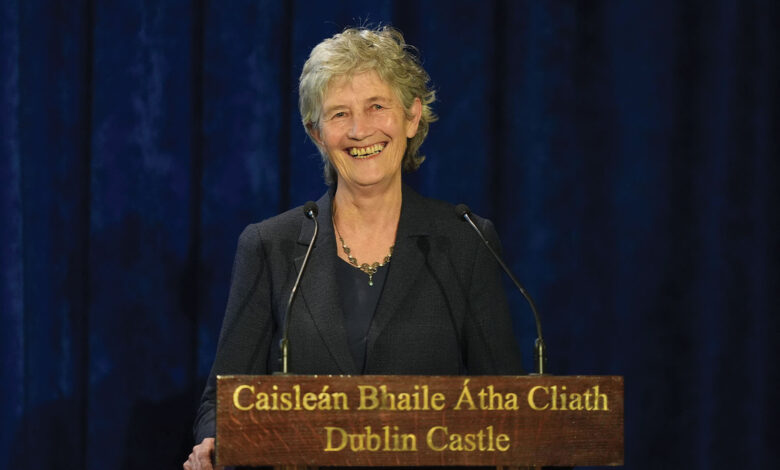
The election of Catherine Connolly as the 10th President of Ireland has proved divisive in Northern Ireland, with Sinn Féin basking in the victory of the candidate it backed, while unionists have claimed that the election shows the Republic is a “cold house” for unionists.
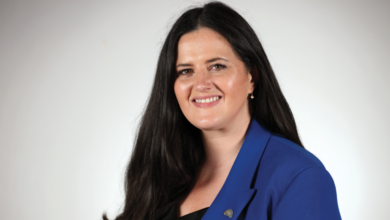
Catherine Connolly, the left-wing former Galway West TD, won the presidency with a larger mandate by number of votes than any political candidate or party in the history of the State. She won 914,143 votes, representing 63 per cent of the total, the largest popular vote margin since the presidency was established in 1938.
This achievement is attributable to a number of factors, the first being Connolly’s political capabilities. Her track record of opposition to the Irish Government on issues including Palestine and housing, strong debate performances, and refusal to resile from controversial standpoints established her as the frontrunner. These factors, along with use of social media by her campaign which was backed by Sinn Féin, the Social Democrats, Labour, People Before Profit, and the Green Party, transformed her into runaway winner.
Connolly labels herself a “voice for peace” and has made commitments to advocate for the people with disabilities, people’s right to housing, and the Irish language. During an August 2025 visit to Belfast, Connolly said she would use her voice “in every way possible” to work towards a united Ireland, adding: “I have always felt that we have cut off a limb of our body in having Northern Ireland cut off from us.”
She said she was “very conscious” that a united Ireland would require majority support to become a reality, asserting: “It is a building of trust, and it is a building of a vision for a united Ireland where we value everybody.
“Of course I would like to see it in my term as president, but whether that will happen will be a political decision.”
The campaign
Having moved early in August 2025, securing the nominations of Social Democrats and Labour TDs, Connolly got ahead of requiring Sinn Féin’s support to make it onto the ballot and left the party to consider its options. However, party president Mary Lou McDonald TD’s announcement in late-September 2025 that Sinn Féin would be supporting Connolly was, as she famously said, a “game-changer”.
With the backing of the largest political organisation on the island of Ireland, Connolly had the momentum and team on the ground to mount a challenge to both Fine Gael and Fianna Fáil, and appeal to a coalition of socialists, liberals, and Irish republicans.
For Fine Gael and Fianna Fáil, the election of Connolly is also the culmination of disaster classes in running an election by the two government parties. For Fianna Fáil, Jim Gavin was a calamity from the beginning. A presidential campaign can be a place where political newcomers can thrive, with Mary McAleese being the most famous example in modern times.
However, Gavin’s maladroit mannerisms and insipid debate performances put him on unsteady footing. The ground went from under him when it emerged that he had not paid back €3,300 owed to a former tenant; which he has now paid back. This culminated in the ludicrous situation where he dropped out of the race but remained on the ballot. Fianna Fáil Leader Micheál Martin is now left to pick through the bones of a damaging campaign and may face the fight for his life as party leader.
For Fine Gael, it was barely any better. There was enthusiasm at the beginning of the campaign when former European Commissioner Mairead McGuinness was unveiled as the party’s candidate. However, McGuinness quickly and unexpectedly dropped out, reportedly for health reasons, and former Minister of Social Protection Heather Humphreys took her place.
Humphreys was a capable candidate who could have had a fascinating case to make as an Ulster protestant. Humphreys’ family associations with the Orange Order became a point of contention on social media, with her grandfather having been a signatory of the Ulster Covenant, and her husband having been a member of the order. Ultimately unable to inspire voters in the campaign and, amid flailing poll numbers, Humphreys turned to negative campaigning against her left-wing opponent, focusing on Connolly’s trip to Syria in 2018 and accusing her of “insulting our allies” in Britain, the US, and the EU.
Spoilt votes
Turnout in this election was up slightly from the 2018 vote, when Michael D Higgins won a landslide victory as a popular incumbent. Dissatisfaction with the narrow field of candidates this time around prompted a ‘spoil the vote’ campaign. A record 213,738 (around 13 per cent) were spoiled; up massively from the 18,438 in 2018.
Most votes were spoiled with messages of anti-immigrant sentiment or endorsements for conservative commentator and Iona Institute barrister Maria Steen who failed to gain the 20 Oireachtas nominations necessary to get on the ballot.
North-south relations
Connolly’s impact on north-south relations remains to be seen. A passionate advocate for Irish unity and for the Irish language, her first trip to Northern Ireland since the election was to Oireachtas na Samhna, the annual festival of Irish including competitions, lectures and book launches which was held in Belfast for the first time since 1997.
Having been backed by Sinn Féin, Connolly’s election was welcomed by the party, while the DUP’s Jim Shannon MP was less enthusiastic, asserting that Connolly’s victory proves that the Republic of Ireland is a “cold house” for unionists.
TUV leader Jim Allister MP claimed that the presidential campaign “descended into open sectarianism, particularly after Sinn Féin entered the fray in support of the ultimate winner”, owing to the defeat of Humphreys.
Connolly’s term began on 11 November, and her inauguration was attended by First Minister Michelle O’Neill (who the President appeared to erroneously call ‘Michelle Smith’ during the ceremony), while the DUP refused to attend.
While Connolly’s election has divided opinion in this state, her ability to garner unlikely support, including from figures on the right such as Michael Collins TD and managing to be elected as the Dáil’s Leas Ceann Comhairle in 2020 shows that she has significant political skills as a personality and strategist, skills which could prove decisive in improving her relationship with Ulster unionism.