Political Platform: Colin McGrath MLA
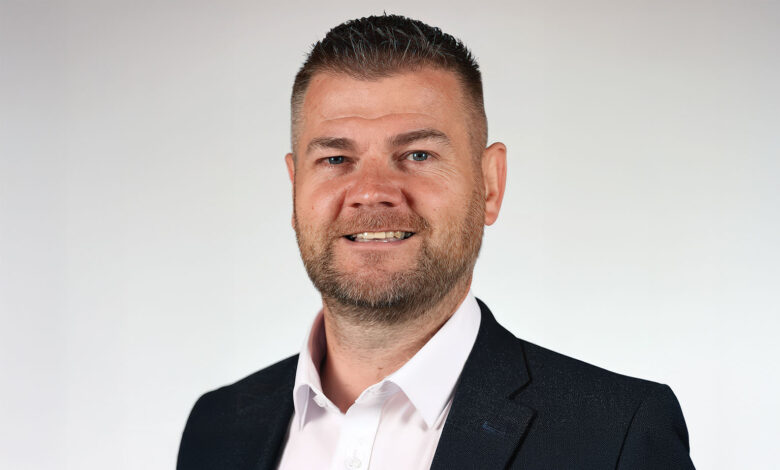
The SDLP’s Colin McGrath MLA has been in elected politics for 20 years. The South Down representative speaks to agendaNi about his priorities for his constituency, his political background, and the challenges of balancing politics with family life.
What inspired you to get into politics?
Having been working as a youth worker in the Patrician Youth Centre in my hometown of Downpatrick, I saw first hand how people were having to deal with the impact of government, or lack of, in their day-to-day lives.
Patrician at that time was undoubtedly the epicentre of Downpatrick, with generations of families having sent children through the doors. Being an integral part of that team meant everybody in the town knew me, and for those young people who were at Patrician, and their parents, there was already a bond of trust.
On occasion, people would bring issues to me about things that were or were not happening in the town, always closing with: ‘Somebody should do something about that.’
I thought that maybe I could do something about it. At that time, for people like me, the SDLP really was the party to be a part of. The Good Friday Agreement had been delivered, and people like Eddie McGrady and Margaret Ritchie were incredibly active in the local area. I joined up and, after a time, an opportunity came to run as a candidate in the local government elections in 2005. I ran, and managed to get elected and have been in politics ever since then.
What are your proudest achievements in politics?
Having been elected to the Northern Ireland Assembly since 2016, the institutions have been collapsed more often than they have been up and running. However, there was a period of something resembling stability during the 2020-2022 period, coinciding with the Covid-19 pandemic.
At that time, I was concerned with the statistics surrounding out of hospital cardiac arrests, and the level of people who had died from them. Hundreds were taking place each year and dozens were needlessly dying. I held the view that if we were to introduce mandatory CPR training and AED awareness onto the school curriculum then this could see a generation of lifesavers trained in these essential skills.
I broached this with the then-Minister of Education, who felt that the curriculum was untouchable. Therefore, I pursued the matter through a private members bill. When the new minister came into post she could see the merit of the bill and worked with me to see the change to the curriculum introduced.
The result is that, right across Northern Ireland now, at some stage in a young person’s school career, they will learn these essential lifesaving skills. I take great pride in that.
Who do you most admire in politics or public life?
I am very privileged in that I get to meet so many people working quietly away in their communities on a daily basis. This is usually in a voluntary capacity, but not exclusively. These highly skilled people are working away to fix their own corner of the world and do so not out of a desire for acclaim or admiration, but simply because it is the right thing to do.
There are thousands of these people across the North, whose names may never be known but still they carry on and help make this a better society for everyone.
Politically, I am lucky in that I get on well with all my party colleagues but also people from different political parties as well. Very often politics here is seen as very divided, but this does not consider the conversations that are taking place every day, whether loud or quiet, between people of different political backgrounds. That will not necessarily get the headlines but it will deliver positive outcomes.
As someone who sits on the Health Committee at Stormont I am able to work with everyone across the political spectrum.
What drew you to the SDLP?
I would say that we all seek authenticity. I think the public seek authenticity from their elected representatives, and will not be long telling you if they think you are trying to feed them a line.
The SDLP, to me, was the home of authentic representatives. When I joined the party, the likes of Hume, Mallon, and McGrady were political giants. To be able to learn from those titans was a genuine privilege. Not just them, but the likes of Margaret Ritchie, John Doris, Peter Craig, and Eamonn O’Neill were so demonstrably authentic in how they approached local politics, and the commitment you give to the electorate in seeking their vote. If you say you are going to do something, then you do it.
As the party that was solidly committed to delivering peace and reconciliation, the SDLP was and is the party to best deliver that.
What are your key priorities for South Down?
South Down has undergone changes in recent years with the reshaping of our electoral boundaries and that is something we have to be conscious of.
Downpatrick was and is my home, but it has been let down badly over the last years. I am unashamed when I say that the revitalisation and renewal of Downpatrick remains my number one priority. People in the town feel let down, and this has developed into a mistrust for politics in general. We have to give people reason to trust politics again. Not to feed them a line, but deliver on the pledges we each made at election time.
Aside from that, as the sole SDLP MLA for South Down, I have been spending a lot of time getting to know people from our most southernly point in Warrenpoint, right out as far as Poyntzpass. Right across the piece we are seeing our small settlement areas feel that they are being forgotten by government, both local and national. So I am doing my best to represent them where I can.
Finally, in places such as Warrenpoint and Newcastle it is essential that we maximise our potential for tourism. I am concerned to see how other areas are growing and I would worry about this happening at the expense of these towns in South Down. So the priority here for me is working with my colleagues on the council to ensure that we do not allow this to happen.
What are your interests outside of work?
I enjoy travelling. My brother has lived in Spain for some years now, so I do enjoy the occasions where I can call over there to pay him a visit. Family is incredibly important to me, so managing that balance alongside the responsibilities that come with a job that is not a traditional 9-5 role is something that needs to be considered.