Unlocking the advanced manufacturing opportunity
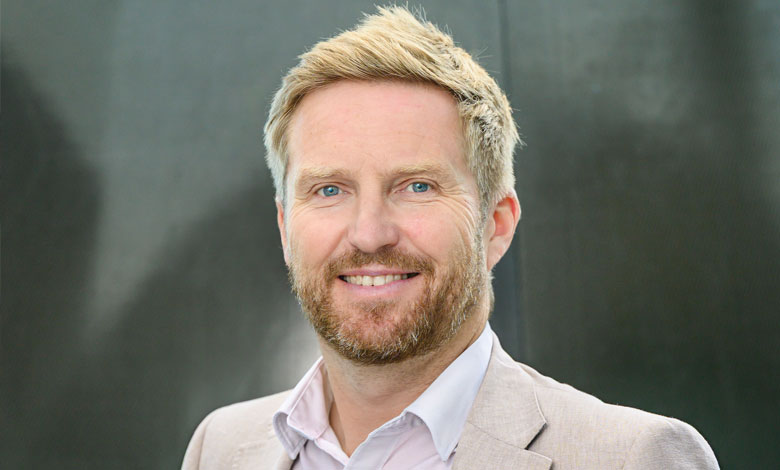
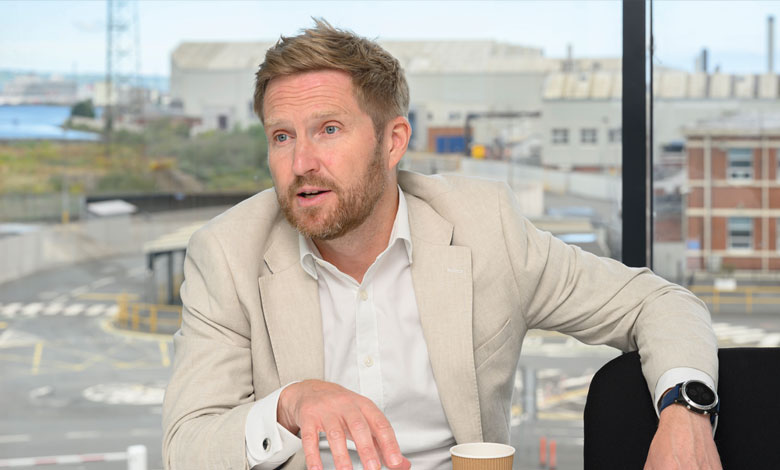
Overlooking Belfast’s harbour estate on Queen’s Island – now known as the ‘Titanic Quarter’ – Sam Turner, CEO of Queen’s University Belfast’s Advanced Manufacturing Innovation Centre (AMIC), discusses economic opportunity, technological advances, sustainability, and his vision for advanced manufacturing.
Having been seconded from the High Value Manufacturing Catapult in the UK, Turner identifies “a significant economic opportunity in Northern Ireland” in terms of its industrial strengths.
Having keen awareness of the manufacturing research and innovation strengths across the UK, Turner was cognisant of Queen’s University Belfast’s status as a leader in design, cybersecurity, and digitalisation research.
“I knew there were real strengths that could be consolidated into an international centre of expertise. After three years, I am pleased to say that the economic opportunity is even greater than I first anticipated,” he says.
“For example, the aerospace sector is delivering a series of partnership projects in collaboration with indigenous companies and prime contractors.”
From a UK perspective, AMIC is “fresh and exciting”. “There are real skills and talents to tap into here, and from our perspective, AMIC was the missing puzzle piece. We are linking the prime contractors such as Short Brothers to the supply chain and creating a sense of ‘team Northern Ireland’ which was absent beforehand.”
AMIC translates the R&D from academia to industry, while also acting as a convener, understanding what industry’s needs are, highlighting solutions, connecting companies, and seeking to establish Northern Ireland as a place for investment, while consolidating what already exists.
In fact, AMIC itself is doubling in size, year-on-year. Having established a team of 60 people to date, this total is set to increase to 100 by the beginning of 2026.
Wider economy
Discussing what “already exists”, Turner identifies manufacturing as a core part of the economy in Northern Ireland. “Manufacturing certainly has a disproportionate socioeconomic tailwind here relative to the wider UK economy,” he says.
In fact, a recent study undertaken by Manufacturing NI demonstrates the social impact of manufacturing, including beyond Belfast.
“After three years, I am pleased to say that the economic opportunity is even greater than I first anticipated.”
Sam Turner, CEO, Queen’s University Belfast’s Advanced Manufacturing Innovation Centre (AMIC)
“Manufacturing is an SME-intensive ecosystem, with many successful, independent, and phenomenally innovative family-owned businesses. From an AMIC perspective, we want to demonstrate how they can be even more successful by providing access to the latest technologies, working in collaboration, developing the skill base, and securing new contracts and work. In short, we want to scale indigenous manufacturing businesses and enhance their competitiveness,” Turner explains.
Challenges
Perennially, the major challenges facing manufacturing are cost competitiveness and pricing which, in competing economies, are often determined by government incentives and cheap labour.
The solution, Turner maintains, lies in technology. “While AMIC is assisting the universities and colleges to produce graduates and apprentices with relevant skills, we also want to upskill the existing workforce to embrace technology in a way that is novel and sustainable,” he says.
Other challenges include geopolitics and a shifting of supply chains. Though the AMIC CEO interprets these as an opportunity for Northern Ireland.
“Consider, for example, how the western economies are seeking to grow semiconductor manufacturing. Uncertainty around tariffs could open opportunities to markets in the United States, differentiating Northern Ireland from competing economies which have higher tariffs. Here in Northern Ireland, we have the only UK land border with Europe and our all-island supply chains are a major part of the opportunity.”
Strategic priorities
From a strategic perspective, AMIC is exploring the challenges associated with creating next generation products and cost effectiveness of the aligned manufacturing processes.
“We are working in partnership with several companies in the fabrication sector in Mid Ulster called ‘Project 4WARD’, examining Industry 4.0 for automation and welding.
“There is also a direct one-to-one dimension of what AMIC does, helping companies with business cases on technology insertion to improve productivity, automation, factory flow, layout, and design for products.”
Simultaneously, AMIC is beginning to develop its skills offering in collaboration with both Queen’s University Belfast and Ulster University, as well as the further education colleges.
“We are working with both industrial partners and academia to determine the collective need and solutions,” Turner explains. “That way, progress is made collectively by AMIC, the universities, and dozens of companies to establish an attractive and unique proposition in contrast to competing parts of the world.”
Policy
Advanced manufacturing transcends a range of sectors: aerospace; materials handling; nanotechnology/photonics; parts of agritech; and construction. So what does the broader industry require of the Executive?
“Clarity of strategic intent is important,” Turner emphasises. “Executive support is not always defined by money alone, rather it is about providing confidence for investors.”
Some of the challenges from the perspective of a potential investor, including energy cost, infrastructure delivery, and skills provision, are within the remit of the Executive. “The Executive has a role in incentivising companies to invest in the skills pipeline at all levels while also supporting the upskilling of the existing workforce.
Harnessing research strengths to deliver tangible socioeconomic impact is a major aspect of Queen’s President and Vice Chancellor Ian Greer’s strategic vision for 2030 and, in fact, was fundamental to the establishment of AMIC.
One factor informing AMIC’s raison d’être, therefore, is the high-risk profile of R&D. “University is the right place for very high-risk research and there is some excellent research being undertaken,” Turner observes.
“Often, it is too expensive and risky for industry to invest in R&D that may or may not deliver. As such, it requires public sector funding – whether UK, Executive, European, or Irish – to derisk the investment and enable the innovative spectrum of industry to pursue innovation. That is the ultimate mission.”
With all the pressures on the Northern Ireland economy, Turner believes that a clear and combined strategic message from the Executive and both local universities could leverage transformative investment from the British Government and the private sector alike.
“Clear strategic intent can demonstrate Northern Ireland’s strengths to the UK Government. That will draw additional funding and support from beyond Northern Ireland,” the AMIC CEO says.
AI
Meanwhile, artificial intelligence (AI) increasingly plays an influential role in design processes, accessing manufacturing materials data, and building design tools. Other uses include quality control, which is at the heart of manufacturing competitiveness.
“If a manufacturer has full control of their costs and processes, they will be able to deliver on time, build credibility, and win customers. Northern Ireland businesses are exceptionally good at doing that,” Turner states.
However, rapid advances in AI makes it difficult for SMEs – and even large companies – to keep pace. Simultaneously, while Turner acknowledges that Northern Ireland is adept in terms of its knowledge base, this will become less important as other economies without that existing knowledge begin investing in and deploying AI tools. In other words, the risk is that AI could be a leveller.
“If we combine the knowledge of manufacturing processes and products with the emerging technology – and that is what AMIC is here to do – we can get ahead of those who do not have the knowledge base or heritage and are over reliant on the technology,” he says.
“In areas such as aerospace or materials handling, Northern Ireland supply chains have an excellent global reputation for delivering on quality and cost. Emerging technology, including AI, can help consolidate this reputation by getting products to market more quickly, at a higher quality, and at a lower cost.
“As we begin to implement more AI solutions, the opportunities for productivity and quality are significant. However, new threat vectors emerge in tandem and are not well understood. There is a responsibility, therefore, to advocate for increased cybersecurity research in parallel with AI in the manufacturing domain.”
Sustainability
Similarly, Turner believes that if manufacturers can demonstrate lower carbon emissions than competitors, this will unlock fresh opportunities.
“There is an opportunity at a macroeconomic level for Northern Ireland to become a destination for low-carbon manufacturing,” he indicates, adding: “If we can get clusters of low carbon, affordable, and reliable energy certified – leveraging local fintech expertise – then we have a phenomenal opportunity.
Through the demonstration of competitive, high quality, and certified low carbon manufacturing footprints, therefore, Northern Ireland businesses have a huge opportunity to win more contracts in a global market and scale.
“AMIC can support companies to understand how they navigate reporting requirements on the scope one, scope two, and – importantly – scope three emissions. More importantly, we can help companies start reducing emissions.
“We want to scale indigenous manufacturing businesses and enhance their competitiveness.”
“For example, when designing a product, 80 per cent of the carbon content is embedded which has a cost. As such, AMIC is developing toolkits to support businesses in designing for lower embodied carbon.”
Turner also believes that a carbon border adjustment mechanism could ensure a level playing field for those investing in low carbon technology versus economies outside of Europe involved in the manufacture of carbon intensive and low-cost products.
“Northern Ireland has been at the forefront of trading into Europe and into the UK and has been ahead of the curve in terms of low carbon manufacturers,” he remarks.
“Disruption also brings opportunity, and we must ensure that manufacturing in Northern Ireland is in a position of agility. Rather than looking for differential advantage, we must seek to establish competitive advantage. Pace of innovation is fundamental to success amid these challenges, whether geopolitics, digitalisation, or sustainability.”
‘Factory of the future’
With the local nanotechnology/photonics sector as a major focus for investment, AMIC intends to harness this through the construction of the ‘Factory of the Future’.
As AMIC’s 10,500m2 flagship facility, Factory of the Future at Global Point Business Park in Newtownabbey draws upon the research excellence of both Queen’s University Belfast and Ulster University, opening access to “the best of Northern Ireland”. This facility, funded in partnership with Antrim and Newtownabbey Borough Council, will allow scaling companies to develop new products and access facilities that would be prohibitively expensive to buy themselves.
“The Factory of the Future will have a representative production environment where we can demonstrate, test, and derisk novel technologies for industry,” Turner explains. “This is difficult to replicate in a university lab. Instead, it must be conducted in an environment that mirrors a factory, with production systems, equipment, and technology, which can be resource intensive.
“People will be able to utilise our facility to explore use cases, problem solving, and proof of concept before deploying this knowledge in their own facilities.”
The Factory of the Future will also have class five and class six clean rooms which will be accessible to organisations in the photonics, nanotech, and biotech spaces. We will be able to help organisations to develop products, optimise manufacturing processes.
Turner anticipates that AMIC will move into the new site by the end of March 2026, with a formal opening in autumn 2026 once it becomes fully operational.
AMIC’s footprint will therefore be spread between its existing harbour facility – the Northern Ireland Advanced Composites and Engineering Centre (NIACE) building, and the Factory of the Future at Global Point.
At the end of July 2025, Finance Minister John O’Dowd MLA and Economy Minister Caoimhe Archibald MLA visited the Factory of the Future site. With construction ongoing, the former emphasised the potential economic growth and social benefits of the new facility.
“This centre is a key part of the Belfast Region City Deal and will be a state-of-the-art research and innovation facility that will serve as a hub for advanced manufacturing technologies… It will have a positive impact on local communities through new jobs, an increased skills base and its support of local businesses,” he said.
Archibald added: “AMIC’s Factory of the Future is a £98 million investment that will transform local manufacturing. It will create 1,500 new jobs, train hundreds of apprentices, and inject millions into the local economy… helping businesses boost their productivity and global competitiveness. Both of which are central to my Economic Vision and the long-term economic development of the North.”
The Factory of the Future, Turner insists, will “become a site of European significance”. “Rather than being a Northern Ireland equivalent of what is happening elsewhere, it will build on local strengths to become a global centre of excellence.
“Capital intensive production sites are needed to do some of that work. One thing AMIC is keen to pursue is assisting manufacturing technology developers. Locally, there are many cyber companies moving into areas such as manufacturing. AMIC is assisting companies seeking to grow and scale with digital solutions to connect with manufacturers who have problems and challenges.
Vision for AMIC
Summarising, Turner defines AMIC’s vision in terms of economic impact. The CEO wants manufacturing to reassert itself as a fundamental part of the economy, replete with high-value, long-term careers. “We are establishing manufacturing clusters, collaborating right the way through the supply chain and strategic leadership, and seeking to achieve more with Executive support,” he outlines.
Referencing Strategy 2030, Queen’s University Belfast’s 10-year strategy, he emphasises the strategic priority of delivering a transformative and sustainable economy, establishing Queen’s as a global research-intensive university, providing the skills hat Northern Ireland needs.
“AMIC is here to move the dial for the economy in Northern Ireland,” Turner asserts, concluding: “I want Northern Ireland also to be a place where people want to build factories, put their work into supply chains, and become an exemplar of high-tech, high-skilled, sustainable manufacturing.
“For decades, offshore it/relocate it has been a trend where people take manufacturing and relocate it to low-wage, low-cost economies. Conversely, greenshoring is taking manufacturing and instead locating it in low-carbon economies. We could be a leader in that; a green destination.
“To be an exemplar, we need the right skills and technologies, but we also need a sense of strategic purpose at Executive level – internalising that ambition and delivering the enabling infrastructure.”