Unionism stands at the crossroads
Since the Brexit vote in 2016, unionism has faced crises such as the Northern Ireland Protocol and Irish Sea border, the emergence of Sinn Féin as the largest party, and a rise in support for a united Ireland. In this context, Robin Swann MP from the UUP and Phillip Brett MLA from the DUP have been discussing the future of unionism with agendaNi’s Joshua Murray and Clayton Taylor.
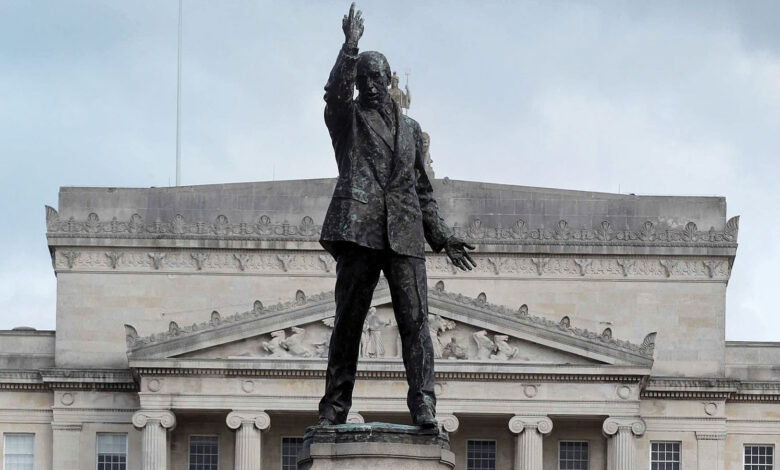
When James Craig, the inaugural Prime Minister of Northern Ireland, proudly boasted of “a Protestant parliament and a Protestant state” during a heated Stormont debate in 1934, political unionism was secure, united, and given free rein to govern the region as an effective one-party state until the early 1970s.
Fast-forward to 2025, and the ‘Protestant parliament’, with its inbuilt unionist majority, is long gone. Having overtaken the DUP in Assembly elections in 2022, Sinn Féin is the largest party in Northern Ireland and the undisputed voice of nationalism, with Michelle O’Neill MLA as First Minister. Furthermore, on the constitutional question, support for the union has dropped from 65 per cent in 2013 to 48 per cent in 2025, while support for a united Ireland has risen from 17 per cent to 41 per cent in the same time period.
While the DUP remains the foremost party in unionism, it has presided over a significant decline in support, arguably caused by its own poor decision-making. Following the 2017 UK general election, the DUP’s influence in British politics peaked, amid the signing of a ‘confidence and supply’ agreement with the Conservatives under Theresa May. However, while the party was able to secure £1 billion in public spending for Northern Ireland, its opposition to May 2025’s proposed Brexit deal, followed by the DUP’s support for Boris Johnson succeeding her as Prime Minister, soon resulted in a loss of influence amid Johnson’s landslide victory and the loss of Nigel Dodds’ north Belfast seat in the 2019 election.
With the rise of Johnson arguably enabled by support from the DUP, the victorious Johnson declared: “There will be no border down the Irish Sea… over my dead body.” He subsequently agreed to the Northern Ireland Protocol, creating a customs border on the Irish Sea. Johnson also presided over the introduction of Irish language legislation, the decriminalisation of abortion, and the introduction of same-sex marriage to Northern Ireland. While the DUP has been traumatised by the events of Brexit, as well as the aftermath of the fall of Arlene Foster, and subsequent rise and fall of both Edwin Poots MLA and Jeffrey Donaldson, the possibility of it being usurped remains remote, with the Ulster Unionist Party still gripped in the identity crisis which has characterised its slow demise since 1998, and the TUV subverted by perceptions that it is the ‘one-man band’ of Jim Allister MP.
In this context, agendaNi has been discussing the state of unionism in 2025 with the DUP’s north Belfast MLA Phillip Brett and former UUP leader Robin Swann MP. agendaNi also reached out to the TUV on multiple occasions for participation in this interview feature, but no representatives made themselves available.
How would you describe the state of unionism in Northern Ireland in 2025?
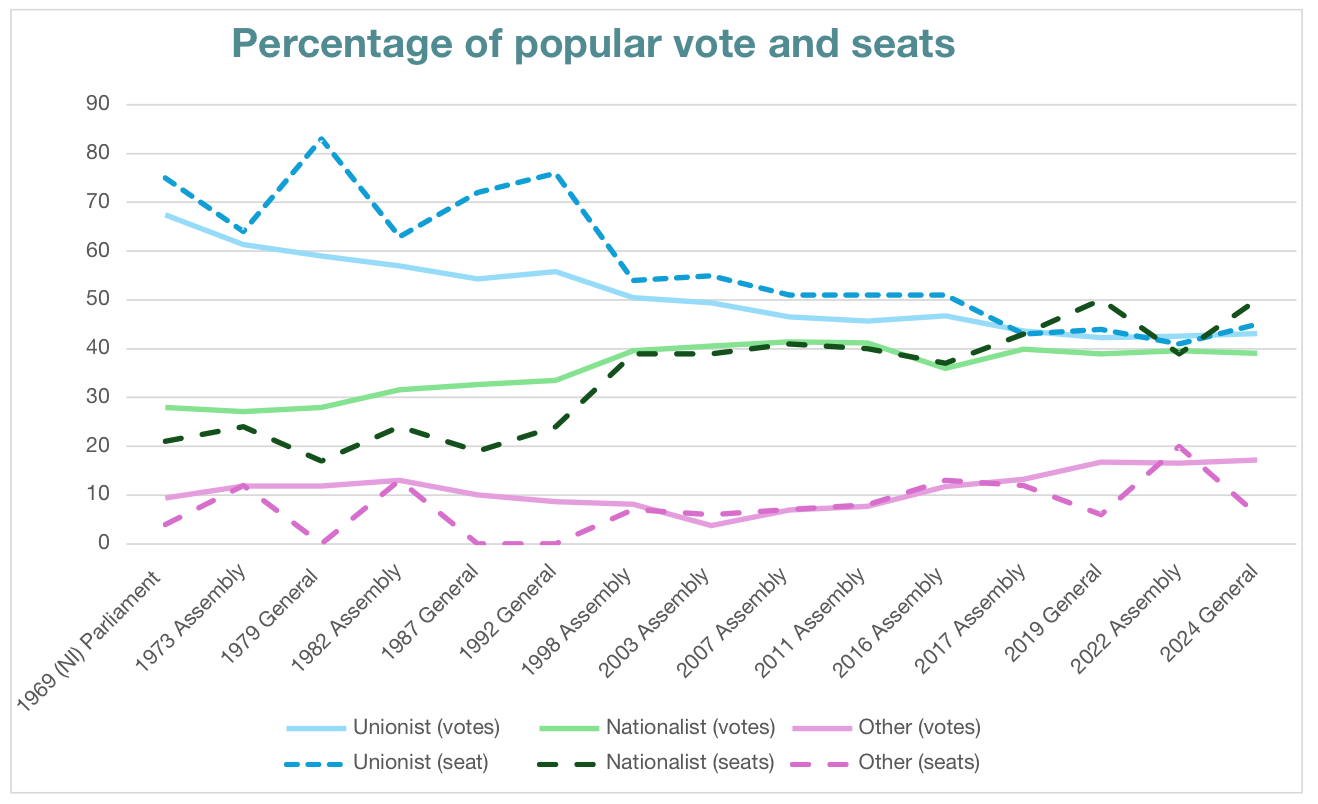
Phillip Brett MLA (PB): Unionism remains the largest designation in the Assembly. Nationalists are at 39 per cent, the exact same level as 1998. However, unionism has a challenge to encourage new people to our cause and increase the number of people voting for pro-union parties.
Robin Swann MP (RS): The narrative seems to be about defending the union, but it should be about selling and promoting the union, and moving to a positive position. If we are now looking at creating a new generation of younger voters, they want to see the positives. It is no longer about the defence of what once was or could have been. It is about where we can go, and how we create a union that is worth being a part of.
Unionism received a vote share of around 50 per cent in the 2016 Assembly election, but this fell to 38 per cent in the 2023 local council elections. Considering this, is political unionism in decline?
RS: There has been a small decline in unionist representation. When the number of MLAs per constituency was reduced from six to five in 2017, unionism lost most of those seats, not because of a decline in vote, but because of voter management with multiple unionist parties, and independent unionists on the balance sheet. On the local level, the introduction of ‘super-councils’ also decreased representation. There are different ways to read these percentages, they show first preference votes, not the final tally of elected councillors or MLAs.
PB: Unionism has an opportunity to expand its voter base by encouraging new people into our movement. It is crucial that we, as political parties, represent the views of those who hold pro-union stances. There is a responsibility on unionism to be more reflective of our community. For example, in north Belfast, the DUP has grown its membership, with younger people, and people from non-traditional DUP backgrounds joining the party. I believe this will bear fruit at the next election.
Do socially conservative positions within unionism inhibit its appeal to younger voters?
PB: The only qualification required in becoming a member of the DUP is support for the union. The DUP has been the lead voice within unionism for the views we hold, and we do not apologise for those views, though people vote for us for a range of reasons. The media have unfairly focused on views held by our members.
RS: No, looking at the latest LucidTalk poll, support for the UUP amongst the 18-24 age bracket is growing. It is important to say that not all unionist parties are socially conservative in their core or presentation.
How can political unionism broaden its appeal?
RS: We need to outline a positive vision, something that chimes with voters, identifies with their needs and aspirations as opposed to simply lambasting others. You do not make your own candle burn brighter by blowing another one out.
PB: We need to focus on everyday delivery and making Northern Ireland work for everyone. This is a unique place, and it is incumbent upon myself and my colleagues to go ahead and sell the benefits of Northern Ireland. On some occasions, I and others have done a poor job in selling the union, not just for unionists, but for everyone in Northern Ireland.
Can unionism regain the post of First Minister?
PB: Following the last Assembly election, unionism remains the largest designation, but because too many unionist parties ran in the election, we do not have a unionist leading the executive. I believe Emma Little-Pengelly MLA is the best candidate to be First Minister, her popularity is higher than any executive minister, amongst unionists and non-unionists alike. It is important that Northern Ireland is led by someone who supports the country and wishes to see it succeed. The First Minister takes every opportunity to talk Northern Ireland down on the world stage.
RS: Since the changes made to the procedure for appointing a First and deputy First Minister in the St Andrews Agreement, the DUP and Sinn Féin to play the ‘if you do not vote for us, you get them’ card continually. Despite Sinn Féin securing the First Minister post, the institutions have not crashed or fallen. Is it challenging for some people? Yes, but I do not believe it is the be all and end all.
How can unionism forge greater links with UK-wide political parties and regain relevance in mainstream UK political discourse?
RS: The Prime Minister has made his unionism clear, he stands in front of the union flag. The language of ‘having no selfish strategic or economic interest in Northern Ireland’ is not something we hear anymore. Just as the UK-wide parties campaigned together in the [Scottish] independence referendum held in 2014, I believe a similar campaign would occur during a border poll campaign, although I worry that some of the personalities could do more damage than good.
PB: The DUP have worked with a range of parties over the years, most notably, we had the formal agreement with the Conservative Party between 2017 and 2019. Keir Starmer MP has been very clear in his support for Northern Ireland remaining in the union, his campaign material could have been DUP material. We have good relationships with all the parties working in the interests of the UK.
Did the Brexit experience damage unionism?
PB: When we entered a formal arrangement with the Conservatives, we were at a time when some political parties wished to undo the will of the British people as declared in the 2016 referendum. It was DUP votes on three separate occasions that ensured the defeat of the Protocol in the House of Commons. The only way in which the protocol was able to be introduced was the 2019 general election, which gave Boris Johnson a large majority, leaving us powerless to block it.
RS: It emboldened nationalism at the time, and further damage has been inflicted by subsequent challenges such as the Windsor Framework. The damage continues for businesses, delivery of food stuffs, farm machinery and more. The way these challenges came about continues to undermine those of us who wish to strengthen the union.
What is your case for the union?
PB: It is the best situation for all people in Northern Ireland, regardless of their background or tradition. This is such a unique place, you can be British, Irish, Northern Irish, you can be none of the above. Only our place in the United Kingdom affords that to our people. We are part of the fifth [sic] largest economy in the world. Our membership of NATO ensures the protection of each and every one of our citizens, and allows us to stand on the world stage. Only our place in the United Kingdom offers that opportunity to our people and communities.
RS: The United Kingdom is the only country in the world with a national health service. If we can get it working well once again, looking after all of us from the cradle to the grave, it will be very hard to argue that the system in the South is a better offer. We still lead the nations in education. Our armed forces, our standing in world, our support for Ukraine. The safety net of the social security system is another positive aspect of the union, but we need to see the benefits equally shared across the four nations.
Are you in favour of a single, combined unionist party?
PB: In my view, the DUP is a strong brand. We have led unionism since 2003, and we are a party held dear by hundreds of thousands of voters across Northern Ireland. We can stand on our own two feet. We have seen examples of inter-unionist co-operation in the past, such as cross-unionist support for Alex Easton in North Down in 2024. I am very happy to work with our colleagues of the unionist persuasion, and I will work with anyone who wishes to maintain and strengthen the union, though I do not think Great Britain or Republic of Ireland parties understand the nuances of Northern Ireland politics.
RS: A single unionist party would not be the monolithic block of all causes. There are other policy issues which differentiate the current parties, and these are important to individuals. A greater variety of choice brings more people out to vote. Unionism could realign by policy, but not via the sitting everybody down on a Monday morning and saying, “we are no longer three parties, decide which room you wish to enter”, some people will blindly choose the biggest party, regardless of the policy detail.
Will Northern Ireland exist in 2100?
RS: I believe in the strength of the union, but we must overcome the political challenges that exist in Westminster when selling the benefits of the union. We must ensure that we, as political representatives, are not the problem. We must make sure people understand the benefits of where we are. I remember the end of the Celtic Tiger, and the subsequent IMF and UK bailouts, and with Dublin looking at its first austerity budget in quite some time, one of the biggest arguments regarding unification is finance.
PB: I do not think I will be around to see that! We have been told year after year that Northern Ireland is a failed state. In 2021, Sinn Féin President, Mary Lou McDonald TD, told us a border poll was imminent. She recently changed the date again to after 2030. The revisionism of nationalist parties is galling. Despite the difficulties unionism has faced, the overwhelming majority of people support Northern Ireland remaining in the union.