National Development Plan was missed opportunity to underwrite the politics of a shared economy
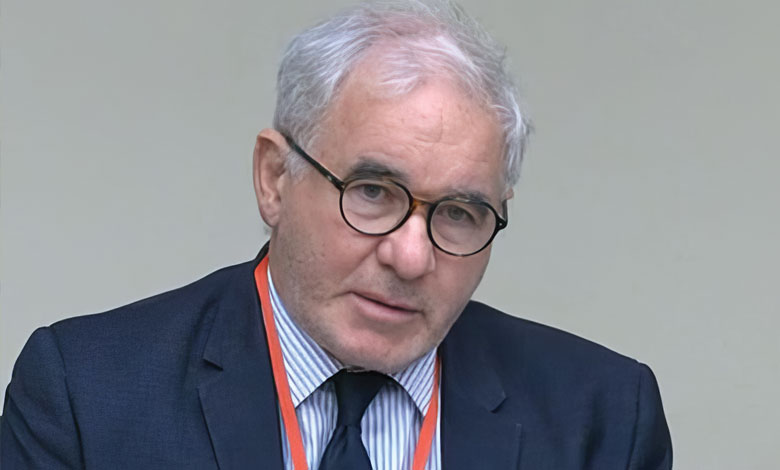
The July publication of Dublin’s National Development Plan Review 2025 cast new light on the pace at which the two parts of our island are drifting apart like two ice sheets cut adrift by the unrelenting force of climate change, writes Peter Doran, Senior Lecturer at the School of Law, Queen’s University Belfast.
Billed as “the largest ever capital investment plan in the history of the [Irish] State,” the Irish Government’s NDP Review promises thousands of new homes, more childcare and school places, investment in disability services, and better healthcare.
In Northern Ireland, conversations on the economy and infrastructure highlight the growing powerlessness of devolved ‘decision-makers’, while Dublin announced investments worth €275.4 billion (over £235 billion). The plan represents an increase of €34 billion on previous stages, aided by a September 2024 European Court of Justice ruling that Apple must repay unlawful state aid, plus interest, to Ireland.
While Dublin commits to budget surpluses, the UK fiscal picture is bleak. Brexit has hit growth, compounded by Keir Starmer’s alignment with US-led military spending priorities in Europe. The UK Office for Budget Responsibility reported government debt at 94 per cent of GDP in summer 2025, among the highest in Europe, while 10-year bond yields reached 4.5 per cent, placing the UK among the costliest borrowers globally.
For Northern Ireland and the devolved territories, the outlook is grim: no end to the “cost of living” crisis, energy pressures and strained public expenditure. Some commentators even warn of another IMF bailout.
The contradictions of devolution must be faced. Fiscal arrangements undermine the spirit of the Belfast-Good Friday Agreement by devolving responsibility without fiscal power. Only financial control translates into political power. Without it, the Northern Ireland Executive is a vassal: it performs governance but cannot deliver for citizens, lacking resources and the latitude to set priorities.
The ecological crisis at Lough Neagh illustrates this impotence. Even modest measures like a Nitrates Action Programme are buried in division. Governance sclerosis, combined with clientelist politics, leaves Northern Ireland ripe for industry lobbying. Resolution requires framing the crisis as a shared responsibility across Dublin, Belfast, and London.
As things stand, the Executive is little more than a democratic buffer for London, shielding it from direct accountability on social and ecological justice. Lough Neagh, the Mobouy landfill site, and degraded rivers and coastlines all stem from a powerless Stormont. Its mal-governance manifests in two ways:
- • parties compete within the narrow fiscal envelope set by London, amplifying divisions; and
- • devolution’s “democratic performance” forces parties to pretend they hold meaningful power.
This creates a spectacle that provides cover for a London Government itself in fiscal crisis. Northern Ireland’s economy and democracy can only be viable with sustained investment underwritten jointly by London and Dublin. Devolution, conceived as conflict resolution, cannot function without fiscal reform.
Short-termism in Dublin
For these reasons, the NDP and the Dublin Government’s Programme for Government fall short for Northern Ireland. Short-termism in Dublin risks betraying future generations by failing to protect ecological assets such as Lough Neagh, regardless of constitutional outcomes. For republicans preparing for reunification, underinvestment in the North betrays the land of Ireland itself.
The NDP is Ireland’s strategic framework to transform infrastructure, addressing deficits in housing, transport and energy. Regional balance is emphasised, but the all-island dimension remains modest.
NDP priorities echo those in the Programme for Government 2025, Securing Ireland’s Future. Yet the commitment to a “shared island” is questionable given limited all-island investment. The PFG chapter on Building our Shared Island and Rebuilding Ireland-UK Relations reaffirms the goal of Irish unity “through a sustained focus and investment in reconciliation” and the Good Friday Agreement. This is underwritten by an extra €1 billion for the Shared Island Fund to 2035, aimed at reconciliation, respect and growth. A headline measure is a new North-South statistical series, comparing economic, health and social outcomes. Diverging results will soon be clear.
Other commitments include:
- funding for independent cross-border research;
- completion of the Narrow Water Bridge;
- prioritisation of the FourNorth project from Connolly Station;
- delivery of the A5;
- deeper healthcare collaboration;
- improved water basin management and nature restoration; and
- integrated tourism strategies.
Additional all-island measures involve:
- implementing the All-Island Strategic Rail Review;
- developing an innovation and entrepreneurial ecosystem;
- consulting on Dublin-Derry air connectivity;
- assessing all-island air cargo infrastructure; and
- introducing a John Hume Fund awarded annually by the European Parliament to champions of reconciliation and shared prosperity.
These commitments are welcome, but the overall scale of support is far below what Ireland’s historic role under the Good Friday Agreement requires. If the Dublin Government truly claims to cherish the whole island, it must match rhetoric with sustained all-island investment to secure both ecological and democratic futures.