Heart health at a tipping point
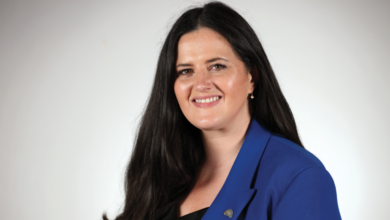
The start of the 2020s has marked a worrying reversal in heart health progress across the UK. In Northern Ireland, the situation is particularly stark. As Fearghal McKinney, Head of BHF Northern Ireland, explains, we are at a tipping point.
Obesity remains a persistent challenge, with 28 per cent of Northern Ireland’s adult population, around 410,000 people, classified as obese. Cardiac waiting lists have surged, with 3,002 people awaiting surgery or treatment at the end of 2024, nearly 30 per cent higher than in 2019.
In 2023, 4,227 people died from heart and circulatory diseases in Northern Ireland, the highest number since 2012. Of these, 1,133 deaths occurred before the age of 75, including 500 working-age adults, averaging 10 premature deaths per week.
These trends follow decades of progress, during which annual deaths from heart attacks and strokes fell by half since the 1960s, thanks to BHF-funded research, medical advances, and declining smoking rates. But now, that progress is at risk.
Local impact and strategic response
Northern Ireland’s cardiovascular health crisis is not just a statistical concern, it is a deeply human one. The rise in heart disease, diabetes, and obesity is placing unprecedented pressure on the health system. Cardiac waiting lists have grown significantly, and the number of premature deaths is climbing.
These trends are mirrored across the UK, where the British Heart Foundation (BHF) has identified a need for a bold, coordinated response. The charity’s new strategy is designed to address this crisis head-on, combining cutting-edge science with policy advocacy and public engagement.
Fearghal McKinney, Head of BHF Northern Ireland, stresses the urgency: “We are entering an era of immense scientific opportunity that can turn this tide. By driving a research revolution, we can reverse this worrying trend and save and improve more lives than ever before.”

The BHF’s strategy is built around three core priorities:
- Reimagine prevention: Using data science, artificial intelligence, and behavioural science to identify and support those at risk earlier.
- Accelerate research translation: Increasing investment in cardiovascular research and ensuring discoveries in UK universities are rapidly trialled and adopted across health services.
- Transform care and support: Helping health systems innovate in how they care for people with heart conditions, enabling them to live longer, healthier lives.
Locally, the BHF is urging the Executive, funders, and supporters to collaborate in making this vision a reality. The charity continues to campaign for meaningful action on obesity, health inequalities, and system-wide reform.

Driving a research revolution
The British Heart Foundation’s strategy is rooted in the belief that science and innovation hold the key to reversing the cardiovascular crisis. Over the past decades, research-driven innovation has transformed heart care, from life-saving medications to advanced surgical techniques. But the pace of change is accelerating, and the BHF is determined to harness this momentum.
The charity is investing heavily in artificial intelligence (AI), genomics, data science, and advanced therapies. These technologies are already reshaping how heart disease is detected, treated, and even prevented.
AI tools are being developed to predict heart attack risk years in advance, allowing for earlier intervention.
Genomic research is unlocking new insights into inherited heart conditions and paving the way for personalised treatments.
Data science is enabling researchers to analyse health records from millions of people, identifying patterns and risk factors that were previously invisible.
This research revolution is not confined to laboratories. The BHF is working to ensure that discoveries made in UK universities are rapidly translated into clinical practice, trialled, approved, and rolled out across health services in all four nations.
McKinney highlights the local relevance: “We are urging the Executive, funders, and supporters to work together to make this vision a reality. We are at a tipping point, but we are also entering an era of immense scientific opportunity.
Policy and prevention
While scientific innovation is essential, it must be matched by bold policy action and public health leadership. The British Heart Foundation is calling on the governments across the UK, including the Northern Ireland Executive, to take coordinated steps to address the root causes of cardiovascular disease. This includes:
- tackling obesity through improved food policy, physical activity promotion, and community support;
- reducing smoking rates, especially in deprived areas where cardiovascular risk is highest;
- improving access to care, including reducing waiting times for cardiac treatment and surgery; and
- addressing health inequalities, which continue to widen and disproportionately affect vulnerable populations.
In Northern Ireland, the BHF is campaigning for the Executive to act decisively in the best interests of the peoples heart health. This means investing in prevention, supporting innovation, and ensuring that heart patients receive timely, high-quality care.
The charity also advocates for better use of behavioural science to help people manage their health, and for digital tools that empower individuals to monitor and improve their heart health over time.
McKinney says: “The reasons for the decline in heart health are complex and varied. But we know what works and we must act now to prevent further loss and suffering.”

Vision for 2035
The British Heart Foundation’s long-term vision is ambitious but achievable, with the right investment, collaboration, and scientific momentum. By 2035, the BHF aims to:
- prevent 125,000 heart attacks and strokes across the UK;
- reduce early deaths from cardiovascular disease by 25 per cent; and
- cut the number of years lost to heart-related ill health by 25 per cent.
These goals reflect the scale of the challenge, but also the potential impact of research-driven innovation. Cardiovascular disease remains one of the most preventable causes of premature death and disability. Yet, it continues to receive disproportionately low levels of research funding compared to its societal burden.
To address this, the BHF is committed to funding around £100 million in new research awards every year, making it the largest independent funder of cardiovascular research in Northern Ireland. The charity is also working to attract additional investment from government, industry, and philanthropic partners.
Bryan Williams, BHF’s Chief Scientific and Medical Officer, describes the current moment as “a golden era of discovery”. Advances in AI, genomics, and regenerative medicine are opening doors to treatments and cures that were unimaginable just a few years ago.
But to realise this potential, the BHF stresses the need for collaboration, with all four UK governments, the NHS, universities, and the life sciences sector. Together, these partners can unlock the breakthroughs that millions of patients are still waiting for.
Turning the tide on heart disease
The British Heart Foundation’s strategy is more than a roadmap, it is a rallying cry. The rise in cardiovascular disease across Northern Ireland and the UK is alarming, but it is not irreversible. With bold investment, scientific innovation, and coordinated action, the tide can be turned.
McKinney says: “By driving a research revolution, we can reverse this worrying trend and save and improve more lives than ever before. The BHF’s new strategy will be key to this, as we aim to save many more families the heartbreak of losing loved ones far too soon.”
The BHF’s commitment to funding world-class research, advocating for policy change, and supporting patients is unwavering. But success will depend on collaboration between governments, funders, researchers, clinicians, and communities.
As the UK enters a new era of scientific possibility, the opportunity to transform heart health has never been greater. The challenge is urgent, but the tools are within reach. Together, we can prevent thousands of premature deaths, reduce suffering, and build a healthier future for generations to come.
Mary McFarland’s story
Mary McFarland, 44, lives in Antrim with her husband and three boys, aged 6, 10 and 12. Mary, a medicinal chemist working in drug discovery, was fit and healthy when she had a heart attack at work in October 2024. Mary’s heart attack had followed from a SCAD (spontaneous coronary artery dissection), a serious condition where a tear appears in the wall of a coronary artery, which supplies blood to your heart. Mary says: “Before my heart attack I was working full time and was fairly active with three young boys and I had also recently taken up rowing with my local club. “It was a Friday morning and I was in work as part of an interview panel. I had walked up and down the stairs a few times and said to a colleague I felt so out of breath. I put it down to not having quite recovered from a vomiting bug I had had the previous Sunday. “I did the first interview and was feeling good, then the second interviewee came in. 10 minutes in, I felt a crushing pain in my chest and it spread down my arm. I thought it will go in a minute or two. When I was interviewing I was trying to take notes and I could not even hold the pen, my arms were so weak. Then the sweating started, I had to get up, so I got up and left the room and I collapsed just outside the door. Thankfully a colleague had followed me out and saw me collapse and came to my aid. I felt like I was struggling to breathe. “I had been a first aider in work for 15 years and my immediate thought was, ‘I am having a heart attack’. My colleague phoned the emergency services and got the defib ready. The pain in my chest started to settle a bit and I was able to start talking but my arms and legs were still full of pins and needles and I was short of breath.” The ambulance arrived and did an ECG on Mary. Mary was shocked to be told by the paramedics that she was ok and was having a panic attack. They said for her own peace of mind she could go and get a blood test. A colleague of Mary’s then took her to the hospital where an ECG was performed. Once the doctor saw Mary’s troponin levels were elevated, he admitted her. She says: “With my age and no medical history of heart issues, the doctor was very surprised with the high troponin levels in my body which suggested a heart attack. I am very aware of the symptoms of a heart attack but I never thought in my early 40s and having a healthy diet, that it could happen to me.” Mary’s chest pains continued when she was at The Mater Hospital from the Friday night through the weekend and on Sunday, she was transferred to the Royal Victoria Hospital Belfast. Mary says: “The cardiologist came to see me and she was going to arrange an angiogram so would need to call the team in. However she said as I looked well and did not look like her typical heart patient she would ask the senior consultant if it was really necessary to bring the team in. Thankfully the consultant agreed it needed to be done that day. “Until this point, I was not convinced I had had a heart attack. On the Friday the cardiologist had told me the heart can sometimes have episodes and that my troponin levels had indicated that my heart was under stress. I thought ‘maybe I am doing too much’. I have three kids, a full-time job, and the kids go to football and rugby. I leave the house early for work in Belfast to beat the traffic so my days are long. Doctor Murphy in the Royal was amazing and very clear. He told me that there was too much evidence to suggest anything other than a heart attack.” The angiogram confirmed Mary had a tear in her left anterior descending (LAD) artery. Mary says: “They started me on different medications and I was due to be discharged on Tuesday as they said a SCAD should heal on its own.” However on the Monday night, Mary woke up with “the same horrible pain in my chest” and the cardiology team took her for another angiogram. The cardiology team led by Dr Murphy discovered a blood clot on her heart which had blocked the artery and Mary had to have a balloon angioplasty procedure to widen the artery and save her life. Since starting cardiac rehabilitation in January 2025, Mary has begun to slowly build up strength and fitness again. When Mary started the cardiac rehab, she realised there were still a lot of misconceptions around who can be affected by a heart attack as she says: “Some of the people there with me could not believe I had had a heart attack and thought I must be training for something.” Mary has now made great progress on her recovery journey and is back to work full-time, taking her boys to their sports and rowing again. She says: “I am quite a positive person, I know it would be very easy to be afraid and not trust your body anymore, but I know that I am doing everything I can to build up my strength and reduce stress. “A lot of time people say when a lady has a heart attack she has symptoms that are not typical. Mine were textbook typical but they were still ignored. The main thing is to trust your own body and if you think there is something not right, go with what you believe and get checked out.” |

For more information about the BHF strategy visit: www.bhf.org.uk
You can contact the BHF NI team here: ni@bhf.org.uk