All-island rail project priorities
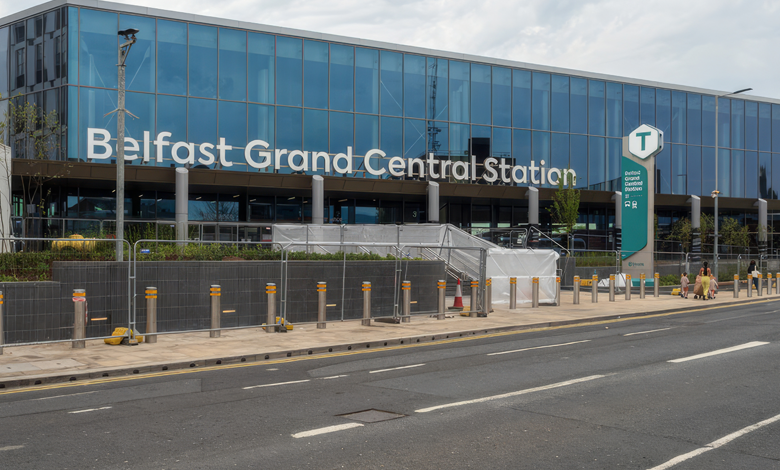
The Rail Project Prioritisation Strategy has set out how major rail schemes across the island could be sequenced and delivered over the coming decades, with upgrades and line reopenings in the North and on cross-border corridors placed at the forefront of the programme.
The strategy, developed to support the All-Island Strategic Rail Review and launched in December 2025, identifies which projects outlined in the review should be progressed first, which can be delivered in the short term, and which will require sustained investment over the medium to long term.
In doing so, it places particular emphasis on improving connectivity between Belfast, Derry, and Dublin, while also restoring rail access to parts of Northern Ireland that have been without services for decades.
Among the most significant projects identified is the upgrade of the Belfast-Derry line, which has long suffered from slow journey times and limited frequency. The strategy prioritises capacity and frequency enhancements alongside line speed improvements, with the aim of delivering faster, more reliable services, and supporting regional economic development in the northwest. These works are identified as a major project to be delivered in phases, subject to further appraisal and funding.
The Belfast-Dublin corridor, the island’s busiest cross-border rail route, is also prioritised for further enhancement. Building on the Enterprise fleet replacement programme, the strategy identifies electrification and line speed improvements as key next steps. These interventions aim to support journey time reductions, improve reliability, and significantly reduce carbon emissions on a corridor that plays a critical role in cross-border mobility and trade.
Beyond upgrading existing routes, the strategy places renewed focus on rail reinstatement in Northern Ireland, with several long-closed lines identified for progression. The reopening of the Lisburn-Antrim line would reintroduce a strategic link within the Northern Ireland network, improving flexibility and resilience while also enabling, in the longer term, a rail connection to Belfast International Airport.
The Portadown-Armagh line is also identified for reinstatement, reconnecting Armagh city to the rail network for the first time since the 1950s. Armagh is the only city on the island of Ireland with no railway station.
In addition, the strategy highlights a reinstated and partially new corridor from Portadown to Derry via Letterkenny, which would create a new cross-border rail spine serving the northwest and linking into the wider all-island network.
Taken together, these projects would significantly expand rail accessibility in Northern Ireland and strengthen cross-border integration, addressing longstanding regional imbalances in transport provision.
While the strategy focuses on major projects over the medium to long term, it also identifies a series of early interventions to be delivered by 2030. On the Belfast line, these include the reinstatement and increased use of passing loops, which would support hourly Dublin-Belfast services and improve reliability in the shorter term. A new spur at Portadown station is also proposed to future-proof the route for onward services towards Derry.
Projects in the Republic
Outside Northern Ireland, the strategy sets out a wide-ranging programme of upgrades across the Republic, including electrification, line speed improvements and capacity enhancements on key intercity routes such as Cork-Dublin, Galway-Dublin, and Waterford-Dublin. One of the most critical bottlenecks identified is the Hazelhatch-Portarlington section west of Dublin, where capacity constraints affect services across much of the national network.
A notable cross-regional project is the proposed reinstatement of the Claremorris-Athenry line, which would restore a missing link on the Western Rail Corridor. This would enable new passenger services between the west and south of the island and support the development of rail freight, particularly in conjunction with port connectivity.
Decarbonisation underpins much of the strategy. Around 750km of track are identified for electrification, including major intercity and cross-border corridors. This would enable the majority of long-distance passenger services to operate using electric traction, reducing emissions while also improving performance and operating efficiency.
The strategy adopts a phased delivery approach, with smaller, lower-cost interventions designed to unlock capacity and resilience in the short term, and more complex, capital-intensive projects sequenced over longer timeframes. All projects remain subject to detailed feasibility studies, environmental assessment, and the securing of funding and statutory approvals.
While the document does not commit governments to specific delivery dates, it provides a clearer roadmap than previously existed, indicating how the vision set out in the All-Island Strategic Rail Review could be translated into a sustained programme of investment.
If delivered, the prioritised projects would significantly reduce journey times between major cities, improve service frequency and reliability, and extend rail access to communities across Northern Ireland and the border region. More broadly, the strategy positions rail as a central component of future transport policy on the island, supporting economic development, regional balance, and long-term decarbonisation goals.
Minister for Infrastructure Liz Kimmins MLA says: “This is the next step in progressing the implementation of the All-Island Rail Review. I believe the transformation of our rail network will help address regional imbalance and encourage a shift towards greater use of sustainable transport. This includes important projects including Portadown to Derry, Portadown to Armagh, and Lisburn to Antrim.
“The publication of this Rail Project Prioritisation Strategy provides a way forward for connecting communities who have been without rail, particularly in the northwest, alongside increasing frequency and improving services for those along existing lines. This will help strengthen economic and social ties across the island.”