A digitally enabled utility

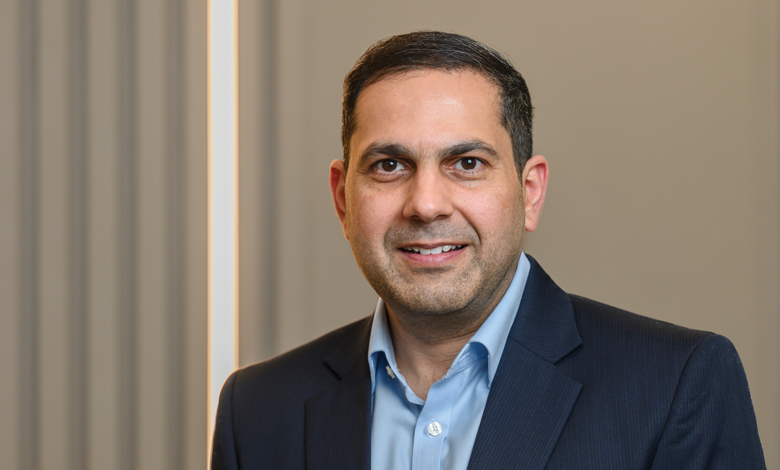
Rohan Kapoor, Chief Information Officer of NIE Networks, talks to Owen McQuade about the company’s new technology partnership with BT and how the electricity network is becoming smarter and greener with the convergence of digital, data and operational technologies.
In 2024 NIE Networks went to market for a managed service provider for IT, security, infrastructure, and network services. After an 18-month robust process which received high levels of market engagement, including several global IT players bidding, BT was confirmed as NIE Networks’ new partner.
“This multi-year partnership is a win-win for Northern Ireland’s economy supporting local jobs, skills development, and supply chain opportunities. The partnership also reinforces investment in Northern Ireland’s digital and energy infrastructure, helping create long-term economic value and accelerating Northern Ireland’s net zero transition.”
Rohan Kapoor, Chief Information Officer, NIE Networks
NIE Networks is entering a transformative era under RP7, the latest regulatory period, running from April 2025 to 2031. The company plans significant investment in digital capabilities to meet the evolving energy landscape.
“The industry is changing rapidly, and our strategy is to become a digitally enabled Distribution System Operator (DSO), powered by data and AI,” says Kapoor. “Our current business plan includes a wide range of transformation projects, and having the right partner is critical. This collaboration will ensure NIE Networks operates as efficiently and effectively as possible, enhancing the customer experience, and supporting delivery of the Executive’s net zero targets.”
Reflecting on the evolution of the sector, Kapoor notes that early in his career, the focus was firmly on core IT services. Today, however, the emphasis has shifted toward digital transformation.
“Digital is far more than traditional IT,” he explains. “We live in a data-driven world where technology is everywhere, generating vast amounts of data and information. The real challenge lies in refining and using that data effectively. You hear about AI everywhere, but what is equally important is the convergence of IT and operational technologies.
“At NIE Networks, we have both in abundance, and our goal is to integrate these data sets powered by AI to create more efficient operations that deliver real value for customers. This will unlock benefits for the DSO, including improved network visibility, enhanced performance, safer operations and a better customer experience.”
Kapoor adds: “Digital also gives us the tools to transform our technology services. A key part of this partnership is ensuring reliable and resilient services.”
Dynamic line rating explained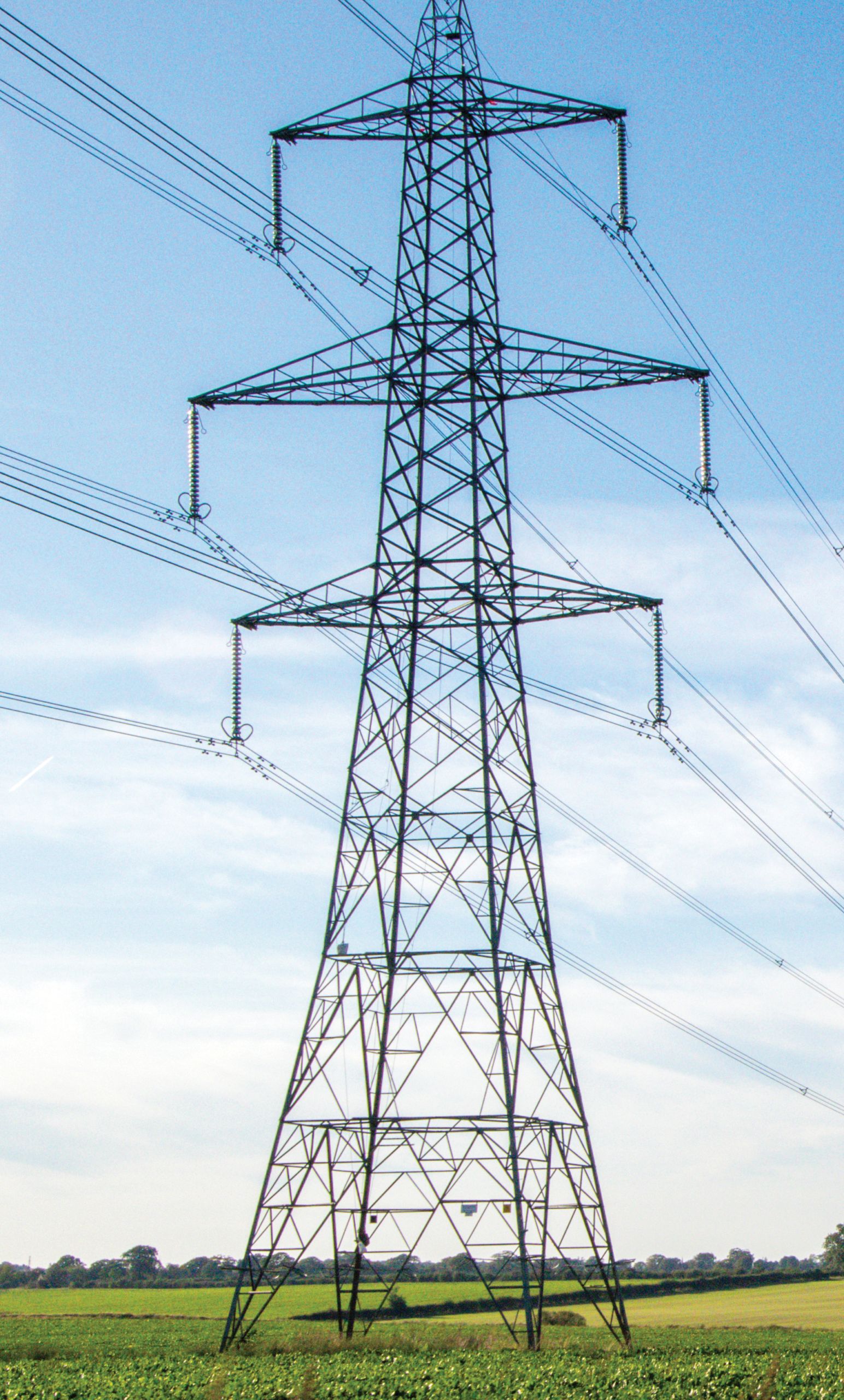
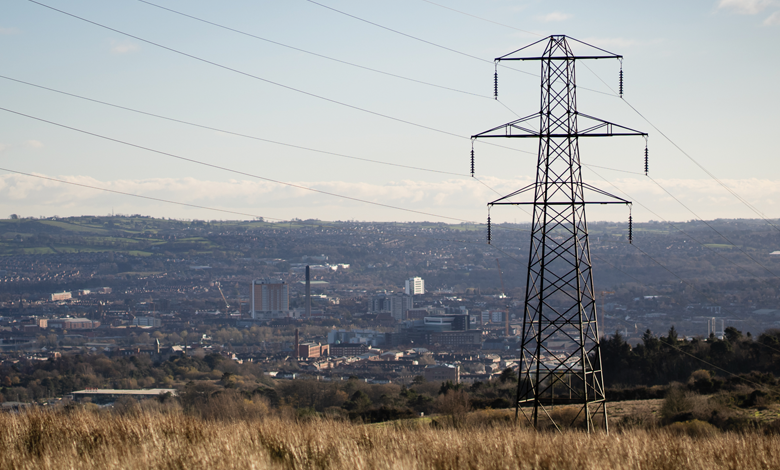
Dynamic line rating (DLR) is a grid technology that uses real-time weather data and line sensors to calculate a power line’s actual safe capacity, allowing it to carry significantly more electricity than the traditional ‘static’ rating. The traditional approach assumes worst-case weather (for example, no wind and/or high heat) to set a fixed, conservative limit, meaning lines are often underutilised. The DLR approach uses sensors to measure conductor temperature, wind speed/direction, solar radiation, ambient temperature, and even line sag. This is used to determine the actual maximum current the line can safely carry at that moment. The main benefits of DLR are increased capacity, reduced curtailment of intermittent renewable energy sources, cost savings by avoiding building new transmission lines, and improved grid stability. |
While acknowledging BT’s strong local presence, he highlights the added value of their global perspective: “BT brings expertise and experience from across the digital landscape and industry. It is no longer just about desktop PCs and networks, it is about intelligence, security, and a broader view of what digital can achieve. That insight will be invaluable for us.”
In recent times, cybersecurity has become a critical priority as the number of malware and ransomware incidents continue to rise. With the electricity network classified as critical national infrastructure (CNI), the growing influence of artificial intelligence has introduced new vulnerabilities, making it easier for malicious actors to target essential systems.
“This partnership strengthens our defences by bringing advanced security services and BT’s expertise in managing cyber operations,” says Kapoor. “As a major industry player, BT’s experience in safeguarding its own operations will be inestimable.”
Shared values
Kapoor believes the partnership will also benefit the Northern Ireland economy. Much of the expenditure in the partnership is to be spent locally, which means more jobs, enhanced skills, and experience in working with a CNI and a global technology player.
“This multi-year partnership is a win-win for Northern Ireland’s economy supporting local jobs, skills development, and supply-chain opportunities. The partnership also reinforces investment in Northern Ireland’s digital and energy infrastructure, helping create long-term economic value and accelerating Northern Ireland’s net zero transition.”
Aside from technology expertise and experience, Kapoor believes the partnership will be one of shared values. “There is a shared commitment to climate change with stringent emission reduction targets that include suppliers and customers.”
Smarter, greener grid
NIE Networks is driving the transition to a greener, smarter electricity network, backed by ambitious emissions targets and a dedicated sustainability team.
“Our goal is to combine operational and IT data to create intelligence that informs decision-making,” explains Kapoor. “This insight helps us maximise the existing grid, optimise investment, and increase capacity where it is needed most. For example, dynamic line rating technology uses sensors to deliver real-time data, enabling us to unlock additional network capacity and target investment effectively. By coupling this real time data with our investment plans, we can target investment to where it is needed the most.
“A smarter grid also informs customers about the best time to use electricity, when to use their washing machine, charge their EV, and so on. That is the world we are moving towards, and technology will enable that world.”
Kapoor continues: “The energy sector is evolving rapidly with the rise of the ‘prosumer’; individuals generating their own electricity and exporting surplus to the grid. In markets like California and parts of Australia, distributed energy systems featuring solar PV, wind turbines, and EVs are already widespread with households feeding surplus energy back to the grid.
“EVs, for example, can power a home for days during low generation periods,” explains Kapoor. “Some suppliers in Great Britain even incentivise customers to reduce usage at peak times. Our current system is still largely linear, with big producers feeding the grid, but the future will be decentralised with thousands of small producers using rooftop solar and other low-carbon technologies. Combined with smart metering, this will fundamentally change how we operate. Achieving this requires vast amounts of data, operational insight, and technologies to produce valuable insights for decision-making. The future DSO will be as much about data as it is about overhead lines and cables.”
Partnership, people, and purpose
Asserting that his digital leadership of NIE Networks is based on a “partnership approach”, Kapoor says: “The partnership with BT will deliver improved outcomes that will benefit all our customers; homes, businesses, and public services.”
Kapoor sees many potential synergies in working with the locally based BT Northern Ireland that will benefit NIE Networks’ customers and the region’s economy more broadly. “The real winners will be the people of Northern Ireland.
“The collaboration will help meet Northern Ireland’s energy needs, increasing our technological capabilities and enabling further electrification, renewables integration and emerging flexibility markets all of which have a positive impact on the Northern Ireland economy and the Northern Ireland Executive’s net zero targets,” he concludes.
Rohan Kapoor Rohan Kapoor is Chief Information Officer at NIE Networks. Originally from India, where he graduated with a degree in engineering, Kapoor came to the UK to study for an MBA. He then worked in a number of technology roles in the NHS before joining National Grid for a decade. He joined NIE Networks in March 2023, which he sees as an opportunity “to drive change and transformation towards a sustainable future for Northern Ireland’s energy infrastructure”. Kapoor’s interests outside work are travel and sports, including cricket, football, and Formula 1. Rohan Kapoor is Chief Information Officer at NIE Networks. Originally from India, where he graduated with a degree in engineering, Kapoor came to the UK to study for an MBA. He then worked in a number of technology roles in the NHS before joining National Grid for a decade. He joined NIE Networks in March 2023, which he sees as an opportunity “to drive change and transformation towards a sustainable future for Northern Ireland’s energy infrastructure”. Kapoor’s interests outside work are travel and sports, including cricket, football, and Formula 1. |