Support for Assembly reform widespread
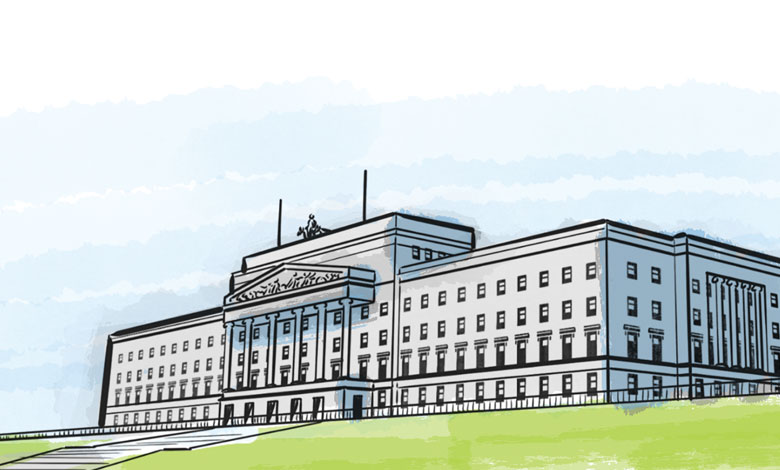
While there is broad support for the Assembly’s system of governance, consensus for reform is becoming increasingly widespread both in politics and society, according to a paper prepared for Stormont’s Assembly and Executive Review Committee.
Public opinion on the Northern Ireland Assembly and Executive and options for reform, published in February 2026, highlights that the current power-sharing system is still the most popular among nationalists, unionists, and those who are neither, although a majority of those surveyed believe it requires change.
Despite the support for the model, there is “near universal dissatisfaction” with the practical operation of the power-sharing institutions. One survey found that 70 per cent of participants disagreed that the Executive functions well as a government.
To prevent further Executive collapses, reforms of the Executive Office were popular across surveys.
There was majority support for making nomination rights transferable to another party if the First or deputy First Minister resign. However, there is no common agreement over whether community designation would factor into this process.
There was also found to be general support for renaming the titles of First Minister and deputy First Minister to ‘joint first ministers’.
The paper also demonstrated that there was dissatisfaction with the system of voting in the Assembly.
The Petition of Concern, where 30 MLAs from one designation can block legislation passed by an Assembly majority, was found to be unpopular.
Multiple surveys highlighted strong support for allowing key votes in the Assembly to be passed using a weighted majority of 60 per cent.
The smaller forums, which took place during the collapse of the Executive between 2022 and 2024, focused on attitudes towards two alternative political systems.
In both discussed systems, parties would negotiate with each other to determine the Executive’s formation. However, one would feature guaranteed cross-community representation, and the other would not.
The report recognises some benefits to these alternatives, including a more substantial opposition allowing for enhanced parliamentary scrutiny as well as a more cohesive Executive.
However, concerns about the potential loss of cross-community governance took precedence in discussions about the model without any safeguards.
Others expressed concerns that in both systems a major political party such as the DUP or Sinn Féin could be absent from government.
A survey of the participants found that support for the current system and a voluntary coalition with cross-community safeguards was identical.
A voluntary coalition system without any guaranteed community representation was the least popular and widely regarded as problematic.
There appears to be some support among politicians for reform, as a majority in the Assembly voted in favour of a motion calling for institutional reform, introduced by the Alliance Party, in December 2025.
However, there was not cross-community support as every unionist politician who voted did so against the motion.
Following the vote, Alliance Party leader Naomi Long MLA said that: “Alliance has long been clear that institutional reform is urgently needed to remove the ability of any single party to hold decision-making, or the institutions themselves, to ransom.”
She also urged the Secretary of State to immediately convene a process of institutional reform at Stormont.
Institutional reform is one of the main aims of the Alliance Party, and it has previously called for changes to the Petition of Concern and for a weighted majority voting system.
Support for reforming the institutions is becoming a more consistent theme in Northern Ireland politics as, in a meeting in March 2026, SDLP leader Claire Hanna MP told UK Prime Minister Keir Starmer MP that there is a need for “serious discussions about the change needed at Stormont, particularly at a time when public confidence in our institutions is at an all-time low”.
As the sole party in Official Opposition, the SDLP has been consistently critical of the Executive and how it functions.
During its time in opposition, it has repeatedly called for the removal of the ‘St Andrews veto’, which allows a party to prevent an item appearing on the Executive agenda.
The party also introduced a non-binding motion in March 2026 that would “equalise the titles” of the First and deputy First Minister, which was passed by 29 votes to 21.
The two largest parties in Stormont, the DUP and Sinn Féin, have a more ambiguous position on reform, with neither publicly calling for large-scale changes.
However, the DUP has historically supported a similar reform of the institutions through the guise of ‘opposition to mandatory coalition’ with Sinn Féin. Despite this, the DUP has not supported measures which would effectively lead to this from either the Alliance party or the SDLP.
Sinn Féin and the DUP have publicly stated opposition to changing the titles of First Minister and deputy First Minister to ‘joint first ministers’, with MLAs from both parties criticising the SDLP’s motion.
Therefore, given the current make-up of the Executive, it seems unlikely that there will be any major institutional reforms in this Assembly mandate. The DUP was contacted for comment.