Examining the Speaker’s role
Presiding officers in legislatures across the UK and Ireland share several common themes but differences exist regarding specific powers and mechanisms of responsibility, an Assembly briefing paper states.
The position is characterised by a combination of procedural, administrative, and representational responsibilities. They are expected “to uphold the impartiality and integrity of parliamentary proceedings”, states the Role and accountability of Speakers/Presiding Officers in legislatures in the UK and Ireland research paper, published in February 2026.
Presiding officers must ensure debates are conducted in an orderly fashion, members are treated fairly, and standing orders are applied consistently. Their duties include selecting amendments, managing legislative changes, and interpreting procedural rules.
The paper asserts that the frameworks for appointment and removal “demonstrate a balance between institutional stability and democratic oversight”. It identifies rarely invoked removal procedures as “important constitutional safeguards”.
Regarding election processes across legislatures, the paper says: “Each system seeks to confer legitimacy while safeguarding the independence of the office holder.”
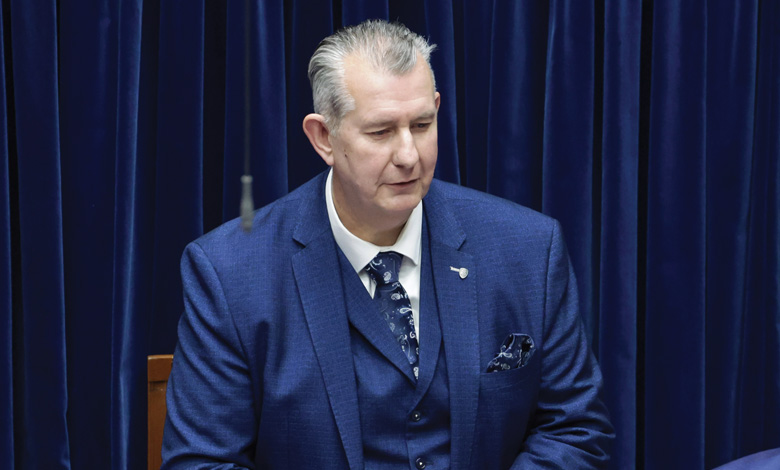
The Northern Ireland Act 1998 provides the statutory basis for the role in the Assembly where it is referred to as the Speaker. It is also outlined in the Assembly’s standing orders. Former DUP leader Edwin Poots MLA has been the Assembly’s Speaker since 2022.
There is no statutory basis for the role in the House of Commons, but the position dates back to the 13th century. In 1377, MP Thomas Hungerford was the first to be formally recognised as the ‘Speaker’. Former Labour MP Lindsay Hoyle is the current Speaker in the Commons.
In Scottish Parliament, the position is referred to as the Presiding Officer and the Scotland Act 1998 provides its statutory basis. The position is also outlined in the standing orders. Independent MSP Alison Johnston currently holds the role.
In Senedd Cymru, the position is referred to as Llywydd which translates to ‘presiding officer’. The Government of Wales Act 2006 provides statutory basis for the role and it is also outlined in the standing orders. Plaid Cymru MS Elin Jones is the current Llywydd.
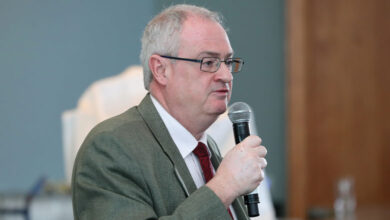
In Dáil Éireann, the official title of the position is Ceann Comhairle which translates to ‘head of the council’. Bunreacht na hÉireann, the Constitution of Ireland, outlines the role. Independent TD Verona Murphy is the current Ceann Comhairle.
Election and removal
The election of the presiding officer is the first item of business following an election in each legislature. Presiding officers in Scotland, Wales, and the Republic of Ireland are elected through secret ballot.
In the Assembly, the Speaker is elected by cross-community support. The Speaker holds office until the conclusion of the next election for Speaker unless they resign or cease to be an MLA otherwise through a dissolution.
In the House of Commons, a new Speaker may be re-elected in circumstances where MPs oppose the incumbent’s re-election, the Speaker has not been re-elected, or the Speaker resigned before the meeting of a new Parliament. A secret ballot takes place to elect a new speaker in such an event.
If the MP who was Speaker in the previous Parliament is re-elected to the Commons and wishes to continue as speaker, a motion is put before the House on the matter. Should the question be challenged, the decision is made by division.
In the Scottish Parliament, the presiding officer may be removed if a member proposes a seconded motion on the matter. This decision requires an absolute majority if taken by division. In the Senedd, the Llywydd may be removed if at least six members table a motion on the matter. The Ceann Comhairle of the Dáil may be removed by a special resolution of the Dáil at any time.
Presiding
In the Assembly, Scottish Parliament, and Senedd, presiding officers must ensure legislation is within the legislature’s competence. The Ceann Comhairle of the Dáil must ensure bills comply with the standing orders.
In the Assembly, the Scottish Parliament, and the Senedd, presiding officers’ rulings on questions of procedure are final. Speakers in the Assembly must be heard in silence when giving a ruling or preserving an order.
Comments on the Speaker’s actions or character may be punished as breaches of privilege. The Speaker cannot be criticised in a debate or by any form of proceedings except a substantive motion.
Presiding officers in the Commons and the Dáil have authority to suppress disorder. The Ceann Comhairle may order members to withdraw from the Dáil or name them for suspension, and can suspend or adjourn the Dáil “in the case of great disorder”.
They may interpret standing orders and rule on matters that they do not expressly cover. This includes, but is not limited to, matters relating to relevance, repetition, and appropriate use of privilege during debate.
Amendments
Presiding officers have the power to select amendments in each legislature. In the Scottish Parliament and the Senedd, they determine the ‘proper form’ bills and amendments must adhere to. They also decide on the admissibility of amendments and do not normally give reasons for these decisions.
In practice in the Senedd, clerks make routine decisions regarding amendments’ admissibility. Decisions may be escalated to the Llywydd at clerks’ discretion or if requested by a tabling member.
In the Dáil, the Ceann Comhairle can disallow amendments if they are not relevant to a bill or conflict with its intentions. Furthermore, they may disallow an amendment proposed by non-government members “if it might give rise to public expenditure of additional taxation”. The Bills Office assesses the admissibility of amendments against standing orders and may submit them to the Ceann Comhairle for disallowance.
Concluding, the research paper says: “While each legislature operates within its own constitutional and procedural context, all recognise the Speaker or Presiding Officer as a central figure in protecting the rights of members and the integrity of parliamentary proceedings.”