O’Dowd publishes draft multiannual Budget
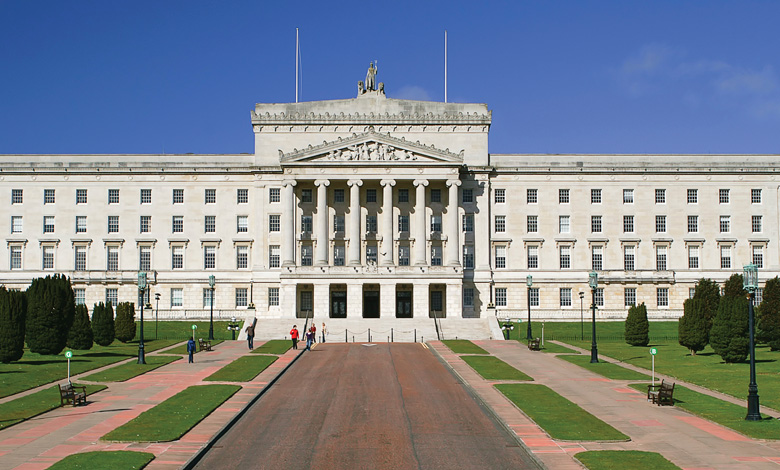
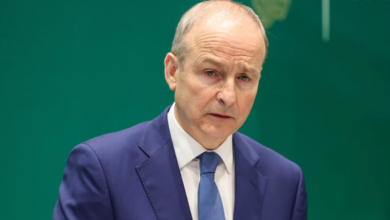
Finance Minister John O’Dowd MLA has boldly published a draft multiannual budget. However, Sinn Féin’s Executive partners have accused O’Dowd of publishing the proposal without agreement from the other parties, and the DUP has accused the Minister of underfunding the departments over which it has control.
The Executive’s draft Multi-Year Budget 2026-2029/30, currently out for consultation, marks a significant procedural shift in Northern Ireland’s public finances. After years of annual settlements and in-year firefighting, the move towards a multiannual framework is intended to provide stability, enable strategic planning, and support public service reform.
The multiannual budget is designed to align funding with policy delivery. Departments can plan workforce requirements, sequence capital projects, and pursue reform agendas with greater confidence when funding is known beyond a single year. This aims to reduce inefficiency, avoid last-minute spending decisions, and improve value for money.
Although the Budget spans three years for resource spending and four for capital, the overall funding envelope remains highly constrained. The draft makes clear that allocations reflect the limits of the Executive’s settlement, rather than a reassessment of what is required to meet demand. As a result, the multi-year framework risks locking in pressures rather than alleviating them.
In nominal terms, departmental resource allocations increase over the period. However, once inflation, pay pressures, and demographic change are accounted for, real-terms growth is modest at best. For departments with demand-led services, particularly health, education, and justice, this means that multi-year certainty does not necessarily translate into service stability.
The Budget has also been developed against a backdrop of significant in-year overspends, which have not yet been fully reconciled with future baselines. This creates a structural risk because if current pressures are effectively rolled forward, future years may inherit a reduced level of spending power once adjustments are made. This weakens the predictability argument for multiannual budgeting.
Departmental performance
While spending pressures are evident across the system, both their scale and persistence vary significantly between departments.
Departments such as Infrastructure and the Economy have generally demonstrated comparatively tighter fiscal management. In 2024/25, the Department for Infrastructure (DfI) was allocated £559.5 million resource DEL and £820.1 million capital DEL.
During monitoring rounds, DfI reported emerging pressures primarily linked to energy costs, public transport subsidies and investment requirements for water and roads infrastructure. While the department did not publish a single consolidated overspend figure, Department of Finance monitoring statements confirm that these pressures were managed in-year through reallocations, capital-to-resource switches, and reprioritisation, limiting the risk of an unmanageable overspend by the end of the year.
Similarly, the Department for the Economy entered the 2025/26 budget cycle with a resource DEL allocation of approximately £799 million, up from £766.6 million in 2024/25. Despite exposure to demand-led areas such as skills programmes, higher education funding, and apprenticeships, departmental evidence to the Assembly and audit coverage indicates that identified pressures were material but relatively modest compared with larger service departments. The department’s higher proportion of discretionary and capital-linked spending has provided greater flexibility to absorb in-year pressures through deferral and reprofiling, rather than requiring significant additional funding.
By contrast, Education and Communities have faced substantially higher and more recurrent financial pressures. The Department of Education received £2.874 billion resource DEL in 2024/25, rising to approximately £3.2 billion in the 2025/26 draft budget. In-year monitoring returns during 2024/25 identified a significant funding gap, driven primarily by teachers’ pay settlements, escalating special educational needs (SEN) demand, and a growing schools maintenance backlog. Independent evidence submissions and departmental briefings to Assembly committees indicated that unfunded pressures in education could exceed £200 million in a single year if not addressed through monitoring allocations.
SEN expenditure represents the most acute structural pressure. Departmental data show that the number of pupils with statements or equivalent SEN support has increased steadily, with special school enrolments rising by around 17 per cent over the past five years. Over the same period, SEN-related spending has increased by well over £100 million, significantly outpacing general funding growth and creating pressures that are not readily absorbed within the existing funding model.
The Department for Communities (DfC) has also reported sustained financial strain. In its 2024/25 budget consultation, DfC identified a Resource DEL shortfall of approximately £115.8 million, alongside a capital DEL shortfall of around £167.3 million, against assessed need. These pressures reflect rising demand for social housing, homelessness prevention and temporary accommodation, regeneration programmes, and the administrative costs associated with delivering social security benefits. Subsequent monitoring allocations mitigated some immediate risks but did not eliminate the underlying gap between funding and demand.
When assessed relative to their overall share of the resource budget, Education and Communities together account for a disproportionately large share of in-year financial risk.
Capital planning and revenue raising
The extension of capital planning to 2029-30 is one of the more substantive elements of the draft Budget. Longer-term capital certainty is essential for big infrastructure, health, and education projects, particularly given Northern Ireland’s historic under-delivery of capital programmes.
However, the capital plan remains heavily concentrated on a small number of large schemes, many of which have experienced delays or cost escalation in previous cycles. With borrowing levels already elevated, the scope for responding to emerging capital needs such as school maintenance, water infrastructure resilience, or climate adaptation remains limited.
The draft Budget does little to expand the Executive’s revenue-raising capacity. Continued reliance on regional rates increases reflects the limited nature of Northern Ireland’s fiscal devolution. While politically contentious options such as the introduction of water charges remain excluded, this leaves the Executive with few levers to address structural funding gaps.
Political fallout
The DUP has criticised the process and substance of the proposals, arguing that they fail to prioritise key services and lack collective Executive ownership. Other parties have raised concerns about ambition and sustainability. All parties broadly accept the need for a multi-year framework.
In a written ministerial statement to the Assembly, Finance Minister John O’Dowd MLA says: “By moving beyond short-term cycles, we can enable strategic investment that delivers lasting benefits for our economy, our environment, and our society. Setting a multi-year budget is one of the biggest decisions we will take during this Assembly mandate.”
O’Dowd also accuses the UK Government of “underfunding in public services”, and asserts that the additional funding provided by the Autumn Statement “will not undo the damage caused by the years of underfunding of our public services by successive British governments and is insufficient to plug current and future funding gaps”.
The DUP has responded angrily to the draft Budget. A party statement says: “This draft Budget is John O’Dowd’s Budget, it has not been agreed by the Executive and it is not supported by the DUP. While we recognise the very real financial pressures facing Northern Ireland, the choices and allocations set out by the Sinn Féin Finance Minister are deeply flawed and will require significant changes if they are to command our support.
“The DUP will not accept a Budget that fails to properly prioritise frontline services, particularly education, while wasteful and unnecessary spending continues elsewhere. The Finance Minister must return with proposals that put essential public services first, ensure taxpayers’ money is used efficiently, and deliver for families and communities across Northern Ireland.”
Leader of the Opposition Matthew O’Toole MLA has described the draft Budget as “an unambitious ghost Budget bereft of vision”, adding: “Rather than setting out a plan to transform services and improve people’s lives, it has a few pages of text blaming others and then tables setting out essentially more status quo.”
The draft Budget is currently out for public consultation, for which submissions can be made until 3 March 2026.