Limited progress towards housing strategy targets
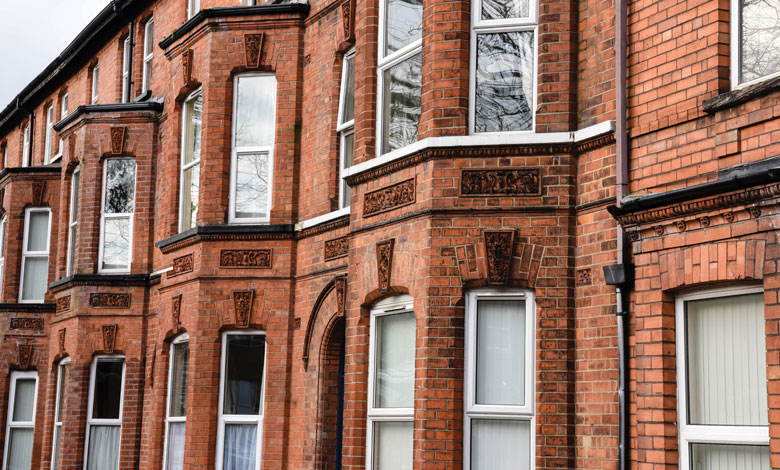
Following the launch of the Housing Supply Strategy 2024-2039 and against the backdrop of a chronic housing shortage, recent data highlights modest improvements in private housing starts but ongoing challenges in meeting social housing commitments.
Northern Ireland continues to experience significant housing pressures, with almost 48,000 households on the social housing waiting list, over 36,000 of which are in housing stress. In recognition of these challenges, the Department for Communities (DfC) published its Housing Supply Strategy 2024-2039, setting an ambition to deliver at least 100,000 new homes by 2039, including 33,000 social homes.
The strategy adopts a whole-system approach and is structured around five objectives:
- increasing supply and affordable options;
- preventing homelessness and reducing housing stress;
- improving quality and safety;
- building thriving communities; and
- ensuring low-carbon housing.
- Aligned with the draft Programme for Government, the strategy aims to tackle affordability pressures, improve housing conditions, and meet net-zero targets.
Social housing delivery
The Programme for Government commits to starting work on 5,850 new build social homes by 2027, equating to approximately 2,000 per year. However, progress has fallen significantly short of this benchmark.
In 2024, 1,504 new social homes were started, while current budget allocations are expected to fund around 1,000 homes in 2025, less than half the annual target. Communities Minister Gordon Lyons MLA has indicated that 80 per cent of available capital funding is directed towards housing but acknowledged that the budget remains “continually constrained”.
To remain on track, the Department estimates that an additional £62 million would be required. While the Department can bid for extra funding through in-year monitoring rounds, there is no certainty regarding availability or prioritisation.
Recent construction trends
Data for the second quarter of 2025 indicates an improvement in overall housing activity, with work starting on more than 2,000 new homes, the highest quarterly figure since early 2018. This marks only the second time since the onset of the pandemic that new starts have exceeded 2,000 units.
Despite this, it remains uncertain whether the increased level of activity can be sustained. Historically, quarterly housing starts exceeded 3,000 in the mid-2000s, prior to the global financial crisis. By comparison, recent figures highlight the scale of the gap between historical peaks, current delivery, and long-term need.
The Housing Supply Strategy outlines that 8,000 new dwellings per year are required to address existing demand and projected household growth. However, current trends fall well below this level.
Affordability pressures
Alongside supply constraints, affordability remains a core challenge. Figures for Q2 2025 indicate that the average house price in Northern Ireland increased by 5.5 per cent year-on-year, reaching just over £185,000. Quarterly growth was more modest at 0.3 per cent.
Regional variations persist:
- Mid Ulster recorded the largest annual increase at 8 per cent;
- Newry, Mourne and Down experienced the smallest increase at 1.2 per cent;
- Lisburn and Castlereagh reported the highest average price at £219,000; and
- Mid and East Antrim recorded the lowest at £164,000.
The strategy acknowledges affordability as a key driver of housing stress and identifies intermediate housing options such as shared ownership and intermediate rent as part of the solution.
Long-term objectives and enabling actions
To achieve its targets, the Housing Supply Strategy sets out commitments including:
- optimising financial transactions capital (FTC) and attracting alternative finance, including capital markets and ESG investment;
- addressing infrastructure constraints, notably wastewater capacity;
- enhancing planning system efficiency, through the Planning Improvement Programme and statutory consultee reforms; and
- increasing land availability via digital mapping of public sector holdings through the Government Land and Property Register.
The Department has also committed to commissioning research on housing affordability measures, improving data on housing supply and demand, and strengthening interdepartmental collaboration to support delivery.
Prevention and intervention measures
Alongside increasing supply, the strategy prioritises reducing homelessness and providing tailored housing solutions. Key actions include:
- supporting delivery of the Ending Homelessness Together Strategy (2022-2027);
- progressing the Interdepartmental Homelessness Action Plan;
- implementing recommendations from the Fundamental Review of Social Housing Allocations; and
- developing alternative models of supported housing and improving access to adaptations for disabled and older people.
Future outlook
While the Q2 2025 increase in housing starts suggests potential for improved performance, systemic challenges persist. Budgetary constraints, infrastructure bottlenecks, and skills shortages remain significant barriers.
The long-term ambition of delivering 100,000 homes by 2039 will require sustained investment, cross-government collaboration, and continued innovation in financing and planning processes.
Failure to accelerate delivery risks further widening the gap between housing supply and demand, with implications for affordability, social equality, and economic development.